




How carbon capture regulations affect project permitting timelines




Carbon capture projects rarely lose time because a team underestimated the size of an absorber column or the length of a pipeline route. More often, the schedule begins to stretch when a seemingly straightforward engineering decision triggers a new environmental review, a separate CO2 transport authorization, or a storage permit with years of baseline data requirements.
For project managers, carbon capture regulations are therefore not a legal workstream to be addressed after process design. They are a schedule-shaping discipline. The permitting path can influence site selection, technology configuration, contracting strategy, financing milestones, and the order in which construction packages are released. A project may have a credible emissions-reduction case and sound equipment design, yet still face delay if regulatory interfaces are discovered too late.
Permitting is not one approval
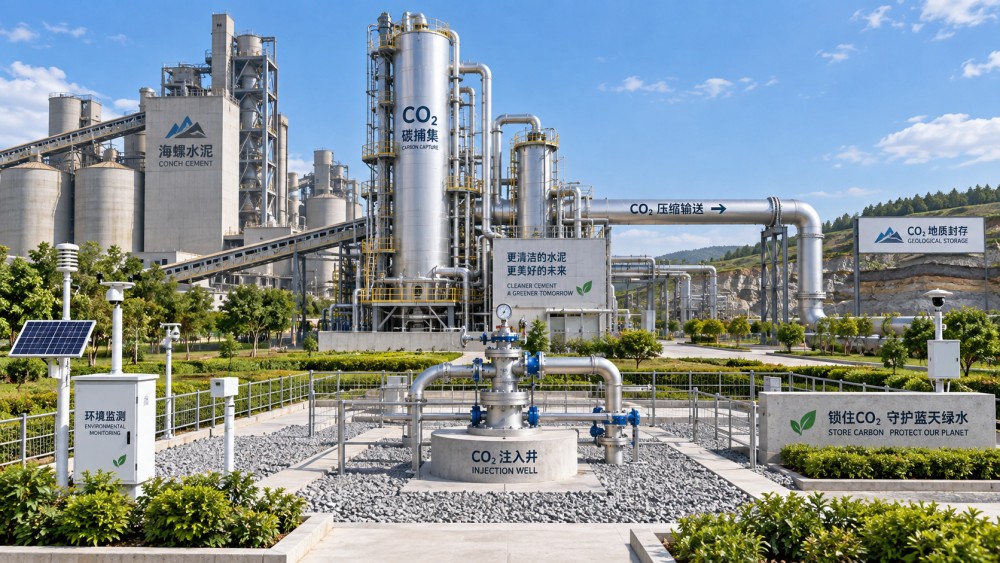
A carbon capture value chain usually combines several regulated assets: the industrial source, capture equipment, compression and dehydration units, a pipeline or shipping link, an injection site, and a long-term monitoring program. Each asset may fall under a different authority, approval regime, and consultation process.
That distinction matters. Retrofitting capture equipment at a cement kiln, refinery, steel facility, ammonia plant, or power station can require modifications to existing air, water, waste, safety, and operating permits. If the project includes a new CO2 pipeline, land access, route approval, construction permits, and transport safety obligations may enter the schedule. Geological storage adds another layer: site characterization, injection authorization, well integrity review, financial assurance, monitoring, reporting, and post-closure responsibilities.
In other words, the permitting timeline is usually governed by the slowest linked approval, not the first permit a team obtains.
Where carbon capture regulations create the longest schedule risk
The most significant delays tend to arise where regulators need evidence that the project will remain safe and environmentally controlled over a long period. This is especially true for permanent geological storage. Authorities may ask for detailed subsurface models, seismic data, legacy well records, plume migration forecasts, pressure management plans, and corrective-action procedures before authorizing injection.
In the United States, a dedicated Class VI underground injection control permit is generally central to projects storing CO2 in deep geologic formations. In the European Union, the CCS Directive establishes a framework for storage permits, monitoring, corrective measures, and transfer of responsibility. Other jurisdictions have their own regimes, sometimes still evolving. Project teams should never assume that a permit strategy used in one country can simply be copied into another.
Environmental impact assessment can be equally consequential. The review may cover emissions changes at the host facility, energy consumption, cooling-water demand, construction disturbance, pipeline routing, biodiversity, community effects, and potential impacts associated with storage operations. If the capture plant, transport system, and storage site are assessed separately without a clear cumulative-impact narrative, regulators may request additional information later—often when the project thought it was ready to move forward.
The design choices that quietly affect approval timing
Many permitting problems begin as design assumptions. For example, choosing a storage site before confirming sufficient characterization data can create a long investigation program. Selecting a pipeline corridor only on the basis of distance may overlook densely populated areas, protected land, crossings, or incompatible local planning rules. A capture process that materially increases fuel use or changes stack conditions may require the host plant to revisit existing emissions limits.
Project managers should treat the following decisions as regulatory gates rather than purely technical choices:
- Capture technology and utilities: solvent management, water use, waste streams, heat integration, and changes to air emissions can affect facility permits.
- CO2 specification: impurities, dehydration requirements, corrosion control, and pressure conditions influence transport and injection design.
- Transport mode: pipeline, ship, rail, and truck transport bring different safety, routing, port, and cross-border requirements.
- Storage formation selection: data availability, existing wells, reservoir pressure, monitoring feasibility, and long-term liability shape the storage license pathway.
- Project boundary: regulators may examine the integrated chain, even when different companies own the capture, transport, and storage assets.
These issues are why a concept design package should include a regulatory basis of design. It does not replace legal advice or permit applications. It gives engineers, environmental specialists, and commercial teams a shared view of what evidence must be produced and when.
A realistic permitting timeline has parallel tracks—and dependencies
It is tempting to draw permitting as a linear sequence: complete engineering, submit applications, wait for approvals, then build. In practice, successful carbon capture projects run multiple tracks in parallel. Baseline environmental surveys, subsurface characterization, landowner engagement, process safety studies, and stakeholder consultation may need to start before the final front-end engineering design is complete.
Parallel work does not mean submitting incomplete applications. Regulators often accept phased engagement but expect consistency between early technical discussions and the final permit package. A material redesign after filing—such as changing injection well locations, increasing annual injection volumes, or revising the pipeline route—can require supplemental analysis and reopen stakeholder concerns.
For planning purposes, teams should separate three dates that are too often compressed into one: the date an application is filed, the date the regulator considers it complete, and the date a final decision is issued. The gap between filing and completeness can be substantial if baseline information, drawings, risk assessments, or consultation records are missing. A schedule that counts only the statutory review period may create false confidence for investors and construction partners.
Cross-border CO2 movement adds a commercial as well as regulatory question
Projects involving offshore storage or international transport face an additional layer of uncertainty. CO2 movements may be affected by marine rules, port approvals, pipeline interconnection standards, national licensing systems, and international arrangements governing transboundary export for geological storage. The applicable framework depends on the countries involved and the transport route.
For the project manager, the practical question is not simply “Is cross-border transport allowed?” It is “Which party is responsible for proving compliance at each handoff?” A capture operator may meet its own permit conditions yet be unable to start operations if the downstream ship-loading facility, pipeline connection, or storage license is not ready. Interface agreements should define CO2 quality, metering, custody transfer, incident notification, monitoring data access, and the consequences of a downstream outage.
Monitoring and closure obligations affect today’s permit strategy
Carbon capture regulations do not end when injection starts. Storage projects normally require monitoring to demonstrate containment and identify unexpected plume or pressure behavior. Requirements can include pressure monitoring, seismic surveys, groundwater protection measures, well testing, reporting, and corrective-action planning. Financial responsibility for closure and post-closure care may also be assessed during permitting.
This changes early project decisions. A storage operator needs monitoring technologies that can produce auditable data, but it also needs a practical plan for managing and retaining those records over the life of the project. The capture facility, transport operator, and storage provider should align their measurement systems early. Disputes over flow volumes, impurities, or emissions-accounting boundaries can become both compliance and revenue problems.
What project leaders should do before committing to a delivery date
A strong permitting strategy begins with a jurisdiction-by-jurisdiction permit map. List every approval, responsible authority, expected input, public consultation requirement, review dependency, and decision risk. Then connect that map to the engineering schedule rather than maintaining it as a separate compliance spreadsheet.
It is also wise to establish an evidence register. This should identify the studies needed to support each application: emissions modeling, environmental baseline surveys, geotechnical investigations, reservoir characterization, pipeline integrity analysis, hazard assessments, monitoring plans, and emergency-response documentation. Each item needs an owner, a required level of maturity, and a date by which it must be available.
Early regulator engagement is valuable when it is specific. Rather than asking for broad approval of a concept, bring defined questions: whether a proposed monitoring approach is acceptable, what data will be expected for a storage complex, how an existing industrial permit should be amended, or whether a route alternative needs further assessment. Record the outcomes and feed them back into design control.
Reliable market and technical intelligence also improves these decisions. Project teams assessing capture equipment, CO2 compression systems, pipeline technologies, injection equipment, materials, and monitoring solutions need to compare specifications against the regulatory requirements of the intended project location. Structured industry resources such as GEMM can help teams organize product, process, supplier, standards, and application information before procurement assumptions become embedded in the schedule.
The central lesson: permitability is part of project maturity
Carbon capture regulations can lengthen a project timeline, but they do not have to make it unmanageable. The greatest schedule damage usually comes from treating permitting as an administrative finish line rather than a design input. When regulatory evidence, engineering choices, land and community issues, transport interfaces, and storage obligations are managed as one connected program, teams can identify uncertainty earlier and communicate more credible dates.
For a project manager, that is the real value of regulatory planning: not merely obtaining a permit, but building a carbon capture project that is technically deliverable, commercially coordinated, and ready to meet the conditions under which it will actually be allowed to operate.
- Last One:No more articles
- Next Article:When does carbon management consulting pay off for manufacturers?Sep 22, 2026
Related News
- 00
0000-00
Virgin vs Recycled Resin: How to Switch Without Disrupting Production? - 00
0000-00
Why Bio-Based Plastics Still Have to Prove Themselves on the Molding Floor - 00
0000-00
Industrial decarbonization targets slip when baselines are weak - 00
0000-00
How carbon capture regulations affect project permitting timelines - 00
0000-00
When does carbon management consulting pay off for manufacturers?
Related tags
Weekly Insights
Stay ahead with our curated technology reports delivered every Monday.