




How supply chain network modeling reveals costly distribution gaps




Supply chain network modeling helps business leaders uncover costly distribution gaps that traditional logistics reports often miss across complex, multi-region operations.
By mapping suppliers, facilities, routes, demand centers, capacities, and costs, companies can identify weak links, excess distance, inventory imbalances, and regional service risks.
For industrial markets, the practical value is clear: better sourcing choices, stronger resilience, improved customer service, and network investments supported by measurable evidence.
Why Distribution Gaps Remain Hidden in Standard Reports
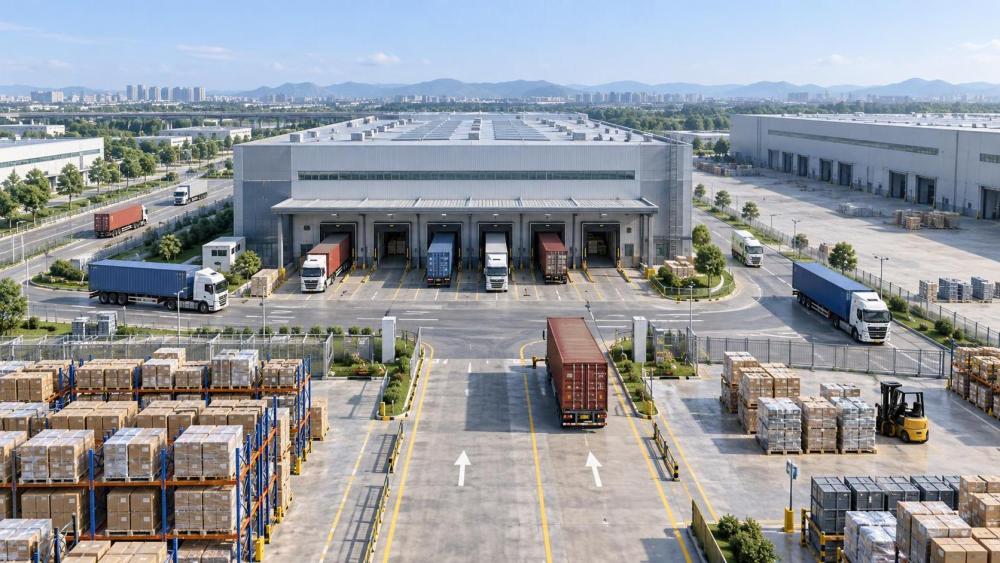
Most logistics reports describe what has already happened, such as freight spending, delayed orders, warehouse utilization, or on-time delivery performance by individual location.
Those reports are useful, but they rarely show how decisions in one part of the network create avoidable cost or risk elsewhere.
A distribution gap occurs when the current network cannot serve demand efficiently, reliably, or profitably because facility locations, capacities, inventory, or routes are misaligned.
For example, a regional warehouse may appear productive while regularly shipping products long distances to customers located closer to another underused facility.
Another common gap appears when a company keeps inventory near historic demand centers, even after projects, manufacturing activity, or customer purchasing patterns have shifted.
Supply chain network modeling connects these operating facts, helping leaders see the structural causes behind recurring expediting, high freight bills, poor availability, and lost sales.
What Supply Chain Network Modeling Actually Evaluates
Supply chain network modeling is a decision framework that represents the physical and economic relationships among suppliers, plants, warehouses, ports, customers, and transportation lanes.
It combines data on demand, product flows, capacities, lead times, service requirements, labor, tariffs, inventory policies, and transportation costs into a consistent network view.
Instead of asking whether one warehouse performs well, executives can assess whether the complete network produces the right service level at the lowest realistic total cost.
For manufacturers and distributors, this distinction matters because a local cost reduction can increase inventory, transportation, working capital, or customer risk elsewhere.
The model can compare alternative scenarios, including new distribution centers, plant closures, supplier changes, port substitutions, inventory repositioning, and different customer-service commitments.
Its purpose is not to produce a mathematically perfect answer, but to provide a defensible basis for choosing among operational and capital allocation options.
Which Gaps Usually Create the Largest Financial Impact
Excess transportation distance is often the most visible distribution gap, particularly for heavy equipment, metals, polymers, chemicals, and other freight-sensitive industrial products.
Long routes increase freight expense, emissions exposure, delivery variability, handling damage, and dependence on carrier capacity during seasonal or market-driven disruptions.
Inventory imbalance is another major issue, where one location carries slow-moving stock while another experiences shortages, backorders, emergency transfers, or expensive expedited shipments.
Network models also reveal capacity gaps that remain hidden until demand increases, a supplier fails, a port becomes constrained, or a major facility experiences downtime.
Service gaps deserve equal attention because missed delivery windows can delay customer projects, disrupt production schedules, and weaken relationships with high-value industrial accounts.
Leaders should evaluate these gaps together, since the lowest freight option may require more inventory, while the fastest service option may require additional facilities.
How Executives Can Turn Model Results Into Better Decisions
The strongest network studies begin with a specific business decision, rather than an open-ended request to optimize every flow, location, product, and customer simultaneously.
A practical question might be whether a new warehouse can reduce delivered cost and lead time enough to justify its operating expense and inventory investment.
Another question may concern whether importing through a different port, sourcing from another region, or consolidating distribution can improve resilience without harming customer service.
Decision makers should request a baseline model first, because it establishes how current demand, facilities, routes, and costs produce present operating outcomes.
They should then compare a limited set of credible scenarios against consistent measures, including total landed cost, service coverage, inventory, emissions, capital needs, and disruption exposure.
Clear scenario comparisons prevent teams from selecting an option solely because it improves one departmental metric while shifting cost or risk to another function.
What Data Is Needed Before Modeling the Network
Reliable supply chain network modeling depends more on sound input assumptions than on sophisticated software, so data quality should be treated as a leadership responsibility.
Core inputs include customer demand by location, shipment volumes, product characteristics, facility capacities, fixed costs, transportation rates, handling costs, and inventory holding assumptions.
Industrial businesses should also capture constraints that are often absent from financial systems, including hazardous-material rules, temperature requirements, customs processes, certifications, and equipment compatibility.
Demand data should distinguish strategic accounts, project-based orders, recurring consumption, and geographic growth opportunities because each pattern creates different service and stocking requirements.
When data is incomplete, teams should document assumptions and test ranges instead of inventing precision that could make a recommendation appear stronger than it is.
External market intelligence can improve model quality by clarifying regional supply availability, trade flows, price volatility, regulations, supplier capability, and infrastructure conditions.
How to Measure Return on a Network Redesign
Network redesign should be evaluated using total economic impact, not just annual transportation savings, because distribution changes affect several costs and several strategic capabilities.
Typical benefits include lower freight expense, fewer emergency shipments, reduced stockouts, better warehouse utilization, lower working capital, and improved delivery reliability for priority customers.
Costs can include new leases, equipment, systems integration, labor, transition inventory, contract termination fees, regulatory approvals, and temporary operating complexity during implementation.
A credible business case estimates the timing of costs and benefits, identifies one-time implementation requirements, and applies sensitivity testing to uncertain demand or freight assumptions.
Executives should also quantify avoided risk where possible, such as revenue protected through better service coverage or reduced exposure to a single vulnerable supplier or route.
The best decision may not deliver the lowest immediate cost, especially when a slightly higher operating expense significantly improves continuity for critical products or customers.
When a Company Should Prioritize a Modeling Project
A network review is especially valuable when freight costs rise faster than sales, service performance declines, or inventory increases without improving product availability.
It is also appropriate before major decisions involving acquisitions, new plants, regional expansion, supplier localization, distribution consolidation, or large customer commitments.
Companies in energy, materials, chemicals, metals, and plastics should reassess their networks after major changes in trade rules, energy prices, commodity supply, or transport capacity.
Organizations with multiple business units often benefit because separate teams may build overlapping warehouse footprints, use different service assumptions, or compete for constrained inventory.
Even a focused model can deliver value when it addresses one product family, market region, or strategic customer segment with significant cost, growth, or supply-risk exposure.
The key is to match project scope to the decision horizon, using rapid diagnostic analysis for near-term choices and deeper modeling for long-lived infrastructure investments.
Questions Leaders Should Ask Before Approving Changes
Before approving a network change, leaders should ask which assumptions drive the recommendation and whether the proposal remains attractive under realistic demand and cost variation.
They should examine service implications by customer segment, rather than relying only on average delivery times that may conceal poor outcomes for strategic accounts.
It is important to understand operational feasibility, including labor availability, permitting, systems readiness, supplier commitments, inventory transition plans, and contractual obligations across affected locations.
Leaders should also ask whether the design improves resilience or merely relocates risk from one supplier, facility, port, or transportation lane to another.
A transparent model provides answers that commercial, operations, finance, procurement, and supply chain teams can review using shared definitions and agreed decision criteria.
That alignment is often as valuable as the technical output, because it turns fragmented operational opinions into a clear and accountable network strategy.
Conclusion: Find Structural Costs Before They Become Permanent
Supply chain network modeling reveals distribution gaps by showing how facilities, suppliers, inventory, customer demand, and transportation choices interact across the entire operating system.
For business leaders, the value lies in making capital, sourcing, and service decisions with a realistic view of total cost, risk, and customer impact.
Companies that model their networks before disruption or expansion can correct structural inefficiencies earlier, protect service performance, and build a more profitable distribution footprint.
- Last One:No more articles
- Next Article:How upstream energy systems monitoring helps detect production lossesSep 13, 2026
Related News
- 00
0000-00
Virgin vs Recycled Resin: How to Switch Without Disrupting Production? - 00
0000-00
Why Bio-Based Plastics Still Have to Prove Themselves on the Molding Floor - 00
0000-00
Industrial decarbonization targets slip when baselines are weak - 00
0000-00
How supply chain network modeling reveals costly distribution gaps - 00
0000-00
How upstream energy systems monitoring helps detect production losses
Related tags
Weekly Insights
Stay ahead with our curated technology reports delivered every Monday.