




What do rare earth mining regulations require before a project starts?




Before a rare earth project can break ground, the developer usually needs far more than proof that the deposit is economically interesting. Mining approvals are typically conditional on demonstrating that the site can be accessed legally, operated safely, supplied with water and power where needed, and closed without leaving unmanaged environmental or financial liabilities.
The exact pathway varies by country, province, state, and land tenure. Yet the same practical test appears across many jurisdictions: can the project owner show, in sufficient technical detail, what will be disturbed, what wastes will be produced, how impacts will be controlled, who may be affected, and who will pay if the operation fails or closes early?
Permits usually follow the project footprint, not just the orebody
Early-stage exploration permissions do not automatically authorize mine construction. A project moving toward development may need separate approvals for mining, land use, roads, power lines, water extraction, processing facilities, tailings storage, waste-rock areas, chemical storage, and transport connections. A permit boundary that covers the pit may still leave critical infrastructure unapproved.
For information researchers assessing a project, the useful question is therefore not simply whether it has “a mining permit.” It is whether the permit package covers the facilities required in the current mine plan. A project can appear advanced while still depending on approvals for a tailings facility, water supply, processing plant, or access corridor.
Land rights also require close attention. Depending on the jurisdiction, developers may need mining leases, surface-access agreements, easements, forestry permissions, zoning approval, or consent to work on public, private, Indigenous, protected, or otherwise restricted land. Mineral rights and surface rights are often held separately. Control of one does not necessarily provide the right to disturb the other.
Environmental assessment is the central pre-construction gate
Environmental review generally requires a baseline description of the site before major disturbance begins. This can include surface water and groundwater conditions, soil characteristics, biodiversity, air quality, land use, cultural heritage, and nearby communities. Baseline work is not a procedural formality: it becomes the reference point for permit conditions, monitoring obligations, and later disputes over impacts.
For rare earth mining, regulators may focus especially closely on the mineralogy and processing route. Some deposits contain thorium, uranium, or other naturally occurring radioactive materials. Even where radioactivity is limited, regulators will want a clear account of where those constituents report during crushing, beneficiation, leaching, separation, residue storage, and eventual closure.
A credible assessment normally connects the orebody to the waste streams. It should explain:
- which materials will be mined, processed, stockpiled, discharged, or stored;
- the expected chemistry of waste rock, tailings, process residues, and contact water;
- whether acid generation, metal leaching, radionuclide mobility, dust, or reagent release is plausible;
- how seepage, runoff, emissions, and accidental releases will be prevented or captured;
- how monitoring will demonstrate compliance during operations and after closure.
A common weak assumption is that a small mining footprint automatically means a simpler approval. That may be true in some cases, but processing complexity can drive the regulatory burden more than pit size. A compact operation using chemical leaching or producing residues requiring long-term containment can face a more demanding review than a larger, physically processed industrial-mineral project.
Water, tailings, and residue management are usually examined together
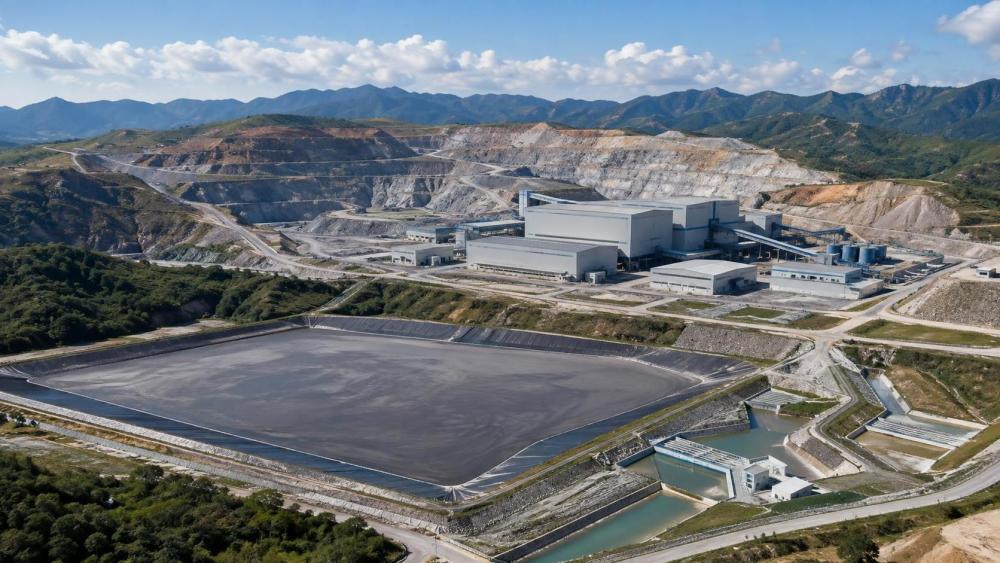
Water management is often one of the earliest issues capable of changing a project schedule. Developers may require permits to withdraw water, build diversions, discharge treated water, disturb wetlands, cross streams, or manage stormwater. Regulators will also examine the project’s water balance: how much water enters the system, where it is used, how it is recycled, where it accumulates, and how excess water is handled during severe weather or operational interruptions.
Tailings and process residues deserve separate scrutiny because they remain after the saleable rare earth product leaves the site. Approval applications generally need to identify the storage method, containment design, stability controls, seepage collection, inspection arrangements, emergency procedures, and closure approach. Where residues contain radioactive or chemically persistent constituents, authorities may impose additional licensing, handling, transport, monitoring, or disposal requirements.
Research teams should avoid treating a tailings plan as complete merely because a storage location has been identified. The relevant evidence is the engineering and management basis: geotechnical characterization, consequence assessment, water controls, operating criteria, independent review where required, and financial capacity to maintain the facility over its full life.
Community, Indigenous, and cultural requirements can determine timing
Many rare earth projects are located in areas with established communities, traditional land users, Indigenous rights holders, agricultural activity, or sensitive heritage sites. Consultation obligations vary widely, and they may be embedded in environmental assessment, land-access law, permitting rules, or negotiated agreements.
Consultation is often misunderstood as a single public meeting near the end of permitting. In practice, regulators may expect engagement while project alternatives are still open for discussion, particularly when road routes, water sources, residue facilities, or transport plans could affect nearby land use. In some legal settings, the project may also require formal consent, benefit agreements, heritage surveys, or rights-impact assessments.
The timing matters because late changes to project layout can force revisions to environmental studies and permit applications. A developer that has not established a workable path for access and local engagement may face delay even when its technical resource model is strong.
Financial assurance tests whether closure is more than a promise
Before operations start, regulators commonly require financial assurance for reclamation, closure, and, where applicable, long-term water treatment or residue management. The acceptable form may include a bond, letter of credit, trust arrangement, insurance-backed instrument, cash deposit, or another approved financial mechanism.
The amount should reflect the cost of work that would remain if the operator could not continue: reshaping disturbed land, stabilizing waste facilities, treating contaminated water, removing infrastructure, monitoring environmental conditions, and managing materials that cannot simply be left in place. For rare earth projects, the closure estimate may need to account for the persistence and handling requirements of process residues, not only visible surface rehabilitation.
Financial assurance should be reviewed alongside the mine plan. If a project relies on deferred reclamation, unproven residue treatment, or a long post-closure monitoring period, the closure liability may be materially different from an initial headline estimate.
What to check before treating a project as construction-ready
A disciplined review separates completed approvals from pending applications and from approvals that are technically granted but subject to conditions. The following questions usually reveal where regulatory exposure remains:
- Do approved permits cover the mine, plant, water system, residue storage, roads, power, and logistics needed for the stated development plan?
- Has the environmental assessment addressed the actual processing route and the chemistry of its waste streams?
- Are water rights, discharge permissions, and water-balance assumptions aligned with the proposed production rate?
- How will tailings and potentially radioactive or hazardous residues be contained, monitored, and closed?
- Are land access, community engagement, Indigenous rights, and cultural heritage issues resolved sufficiently for construction?
- What conditions, appeals, review periods, or financial-security obligations could still alter cost or schedule?
Rare earth mining regulations are therefore best understood as a project-readiness framework rather than a single licensing event. A deposit may be technically attractive and commercially strategic, yet still be years away from construction if its water, residue, land-access, or closure obligations remain unsettled. For researchers comparing projects, the quality and completeness of the approval pathway often provides a more useful signal than a simple statement that permitting is “in progress.”
Related News
- 00
0000-00
Which sectors are driving demand in the chemical engineering market? - 00
0000-00
How to assess lifecycle emissions from CCUS for low-carbon cement - 00
0000-00
How do energy storage technologies compare for 8-hour discharge? - 00
0000-00
Do mill test reports prove industrial alloys meet ASTM standards? - 00
0000-00
How to verify plastic recycling system suppliers' throughput claims
Related tags
Weekly Insights
Stay ahead with our curated technology reports delivered every Monday.