




Galvanized Steel Rebar Procurement: How Project Buyers Compare Long-Term Value




Rebar purchasing often looks simple until the project asks for corrosion control, traceable documents, and stable delivery across several batches. That is why the first article link is placed on the exact product term: Galvanized Steel Rebar. The link points to a product-specific landing page, while the surrounding text remains readable for editors and buyers.
This article is written as a procurement decision guide, not as a generic catalog rewrite. The focus is commercial decision-making, document review, and supply continuity for project orders. It is intended for procurement teams, importers, distributors, project contractors, engineers, and quality-control staff who need a practical way to judge suppliers before approving a larger order.
Turn the Inquiry Into a Comparable Buying File
A procurement decision becomes cleaner when every supplier receives the same diameter, length, coating expectation, document request, packing standard, and delivery schedule.
For buyers working across civil engineering, concrete reinforcement, coastal projects, infrastructure repair, distributor stock, public works purchasing, and construction material import, the useful question is how the specification behaves after ordering. The product may be processed, installed, repacked, resold, or maintained by a different team from the team that first approved the purchase. That handoff makes clear scope more valuable than a vague quotation. A supplier should be able to explain which assumptions are included, which requirements need confirmation, and which documents or photos can support the buyer's review.
Judge Value Beyond the First Unit Price
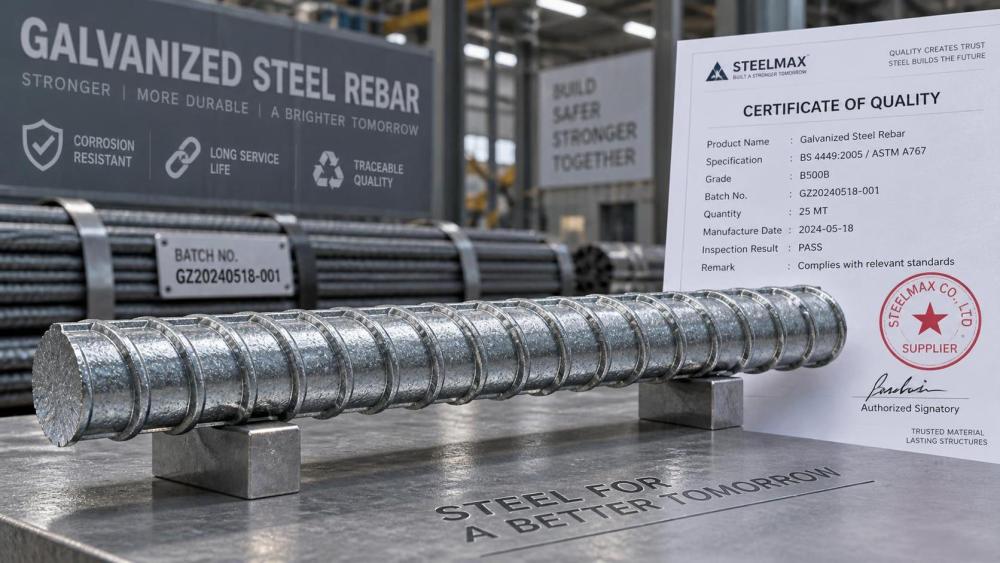
For project materials, a cheaper offer may hide weaker traceability, rougher packing, unclear certificate scope, or unstable lead time. Those gaps can cost more than the initial saving.
For buyers working across civil engineering, concrete reinforcement, coastal projects, infrastructure repair, distributor stock, public works purchasing, and construction material import, the useful question is how the specification behaves after ordering. The product may be processed, installed, repacked, resold, or maintained by a different team from the team that first approved the purchase. That handoff makes clear scope more valuable than a vague quotation. A supplier should be able to explain which assumptions are included, which requirements need confirmation, and which documents or photos can support the buyer's review.
Protect Multi-Batch Orders
Construction and infrastructure orders often arrive in phases. Buyers should preserve approved labels, certificate formats, bundle photos, and arrival feedback to keep later batches consistent.
For buyers working across civil engineering, concrete reinforcement, coastal projects, infrastructure repair, distributor stock, public works purchasing, and construction material import, the useful question is how the specification behaves after ordering. The product may be processed, installed, repacked, resold, or maintained by a different team from the team that first approved the purchase. That handoff makes clear scope more valuable than a vague quotation. A supplier should be able to explain which assumptions are included, which requirements need confirmation, and which documents or photos can support the buyer's review.
Supplier Evaluation Table
Risk Review Before Order Confirmation
The main purchasing risks include coating thickness ambiguity, bend damage, diameter tolerance issues, certificate gaps, mixed bundles, rough handling, and logistics delays on project schedules. These issues can appear during production, shipment, installation, customer acceptance, or repeat ordering. A buyer who waits until arrival inspection may have fewer options, especially when goods are needed for a project schedule or a production line.
Early review should be practical. Ask suppliers to confirm dimensions, grade or model basis, packing method, label format, document availability, shipment preparation, and any known limits. If the product will be processed, ask about handling and fabrication expectations. If it will be installed, ask about interface dimensions and responsibility boundaries. If it will be stocked for resale, ask about visual consistency, reorder control, and packaging durability.
Buyers should also keep a written comparison record. The record does not need to be complicated. It should show the selected keyword, landing page, supplier quotation scope, requested evidence, approved documents, and open questions. That simple file helps purchasing, sales, engineering, and warehouse teams make the same decision from the same facts.
Pre-Approval Workflow for a Cleaner Purchase
A cleaner purchase normally follows a short but disciplined workflow. First, the buyer confirms the real use case and separates critical requirements from preferences. Second, the supplier confirms whether the requested specification is standard, custom, stocked, or subject to production scheduling. Third, both sides review documents and visual evidence before the order moves into a costly stage. Fourth, packing and logistics are checked against the destination, route, storage time, and unloading conditions. Finally, the buyer records the accepted scope so future orders do not restart from memory.
This workflow is useful because many purchasing disputes come from silence rather than open disagreement. The buyer assumes one grade, package, label, inspection document, or accessory scope; the supplier assumes another; both sides discover the gap only after production or shipment. A written pre-approval routine gives both teams a shared reference. It also helps editors and readers understand why the article is practical: it does not simply name a product, but explains how to buy it with fewer avoidable surprises.
Portal Match and Category Rationale
The recommended portal for this article is zdsmetal.com, with the final category Metal & Mining|Steel Market Trends. This is one matched category path from the latest directory, using one second-level category after the vertical bar. It avoids listing several columns separated by punctuation, which keeps the publishing route clearer for the portal editor.
The selected category fits the product's industry: Galvanized Steel and Construction Reinforcement Materials. Chemical resin belongs with polymer materials; heavy trucks belong with transport and tractor categories; steel and coated sheets belong with steel market or metal profile columns; bearings belong with high-precision bearing coverage. When the article category, title, metadata, anchor text, and landing page all describe the same buying topic, the external article is easier to place and easier to review later.
Procurement Checklist
- Confirm the core product keyword: Galvanized Steel Rebar.
- Confirm the landing page URL shown in the metadata.
- Use only the selected final category: Metal & Mining|Steel Market Trends.
- Define application, destination market, quantity range, documents, packing, and acceptance needs before comparing prices.
- Ask each supplier to confirm the assumptions behind the quotation.
- Request practical evidence such as photos, labels, certificates, drawings, inspection notes, or packing records.
- Check shipment and storage risks before the goods leave the supplier.
- Keep approved records for repeat orders and later supplier comparison.
FAQ
Why is one core product keyword used?
One core keyword keeps the article focused and aligns the title, TDK block, metadata, anchor text, and landing page.
Why is there only one external link?
One contextual product link keeps the article natural for readers and avoids turning the content into a promotional link list.
What should buyers compare before choosing a supplier?
Buyers should compare application fit, specification scope, evidence quality, packing, logistics, documentation, communication clarity, and repeat-supply discipline.
How should the article be checked before publishing?
The publisher should confirm that the portal category, product keyword, landing URL, visible TDK, and house style all match the final upload requirements.
- Last One:No more articles
- Next Article:Polycarbonate PC Basics: Why Resin Buyers Need a Clearer Specification MapSep 14, 2026
Related News
- 00
0000-00
Virgin vs Recycled Resin: How to Switch Without Disrupting Production? - 00
0000-00
Why Bio-Based Plastics Still Have to Prove Themselves on the Molding Floor - 00
0000-00
Industrial decarbonization targets slip when baselines are weak - 00
0000-00
Galvanized Steel Rebar Procurement: How Project Buyers Compare Long-Term Value - 00
0000-00
How supply chain network modeling reveals costly distribution gaps
Related tags
Weekly Insights
Stay ahead with our curated technology reports delivered every Monday.