




Is the Energy Transition Faster in Developed or Developing Countries?




The energy transition is not simply faster in developed countries or developing countries. Developed economies often move faster on grid modernization, financing, building efficiency, and the retirement of older high-carbon assets. Developing economies can move faster in new renewable capacity, electrification demand, and the construction of entirely new energy systems. The result depends on what is being measured and what constraint matters most in a particular market.
This distinction matters for project developers, manufacturers, suppliers, investors, and industrial buyers. A country adding large volumes of solar generation may still struggle to connect projects to the grid. Another may have mature transmission networks and strong clean-energy policies but add capacity more slowly because demand growth is limited. Comparing transition speed without separating these conditions leads to poor sourcing, investment, and market-entry decisions.
Start by defining what “faster” means
The question, is energy transition faster in developed or developing countries, has no useful one-word answer because the transition has several moving parts. Renewable installations are visible and easy to compare, but they are only one part of the system. A durable transition also requires transmission capacity, flexible generation or storage, industrial conversion, reliable equipment supply, skilled labor, affordable capital, and rules that can be implemented consistently.
A better question is: faster at what stage of the transition, for which sector, and under which operating conditions? That framing gives a more useful answer than treating national income level as the deciding factor.
Why developing countries can appear to move faster
Developing economies often have rising electricity demand from urbanization, manufacturing, cooling, transport, and expanding access to energy. When the power system must grow anyway, new solar, wind, storage, transmission, and electrified equipment can be added as part of basic infrastructure expansion. This can create very rapid visible growth in clean-energy capacity.
They may also have less legacy infrastructure to replace. A developed market may need to retire or retrofit a large installed base of gas networks, fossil-fired plants, industrial boilers, vehicle fleets, and buildings. A developing market building a new industrial zone, logistics network, or power corridor can choose newer technologies from the start, provided the economics and supply chain work.
That does not mean every fast-growing market is completing a faster transition. New renewable plants may be installed alongside new fossil generation to meet demand quickly. Electricity access can improve while total emissions continue to rise. In this situation, the country is expanding clean energy, but it is not necessarily reducing fossil dependence at the same pace.
The practical lesson is to separate clean-energy growth from system-wide displacement of fossil fuels. They are related, but they are not interchangeable.
Why developed countries can make deeper progress
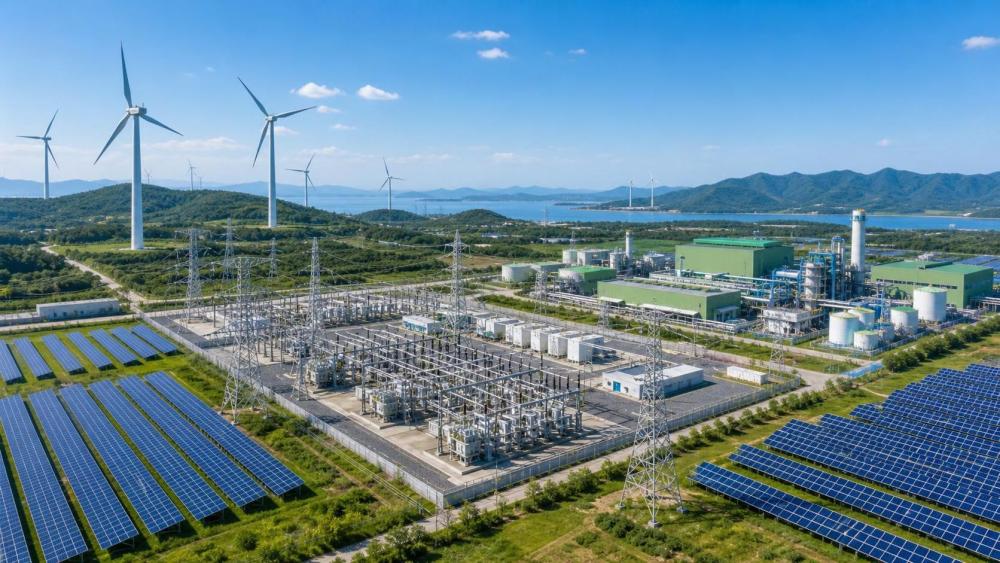
Developed countries generally have more established financial markets, technical institutions, grid operators, testing capability, and regulatory processes. These conditions can make it easier to finance long-lived assets such as offshore wind connections, transmission upgrades, interconnectors, industrial heat electrification, hydrogen infrastructure, carbon capture facilities, and large-scale energy storage.
They are also more likely to have formal mechanisms for managing the difficult part of the transition: changing an existing system without reducing reliability. Replacing dispatchable fossil generation requires more than installing renewable capacity. The system needs forecasting, reserve capacity, flexible demand, storage, grid automation, and protection equipment that can manage different power flows.
However, mature systems can be slow to change. Permitting, land constraints, public opposition, fragmented ownership, aging grids, and complex market rules may delay construction. A country can have ambitious targets and substantial capital but still move slowly at the project level. For suppliers, this often means longer qualification cycles, more documentation, and higher standards for technical compatibility.
Do not confuse investment capacity with deployment speed
Financing is one of the clearest dividing lines, but it should not be treated as a simple advantage for wealthier countries. Developed markets may provide lower-cost capital and more mature contract structures. Yet a well-designed renewable auction, utility procurement program, industrial cluster, or public-private infrastructure package can unlock rapid construction in a developing market.
The more relevant issue is whether a project can carry its risks. Investors and lenders look beyond the price of a solar panel, battery, transformer, electrolyzer, or turbine component. They need confidence in payment collection, currency conditions, land rights, grid connection, equipment delivery, construction capability, and the durability of the offtake arrangement.
For industrial buyers, this affects technology selection. A technically attractive solution may be unsuitable if replacement parts are difficult to obtain, local service is limited, or grid instability requires additional protection and backup equipment. In some markets, a smaller modular system with available service support is more practical than a larger, more advanced design with a fragile supply chain.
Use a sector-by-sector comparison
Energy transition speed changes sharply by sector. Power generation is often the most visible area because renewable projects can be developed as discrete assets. Heavy industry is harder. Steel, cement, refining, chemicals, mining, and high-temperature processing depend on continuous energy supply, feedstock availability, equipment reliability, and long investment cycles.
Developed countries may have stronger capabilities for pilot-to-commercial deployment of industrial decarbonization technologies, especially where companies can absorb higher initial costs and connect to research, engineering, and specialized suppliers. Developing countries may have a strategic advantage where new industrial capacity is being planned, renewable resources are strong, and infrastructure can be coordinated around an industrial hub.
Transport follows a similar pattern. Markets with mature charging networks and reliable distribution grids may support broad electrification of passenger vehicles and fleets. Markets with dense urban travel, high fuel costs, or limited conventional infrastructure may leap directly toward electric two- and three-wheelers, buses, or localized charging models. The winning technology is shaped by daily operating patterns, not just national development status.
A practical way to assess transition speed in a target market
When comparing countries for sourcing, investment, expansion, or project development, use a short decision sequence rather than relying on headline capacity announcements.
- Identify the transition outcome you need. It may be lower power costs, reliable low-carbon electricity, reduced process emissions, energy access, export compliance, or a new equipment market. Each outcome points to different indicators.
- Check demand growth and load shape. Rapid demand growth can support new projects, but it can also overwhelm grid capacity. Examine whether demand is steady, seasonal, industrial, urban, or remote.
- Assess the grid before assessing generation equipment. Connection queues, transmission availability, curtailment risk, voltage stability, and balancing capacity can determine whether a renewable asset produces usable value.
- Map the local supply chain. Consider transformers, switchgear, cable, inverters, storage systems, drilling equipment, pipelines, metals, chemicals, spare parts, and qualified service providers. A project depends on more than its main technology package.
- Separate announced policy from operating execution. A target or incentive matters only when permits, land access, procurement, payment structures, and technical rules allow projects to proceed.
- Test resilience under real operating conditions. Heat, humidity, dust, corrosion, water constraints, logistics interruptions, and variable grid quality can change both equipment specifications and life-cycle costs.
This process is especially useful where the transition involves industrial equipment rather than a single generation asset. An energy storage system, carbon capture unit, biofuel facility, recycled-plastics plant, or electrified process line must fit the surrounding power, materials, maintenance, and transport system. A country’s renewable-growth narrative alone does not answer those questions.
The most common comparison mistakes
Using capacity additions as the only metric. Installed capacity does not reveal utilization, grid congestion, curtailment, or the amount of fossil generation displaced. It is a starting point, not a complete assessment.
Assuming mature markets are automatically easier. They may offer stronger financing and clearer standards, but project timelines can be lengthy and compliance requirements demanding. A slower approval process can affect equipment sales, engineering schedules, and working capital.
Assuming emerging markets are too risky for serious projects. Risks vary widely by country, region, utility, industrial customer, and project structure. Some opportunities are well suited to modular systems, local partnerships, distributed generation, and phased investment.
Ignoring materials and trade exposure. The transition depends on steel, alloys, copper, polymers, specialty chemicals, rare-earth materials, battery inputs, and process equipment. Price movements, export conditions, shipping routes, and supplier concentration can alter project economics after the technology decision has been made.
What this means for energy and industrial decision-makers
Developed countries often provide a stronger environment for complex, capital-intensive transition projects that need reliable grids, advanced engineering, strict quality control, and long-term financing. Developing countries can offer faster growth in new power demand, distributed energy, manufacturing capacity, and greenfield industrial development. Neither category is inherently “ahead” in every meaningful sense.
The most useful comparison is therefore not developed versus developing as a broad label. Compare the specific market’s grid condition, demand trajectory, industrial base, financing structure, equipment supply chain, and ability to execute. A market with modest headline targets but a functioning procurement process and clear connection pathway can be more actionable than one with dramatic announcements but limited implementation capacity.
For teams evaluating products, technologies, and supply options across these markets, structured information is valuable because the relevant evidence is scattered across technical documentation, trade activity, material availability, supplier capabilities, pricing signals, and policy-driven demand. Platforms such as GEMM can help organize this research across energy equipment, metals, chemicals, plastics, storage, carbon management, and related industrial categories before a sourcing or project decision is made.
FAQ
Can a developing country transition faster even if its emissions are rising?
Yes. It can add renewable capacity and expand electricity access quickly while total emissions still increase because energy demand, manufacturing, and transport are growing faster than fossil fuels are being replaced. Measure both clean-energy additions and the change in fossil dependence.
Is grid investment more important than renewable generation?
Neither is sufficient alone. Renewable generation creates low-carbon supply, while grid investment determines whether that supply can be connected, moved, balanced, and used reliably. In constrained systems, grid readiness can be the immediate limiting factor.
Which markets are best for industrial decarbonization equipment?
Look for a combination of stable energy supply, a relevant industrial base, access to required materials or feedstocks, credible project financing, qualified installation and maintenance capability, and a commercial reason to reduce emissions. The country income category is only a rough signal.
Should a supplier prioritize mature or high-growth energy markets?
Prioritize the market where the product fits the actual deployment bottleneck. Mature markets may require certified, highly integrated solutions. High-growth markets may value robust equipment, local serviceability, staged investment, and supply reliability. The product category and delivery model should determine the choice.
Related News
- 00
0000-00
Which sectors are driving demand in the chemical engineering market? - 00
0000-00
How to assess lifecycle emissions from CCUS for low-carbon cement - 00
0000-00
How do energy storage technologies compare for 8-hour discharge? - 00
0000-00
Do mill test reports prove industrial alloys meet ASTM standards? - 00
0000-00
How to verify plastic recycling system suppliers' throughput claims
Weekly Insights
Stay ahead with our curated technology reports delivered every Monday.