




What should companies assess before selecting sustainable energy developers?




What Should Companies Assess Before Selecting Sustainable Energy Developers?
Choosing a sustainable energy developer is not the same as buying a standard piece of industrial equipment. A solar, wind, bioenergy, carbon capture, or energy-storage project may operate for decades, connect to regulated infrastructure, depend on local permits, and affect a company’s exposure to energy prices. The developer’s proposal may look attractive on installed capacity or headline cost, yet those figures reveal very little about whether the project can actually be built, financed, connected, operated, and maintained as promised.
For decision-makers, the practical question is not simply “Which developer has the lowest price?” It is “Which partner can deliver an energy asset that fits our site, operating profile, compliance obligations, and long-term commercial risk?” The strongest sustainable energy developers are usually distinguished by the quality of their project assumptions, not by the confidence of their sales presentation.
Start with the operating need, not the technology label
Companies often begin with a preferred solution—perhaps rooftop solar, a battery energy storage system, renewable gas, or a power purchase agreement. That can narrow the conversation too early. A manufacturing plant with a high daytime load has different needs from a cold-storage warehouse, a chemicals facility with round-the-clock process demand, or a mining operation far from a stable grid connection.
Before comparing developers, define the load profile, critical loads, planned expansion, outage tolerance, fuel usage, available land or roof area, and the company’s preferred ownership model. A developer should ask for this information rather than offering a generic capacity estimate. If a proposal does not explain how generation or storage aligns with hourly demand, it may be optimizing for installed megawatts instead of useful energy.
This matters especially where renewable generation is intermittent. Solar output may be strong when a site needs less electricity; wind resources may be seasonal; batteries may reduce demand charges or improve resilience, but their value depends heavily on dispatch strategy and tariff structure. There is no universal “best” clean-energy configuration. There is only the configuration that performs under the site’s real operating conditions.
Examine technical competence through project assumptions
Technical credentials are important, but a list of past technologies is not enough. Ask prospective developers to show the assumptions behind their energy model: resource assessment method, degradation assumptions, availability targets, curtailment risk, storage cycling logic, grid interconnection constraints, and maintenance approach. A credible team can explain where uncertainty exists and what data would reduce it.
For example, a solar developer should address structural suitability, shading, drainage, roof warranty implications, electrical integration, and access for maintenance—not just panel output. A storage developer should discuss thermal management, fire-safety design, controls integration, replacement planning, and the operating limits that may affect usable capacity. In biofuel, renewable gas, or carbon capture projects, feedstock quality, process reliability, transport logistics, and offtake requirements may matter more than the nameplate capacity on a brochure.
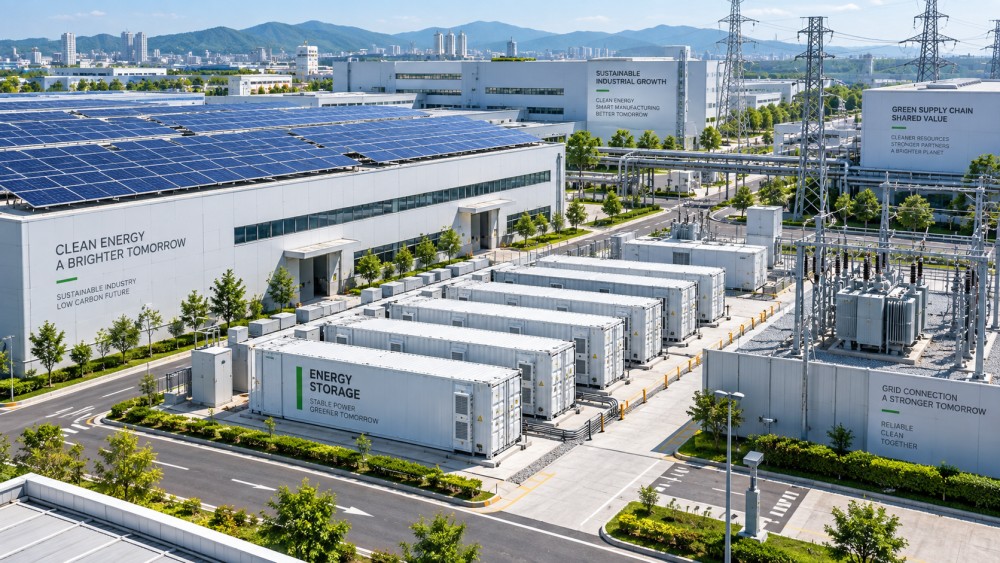
It is also wise to separate the developer’s capability from that of its engineering, procurement, and construction partners. Some developers manage projects directly; others assemble a network of EPC contractors, equipment suppliers, and service providers. Neither model is automatically better, but responsibilities must be clear. When a technical issue emerges during commissioning, the company needs to know who owns the solution, who carries the cost, and who has authority to make decisions.
Check whether the project is genuinely deliverable in the local market
Many energy projects fail to move forward because development risks were treated as administrative details. Land rights, zoning, environmental review, grid capacity, utility approvals, building permits, community expectations, and local content requirements can alter the timeline materially. A developer with strong equipment knowledge but limited local permitting experience may still create a difficult project.
Ask which permits are already secured, which remain conditional, and which parties are responsible for obtaining them. Grid interconnection deserves particular scrutiny. A developer should be able to explain the interconnection study process, likely upgrade requirements, queue position where relevant, and the consequences if the connection date changes. Do not accept a vague statement that “grid access is expected.” The commercial model often depends on it.
The same caution applies to environmental claims. Companies may need renewable energy certificates, emissions accounting support, lifecycle information, or evidence that a project aligns with internal procurement policies. These requirements vary by jurisdiction and reporting framework. Developers should be prepared to identify what can be documented and what still requires verification under the company’s chosen reporting method.
Look beyond the headline price to the contract risk
The cheapest proposal can become the most expensive one if performance terms are weak. Whether the project is purchased outright, leased, financed through a power purchase agreement, or delivered under an energy-as-a-service model, commercial terms should be reviewed alongside technical design.
Key questions include: What output or availability is guaranteed? How is performance measured? What happens when weather, grid curtailment, equipment failure, or site changes affect results? Who pays for major component replacement? Are there escalation clauses, minimum-take obligations, early termination costs, step-in rights, or restrictions on future site expansion?
A useful comparison is to model more than one operating scenario. The base case may assume smooth permitting, expected energy prices, and normal equipment availability. Decision-makers should also examine delayed commissioning, reduced production at the facility, higher interconnection costs, and supplier delays. A developer that is willing to discuss these less comfortable scenarios is generally easier to work with after contract signature.
Test financing strength and supply-chain resilience
Sustainable energy projects can be disrupted long before construction begins. Modules, inverters, transformers, battery cells, switchgear, steel structures, specialty chemicals, control systems, and skilled installation labor may each have different lead times and sourcing risks. A developer should be able to explain its procurement strategy, approved supplier base, equipment substitution rules, and contingency plan for critical components.
Financial strength matters for a related reason. If the developer is responsible for project financing or long-term operations, assess whether it has the capacity to support the project through construction delays, warranty disputes, and future maintenance obligations. This does not require demanding confidential financial information from every bidder. It does require appropriate due diligence on ownership structure, funding commitments, insurance, contractual security, and the parties standing behind performance obligations.
Structured industry resources can make this work more practical. Platforms such as GEMM help teams compare supplier references, technical categories, material and equipment applications, standards information, export activity, and market developments across energy and industrial supply chains. That broader view is useful when a project depends on more than one technology: for instance, solar generation combined with industrial storage, recycled-material construction components, grid equipment, or carbon-management systems.
Assess the developer’s operating life commitment
Construction is visible; long-term operation is where the real test begins. Companies should understand who monitors the asset, how alarms are handled, what spare parts are held, how often preventive maintenance occurs, and how performance reporting will be delivered. For industrial sites, communication between the developer’s control platform and the facility’s existing energy-management or production systems may be as important as the generating equipment itself.
Ask for clarity on end-of-life responsibilities as well. This may include battery replacement, panel recycling, equipment removal, decommissioning reserves, or transfer of operating data. These details are easy to postpone during procurement, but they shape the total risk retained by the asset owner.
Choose the developer that makes uncertainty visible
The best selection process does not reward the proposal with the most optimistic forecast. It identifies the sustainable energy developer that understands the site, explains dependencies plainly, and allocates risk in a way the company can live with. Technical depth, permitting capability, supply-chain discipline, financial backing, measurable environmental claims, and operational support all need to stand together.
Before making a final decision, ask each shortlisted developer to walk through the assumptions that could change the project outcome. The quality of that conversation is often more revealing than the headline price.
Related News
- 00
0000-00
Virgin vs Recycled Resin: How to Switch Without Disrupting Production? - 00
0000-00
Why Bio-Based Plastics Still Have to Prove Themselves on the Molding Floor - 00
0000-00
Industrial decarbonization targets slip when baselines are weak - 00
0000-00
What should companies assess before selecting sustainable energy developers? - 00
0000-00
Can biofuels for aviation meet ASTM fuel certification requirements?
Weekly Insights
Stay ahead with our curated technology reports delivered every Monday.