




How to evaluate upstream energy systems suppliers for project reliability




A supplier can look qualified on paper and still become the point where an upstream project loses time: a critical wellhead component arrives without complete traceability, a skid passes factory testing but cannot be integrated with the site control architecture, or a manufacturer accepts an aggressive delivery date without securing the materials and subcontracted work behind it. In upstream work, those gaps can affect construction sequencing, commissioning, safety reviews, and future maintenance access.
To evaluate upstream energy systems suppliers for project reliability, assess their ability to deliver the exact engineered scope repeatedly under your project’s technical, quality, schedule, and service conditions. Price should be compared only after the supplier has passed defined gates for engineering competence, documented quality control, capacity, logistics planning, and lifecycle support. A low bid that transfers unresolved risk to the project is not a reliable option.
Start with the system boundary, not the supplier list
Supplier evaluations often become unfocused because the request for quotation describes equipment broadly while critical interfaces remain unclear. “Supply a pumping package,” “provide drilling equipment,” or “deliver pipeline valves” may sound sufficient for early sourcing, but each scope can contain design dependencies that materially change supplier suitability.
Before comparing suppliers, define what the system must do and where responsibility begins and ends. This should include operating medium, pressure and temperature envelope, duty cycle, hazardous-area requirements where applicable, control and instrumentation interfaces, utility connections, environmental exposure, maintainability expectations, documentation deliverables, and commissioning responsibilities.
For example, a supplier may have strong experience manufacturing pressure-containing equipment but limited capability in controls integration, packaged-system testing, or field installation support. That does not automatically disqualify the supplier. It does mean the project team must decide whether those interfaces will be managed internally, assigned to another contractor, or retained within one accountable package supplier.
Separate mandatory requirements from preferences
Create a short list of non-negotiable requirements before reviewing proposals. These are conditions that, if unmet, introduce unacceptable technical or execution risk. They may include a specified design code, required material traceability, a defined inspection hold point, compatibility with an existing control system, required documentation language, or the ability to support commissioning within the project location.
Preferences can still influence selection, but they should not be scored as if they carry the same consequence as mandatory items. This distinction prevents a polished commercial proposal from masking a basic compliance gap.
Test technical capability through evidence, not product claims
A supplier’s catalog range or general project references can establish initial relevance, but reliability depends on whether the supplier understands the operating conditions of the specific package. Ask for a technical response that addresses the actual duty rather than simply confirming compliance line by line.
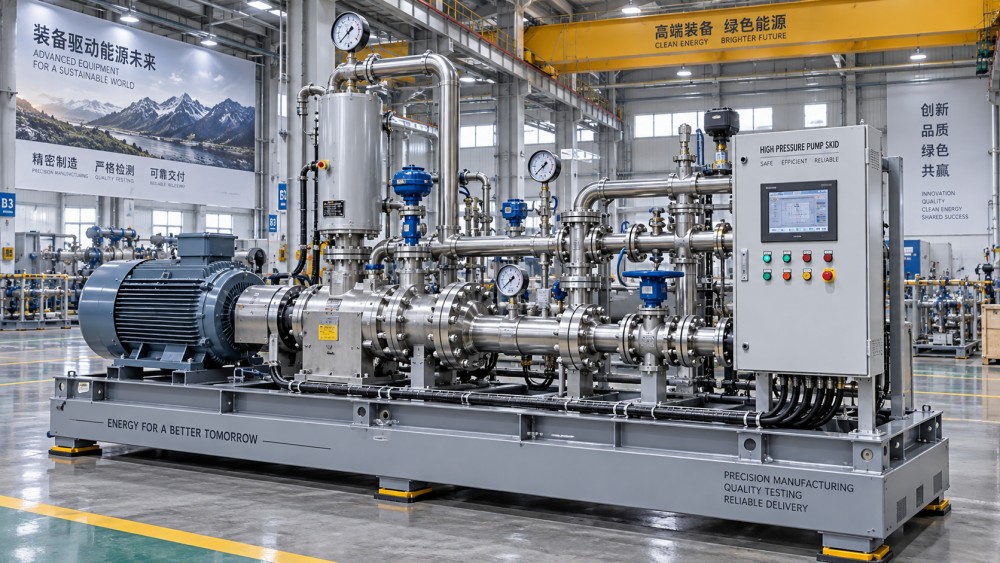
Useful evidence includes design calculations where relevant, data sheets with clear assumptions, general arrangement drawings, instrument and electrical architecture, materials of construction, welding and fabrication procedures when applicable, inspection and test plans, and proposed factory acceptance testing arrangements. The level of detail should match the equipment’s criticality. A simple standard item does not need the same review burden as a custom separation skid, high-pressure pumping unit, subsea-related component, or integrated drilling system.
Technical clarification is also a useful behavioral test. Reliable suppliers identify ambiguous conditions, flag conflicts between specifications, and state exclusions clearly. A proposal that accepts every requirement without questions may be complete, but it may also indicate that the engineering review was superficial. Conversely, frequent clarification requests are not necessarily a problem when they are specific, timely, and directed at genuine design interfaces.
Review quality systems as an execution process
Do not limit quality assessment to asking whether a supplier holds certifications or has a quality manual. The practical question is how the supplier prevents errors from moving downstream. Review the controls used from incoming material through fabrication, assembly, testing, preservation, and release.
For equipment with safety, containment, or uptime consequences, ask how the supplier manages material identification, calibration of test equipment, nonconformance reports, repair approvals, subcontractor quality, and final documentation. Also examine whether inspection points are built into the production plan or added only when a customer requests them.
A useful review asks for examples of the supplier’s documentation format without requesting confidential project records. You need to see whether certificates, inspection records, drawings, revision histories, and test reports can be assembled into a usable turnover package. Poor documentation may not stop a shipment, but it can delay approval, impede installation, and complicate future maintenance or replacement orders.
Verify capacity behind the promised delivery date
Schedule reliability is often misjudged because teams compare quoted lead times rather than the production path required to achieve them. A supplier may have available assembly space but depend on long-lead forgings, motors, electronic components, specialty coatings, third-party testing, or transport permits that are not yet secured.
Ask the supplier to explain the major milestones between order release and shipment. The answer should show engineering release, procurement of critical materials, fabrication or assembly, inspection, testing, documentation completion, packing, and dispatch. For complex packages, identify the point at which a late decision from the project team would affect the critical path.
- Which components have the longest procurement lead time?
- Are those components sourced from approved alternatives or a single source?
- What work is performed in-house, and what is subcontracted?
- Can the supplier provide realistic manufacturing slots rather than a generic lead-time statement?
- What assumptions must be met for the quoted delivery date to remain valid?
Capacity should also be assessed against the supplier’s current workload. It is reasonable to ask whether the proposed order competes with other active projects for engineering resources, test facilities, skilled labor, or specialized subcontractors. The goal is not to obtain commercially sensitive details; it is to determine whether the supplier’s schedule is supported by a credible plan.
Look beyond factory acceptance to field readiness
Factory acceptance testing can confirm that a package operates under defined conditions, but it does not prove that the system will be easy to receive, install, commission, and maintain at the asset. Upstream locations may impose restricted access, lifting limitations, weather exposure, limited utilities, remote communications, local workforce constraints, or restricted access to spare parts.
Evaluate whether the supplier has considered preservation for the expected transport and storage period, packaging suitable for the route, lifting points and handling instructions, site acceptance requirements, commissioning documentation, and recommended startup spares. For control-based equipment, confirm software versions, communication protocols, alarm philosophy, and access arrangements for future troubleshooting.
After-sales capability matters most where downtime is costly or intervention is difficult. Review the supplier’s approach to technical queries, spare-parts identification, replacement lead times, field service availability, and escalation of defects. Avoid treating support as a generic promise. Request named processes: how an issue is logged, who reviews it, what information is required, and how proposed corrective actions are documented.
Use a weighted decision, but keep disqualifiers separate
A scoring model can make supplier selection more transparent, especially when engineering, procurement, quality, construction, and operations stakeholders have different priorities. However, scoring should not allow a supplier to compensate for a critical deficiency with strengths in less important areas. First apply pass/fail gates for mandatory technical, quality, compliance, and delivery conditions. Only then score qualified suppliers.
Weighting should reflect equipment criticality. A standard, non-critical item may place greater weight on availability and commercial terms. A custom process package or safety-relevant component should place more weight on engineering verification, quality controls, testing, and lifecycle support. Record the reason for each score and identify assumptions that must be closed before award.
Before issuing a purchase order, convert the evaluation findings into contractable controls: approved data sheets, drawing-review responsibilities, inspection and test plan hold points, documentation requirements, change-control rules, delivery milestones, packing standards, and acceptance criteria. Supplier evaluation is most effective when the risks identified during selection are carried into execution rather than left in a procurement comparison file.
Related News
- 00
0000-00
Virgin vs Recycled Resin: How to Switch Without Disrupting Production? - 00
0000-00
Why Bio-Based Plastics Still Have to Prove Themselves on the Molding Floor - 00
0000-00
Industrial decarbonization targets slip when baselines are weak - 00
0000-00
How to evaluate upstream energy systems suppliers for project reliability - 00
0000-00
What should companies assess before selecting sustainable energy developers?
Related tags
Weekly Insights
Stay ahead with our curated technology reports delivered every Monday.