




When do energy infrastructure systems become a grid resilience priority




It often starts with a simple question in a planning meeting: is this upgrade still a routine network investment, or has it become something that affects grid resilience? The difficulty is that energy assets rarely announce the shift clearly. A substation expansion, pipeline reinforcement, industrial storage installation, or control-system modernization may look like normal capacity work on paper. Then an outage, supply interruption, weather event, or load spike exposes a bigger issue: the system was carrying resilience risk long before anyone labeled it that way.
That uncertainty creates practical problems. If a company treats resilience-related infrastructure as standard maintenance, it may underestimate interdependencies, delay procurement decisions, or choose equipment only on cost and near-term output. If it treats every asset as mission-critical, budgets become distorted and projects lose focus. In many sectors, the harder part is not understanding that resilience matters. It is recognizing when energy infrastructure systems cross the line from operational necessity to strategic grid priority.
The point where routine assets stop being routine
Many people first notice this shift when the surrounding energy system changes faster than the asset itself. A network that worked reliably under steady industrial demand can become much more fragile when electrification adds new load patterns, distributed generation changes power flows, or extreme weather makes previous design assumptions less useful. In that environment, energy infrastructure systems are no longer judged only by throughput or efficiency. They are judged by whether they help the grid absorb shocks, recover from disruption, and keep supply stable under less predictable conditions.
A common mistake is to wait for visible failure before reclassifying an asset as resilience-relevant. By then, the decision window has already narrowed. A better approach is to look for signals that the system is carrying wider consequences than its original function suggests.
Signals that usually change the conversation
One clear signal is concentration of dependency. If a single facility, transmission segment, storage unit, fuel-handling system, or industrial backup arrangement now supports more critical operations than before, its resilience role has expanded even if its physical footprint has not. Another signal is reduced tolerance for downtime. In sectors where supply continuity affects production scheduling, safety systems, cold-chain operations, water treatment, or digital infrastructure, even short interruptions can create cascading effects.
There is also the issue of flexibility. Assets designed for one-directional flows or predictable load curves may become weak points when the grid must handle intermittent renewables, peak shifting, or localized balancing needs. At that stage, the question is not only whether the infrastructure works, but whether it still fits the behavior of the network around it.
Why older evaluation habits lead to bad timing
In many organizations, project reviews still separate energy decisions into neat categories: generation, transmission, storage, industrial supply, backup, and maintenance. That is useful for budgeting, but less useful for resilience analysis. Real disruption does not stay inside those categories. A fuel logistics issue can affect generation reliability. A transformer bottleneck can limit industrial output. A cyber or control-system weakness can turn a local equipment fault into a wider service problem.
Another habit that causes timing errors is focusing too heavily on average performance. Average utilization, average downtime, and average demand can hide resilience exposure because grid stress usually appears at the edges: storm periods, seasonal peaks, fuel shortages, equipment aging cycles, or sudden changes in load location. When those edge conditions become more frequent, the infrastructure moves into resilience territory even if annual averages still look acceptable.
This is why business decisions around energy infrastructure systems increasingly depend on scenario-based judgment rather than simple replacement cycles. The market trend is not just more spending on hardware. It is a broader shift toward evaluating whether infrastructure can handle variability, interconnection, and recovery demands that were less central before.
A more useful way to decide whether resilience should drive investment
If you are trying to make that call, it helps to stop asking whether an asset is “important” and ask instead how failure would travel through the system. That usually leads to better decisions.
Start with functional dependence. Which operations rely on the asset directly, and which rely on it indirectly? A pipeline compressor, switchgear system, industrial battery, fuel storage area, or process heating unit may appear local, but once you map linked facilities and timing requirements, you can see whether interruption stays contained or spreads.
Then look at substitutability. Can the function be replaced quickly by another route, another supplier, another piece of equipment, or another operating mode? If substitution is slow, expensive, or operationally awkward, resilience value is higher than conventional asset accounting may show.
Recovery speed matters too. Some systems fail gracefully and return quickly. Others take longer because restart procedures, fuel access, cooling cycles, workforce availability, or permitting constraints slow restoration. Infrastructure that is difficult to recover deserves more resilience attention even if outright failure is rare.
Finally, consider exposure to external volatility. That includes weather, fuel supply constraints, port congestion, material lead times, grid congestion, and controls integration risks. A system does not need to be failing today to become a resilience priority. It only needs to sit at the intersection of growing dependence and reduced recovery margin.
Where the market is clearly moving
Across energy and industrial sectors, resilience is becoming less of a standalone emergency-planning topic and more of a filter applied to ordinary infrastructure choices. That affects how buyers review equipment, how engineers compare alternatives, and how investors assess project durability.
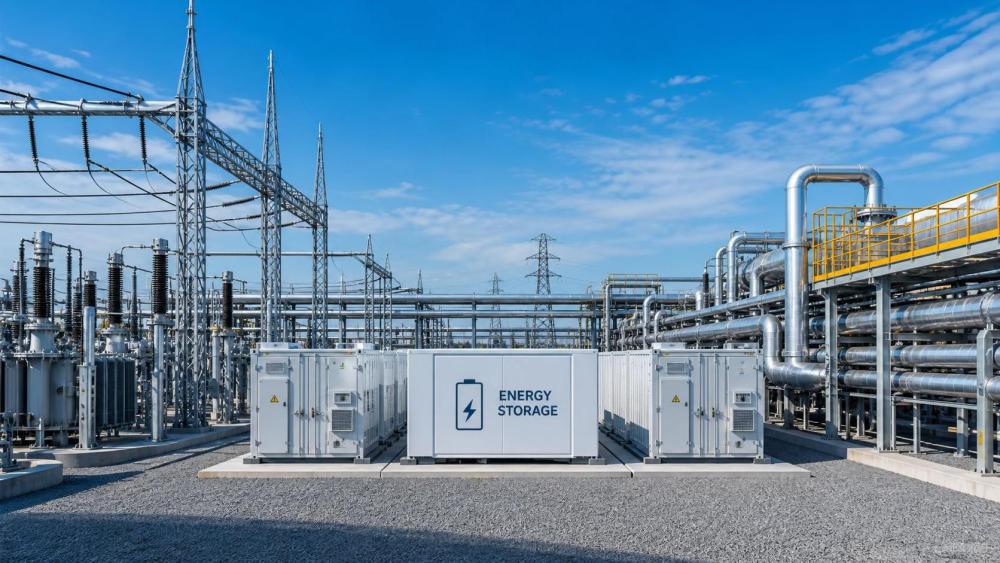
For example, industrial energy storage is often discussed as a decarbonization or peak-management tool, but in some settings it becomes a resilience asset when it supports continuity during grid instability or helps manage short-duration disturbances. Pipeline technologies may be assessed not just for transport capacity, but for monitoring, isolation capability, and restoration practicality. Refining systems, fuel handling equipment, and process utilities may be reevaluated based on whether they can maintain critical operations under constrained energy supply. Even materials decisions, such as steel products, alloys, polymers, seals, or chemical inputs, can become resilience questions when durability, corrosion resistance, and maintenance intervals affect system reliability under harsher operating conditions.
This is also where structured industry information becomes more valuable than broad trend headlines. Decision-makers usually do not need more generic claims about resilience. They need ways to compare technologies, understand application limits, review supply options, and connect technical specifications with actual operational risk. In practice, that means looking across product categories, component standards, process requirements, and market availability at the same time rather than in separate steps.
What usually helps when the decision is still unclear
When the line is blurry, it helps to reframe the project around a few grounded questions. Is this infrastructure expected to handle a new operating pattern, not just more of the old one? Has the consequence of interruption widened beyond the local asset boundary? Are procurement and maintenance choices now constrained by long lead items or tighter performance demands? If the answer to several of those is yes, resilience should probably move from background concern to explicit project criterion.
At that point, the practical work becomes more disciplined. Teams often need to compare product information, technical guidance, supplier capability, and market movement together instead of assigning them to different departments with little coordination. A structured intelligence source can help reduce that fragmentation by making it easier to review system categories, component applications, material performance, production processes, export conditions, and pricing signals before committing to a sourcing or upgrade path.
That does not eliminate uncertainty, but it does make the decision less reactive. Instead of waiting for a disruption to prove the asset was critical, organizations can identify earlier when resilience requirements are already shaping the economics and technical logic of the project.
In the end, energy infrastructure systems become a grid resilience priority when their role expands beyond delivering energy in normal conditions and starts determining whether the wider system can withstand strain, adapt, and recover. The important shift is not rhetorical. It changes how infrastructure is specified, compared, financed, and maintained. For anyone making long-horizon decisions, recognizing that shift early is often the difference between a project that merely operates and one that holds up when the grid is under pressure.
Related News
- 00
0000-00
Which sectors are driving demand in the chemical engineering market? - 00
0000-00
How to assess lifecycle emissions from CCUS for low-carbon cement - 00
0000-00
How do energy storage technologies compare for 8-hour discharge? - 00
0000-00
Do mill test reports prove industrial alloys meet ASTM standards? - 00
0000-00
How to verify plastic recycling system suppliers' throughput claims
Weekly Insights
Stay ahead with our curated technology reports delivered every Monday.