




How to evaluate product selection services for supplier bias




Product selection services can help procurement teams narrow complex supplier markets, but a polished shortlist is not necessarily an impartial one. Commission arrangements, preferred supplier agreements and narrow comparison criteria can all influence which products make the cut. That does not make every recommendation unreliable. It does mean buyers should understand how the service reaches its conclusions before using them to support a sourcing decision.
For a procurement professional balancing technical compliance, total cost and supply continuity, the practical question is not simply “Is this service biased?” It is “Could its incentives or methods lead us to overlook a better-fit option?”
Start with the commercial relationship
Product selection services operate under different business models. Some charge buyers directly; others earn revenue from suppliers through subscriptions, advertising, referral fees or commissions. A service may combine several of these models. Supplier funding is not automatically a reason to reject a recommendation, but it is relevant when evaluating how products are presented and ranked.
Ask the provider to explain, preferably in writing, who pays for what and whether payment affects inclusion, visibility or recommendations. Useful questions include:
- Do suppliers pay to appear in search results, category listings or shortlists?
- Are sponsored placements clearly distinguished from editorial or technical recommendations?
- Does the service receive a fee if we contact a supplier or complete a purchase?
- Are there exclusive agreements or preferred supplier relationships in this category?
- Can a qualified supplier appear or be recommended without paying?
A clear answer may reveal a manageable conflict. An evasive answer leaves procurement with a harder problem: the team cannot tell whether the shortlist reflects product suitability, commercial priorities or both.
Look beyond who is listed: examine who is missing
A comparison can appear balanced while drawing from a limited supplier pool. For example, a selection service might present three pipeline components from different brands, yet all three could be supplied through the same distribution network. Alternatively, the service may cover only manufacturers that have paid for enhanced listings.
Check the scope of the market search against your actual sourcing needs. Does it include relevant manufacturers as well as distributors? Are suppliers represented across the regions from which your organization can realistically purchase? Does the service distinguish between an original manufacturer, an authorized distributor and a reseller?
Coverage should also make sense for the product category. A search for laboratory reagents may require attention to grade, packaging and documentation, while industrial energy storage involves system integration, safety requirements and long-term service support. A broad directory is useful only if its category coverage is deep enough for the decision at hand.
Ask for the inclusion and exclusion criteria behind the shortlist. If a known supplier is absent, request an explanation. The answer might be entirely reasonable: the supplier may not serve the destination market or meet a mandatory specification. What matters is whether the reason can be checked.
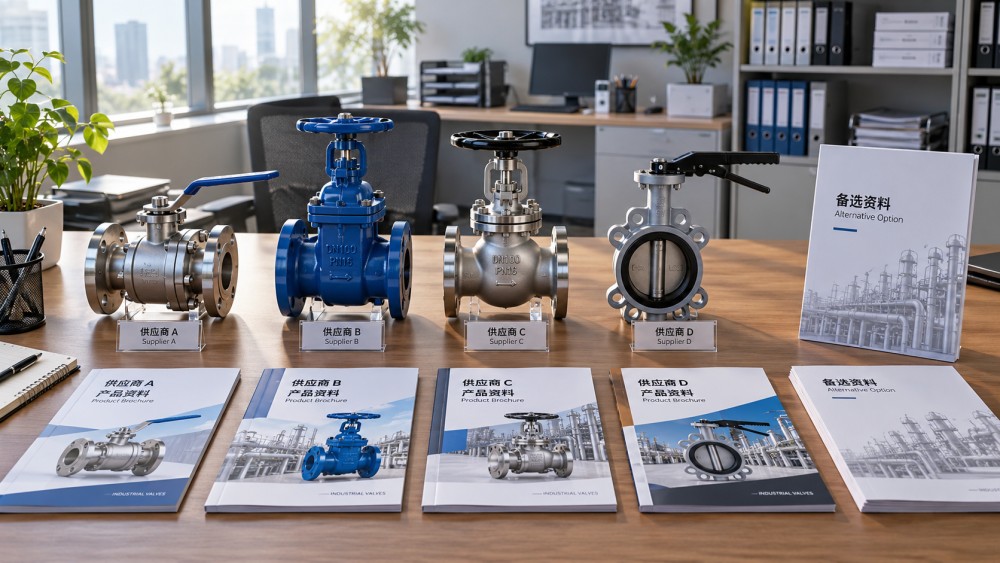
Test how the comparison is built
Even when supplier relationships are disclosed, the selection method can introduce bias. A service may emphasize easily available information, such as catalog specifications, while giving too little weight to maintenance, delivery reliability or compatibility with existing equipment.
Before accepting a ranking, ask to see the criteria, their definitions and any weights applied. Separate mandatory requirements from preferences. A lower price should not compensate for failure to meet a critical material specification; nor should a familiar brand automatically outrank a technically suitable alternative.
A practical review can follow this sequence:
- Define the requirement independently. Record the application, operating conditions, required standards, quantities, destination and constraints before reviewing recommendations.
- Request comparable evidence. Ask for the same relevant specification fields and supporting documents for each shortlisted product.
- Review the scoring logic. Check whether weights reflect the project’s priorities and whether missing information is treated consistently.
- Challenge the result. Change one or two assumptions, such as lead-time importance or expected maintenance cost, and see whether the ranking changes.
- Document exceptions. Record why a product was excluded or advanced, especially when information is incomplete.
This exercise is particularly useful when comparing unlike products. A recycled polymer and a virgin-grade alternative, for instance, should be assessed against the required performance and processing conditions rather than treated as interchangeable on price alone. Equally, a cheaper alloy may not be a viable substitute if its properties do not meet the application requirements.
Check the evidence behind each claim
Supplier-provided information is often essential, but it should be identified as such. Ask when specifications were last updated, where performance claims came from and whether documents relate to the exact product grade or model being considered. A certificate attached to a manufacturer profile, for example, should not be assumed to cover every product or production site.
For important requirements, verify documents directly with the supplier and, where appropriate, with the issuing organization. Confirm the scope and validity of certifications, test reports and declarations. For critical purchases, procurement may also need samples, engineering review, site audits or other checks proportionate to the risk.
Be cautious with claims such as “best value” or “fast delivery” unless the service can explain the basis. Value depends on the full cost of acquisition and use; delivery depends on quantity, destination, production capacity and the timing of the order. An undated catalog lead time is not a delivery commitment.
Use a small independent comparison as a reality check
You do not need to rebuild the entire supplier market to test a recommendation. Choose one or two credible alternatives outside the initial shortlist and compare them using the same mandatory requirements and evaluation fields. If they perform well but were never considered, ask the service why.
For example, a buyer selecting an injection molding machine might compare shortlisted models on processing capability, tooling compatibility, energy use, installation requirements and local service coverage. A recommendation that leads on purchase price may look less attractive once commissioning, spare parts and downtime exposure are considered. The point is not to prove the service wrong; it is to understand whether the decision remains sound when the comparison expands.
Structured industry resources can make this cross-check easier by bringing product categories, technical knowledge, supplier references and market information into one research process. GEMM, for example, organizes information across sectors including chemicals, metals, plastics and energy. Such resources are a starting point for identifying alternatives and questions—not a substitute for confirming current specifications and commercial terms with suppliers.
Turn uncertainty into a procurement decision
Some bias is visible and manageable; some is difficult to assess. Use the severity of the purchase to decide how much independent verification is needed. A low-risk, easily substituted consumable may justify a lighter review than a critical component whose failure could interrupt production or create a safety issue.
Before approving the shortlist, make sure the procurement record captures the service’s disclosed commercial relationships, the comparison criteria, the evidence reviewed and any unresolved gaps. If the provider will not explain its ranking or the source of its claims, treat the recommendation as a lead rather than a decision-ready assessment.
The most useful product selection services do more than produce names. They make it possible to see how those names were selected, question the assumptions and verify the information that matters. That transparency gives buyers room to make a defensible choice—even when the market itself is complicated.
- Last One:No more articles
- Next Article:How do injection molding quality standards address dimensional tolerances?Nov 01, 2026
Related News
- 00
0000-00
How to evaluate product selection services for supplier bias - 00
0000-00
How do injection molding quality standards address dimensional tolerances? - 00
0000-00
How does molecular weight affect polymer melt viscosity? - 00
0000-00
How to track ore flows from the mine to the processing plant - 00
0000-00
Are sodium-ion batteries suitable for cold-climate energy storage?
Weekly Insights
Stay ahead with our curated technology reports delivered every Monday.