




What makes a sustainable energy transition financially viable?




A sustainable energy transition becomes financially viable when the economics of generation, storage, networks, fuels, and industrial assets can withstand real operating conditions rather than only favorable planning assumptions. Falling equipment costs matter, but they are only one part of the investment case. Projects also depend on permitting timelines, grid access, material inputs, financing terms, maintenance capability, contractual revenue, and the cost of managing variability.
The market is increasingly separating concepts that are technically low-carbon from those that can be financed, built, insured, and operated over their intended life. This distinction affects utility-scale renewable plants, distributed energy systems, industrial electrification, biofuel production, carbon capture installations, hydrogen facilities, and energy storage projects. A technology can be commercially promising while still carrying risks that make its cash flows difficult to value.
Lifetime economics carry more weight than headline capital cost
Initial capital expenditure remains highly visible because it determines the size and timing of funding needs. Yet a lower purchase price does not automatically produce a lower project cost. A solar module, battery container, electrolyzer stack, transformer, pipeline valve, or wind turbine component must be assessed alongside freight, installation labor, civil works, interconnection equipment, commissioning, spare parts, warranties, and expected replacement intervals.
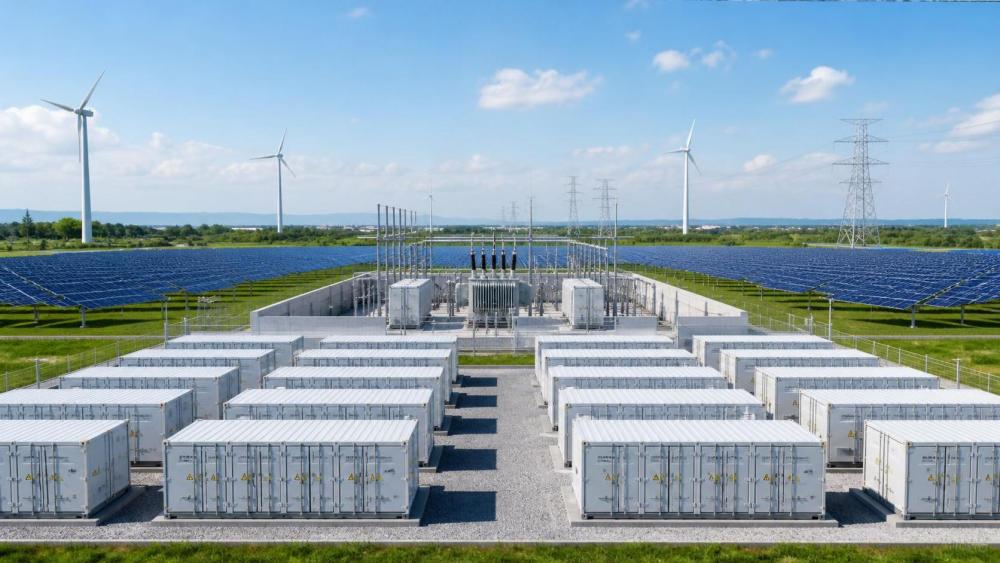
For energy storage, for example, the relevant question is not simply the quoted cost per unit of capacity. Usable capacity, discharge duration, cycle limits, thermal controls, round-trip efficiency, degradation behavior, fire protection design, and augmentation requirements all affect lifetime revenue. A system that appears inexpensive at installation may require earlier replenishment or deliver less usable energy during high-value dispatch periods.
The same principle applies to industrial electrification. Replacing a fossil-fuel-fired process with electric heating may reduce direct emissions, but the financial result depends on load profile, connection capacity, local power pricing, downtime during installation, equipment utilization, and whether the process can respond flexibly to electricity market conditions. Where production must run continuously, the cost of firm power and backup arrangements can materially change the business case.
Revenue quality determines whether low-carbon assets can attract capital
Long-term demand is valuable when it is reflected in credible commercial arrangements. Projects with uncertain sales volumes or highly variable prices may still proceed, but they generally require stronger returns, more conservative leverage, or a sponsor willing to accept market exposure. Revenue structures can include fixed-price supply contracts, indexed contracts, capacity payments, tolling arrangements, renewable power purchase agreements, or internally avoided energy costs. Their quality depends on duration, price adjustment mechanisms, volume commitments, credit strength, curtailment provisions, and remedies when delivery is disrupted.
Merchant exposure deserves particular scrutiny. Wholesale power prices may decline during periods of abundant renewable generation, especially where transmission is constrained. Storage can shift output to higher-value hours, but only if the asset can access those hours reliably and if cycling economics remain sound. A model that assumes constant spreads, unrestricted grid dispatch, or no congestion can overstate future returns.
For low-carbon fuels, revenue depends on both the physical product and the delivery chain. Hydrogen, renewable natural gas, sustainable liquid fuels, and captured carbon dioxide may require dedicated compression, storage, blending, transport, and offtake infrastructure. A production facility without a dependable route to its customer can become an underutilized asset even when demand appears strong on paper.
Supply chains are part of the financial model
A sustainable energy transition relies on materials and components with different supply characteristics. Copper and electrical steel influence cable, transformer, and motor availability. Lithium, nickel, graphite, manganese, and other battery inputs may affect storage equipment pricing and delivery schedules. Rare-earth materials can be relevant to certain permanent-magnet applications. Specialty polymers, corrosion-resistant alloys, catalysts, membranes, and process chemicals may be decisive in more complex conversion or capture systems.
Financial viability improves when procurement assumptions reflect the full bill of materials rather than an equipment quote alone. Lead times for switchgear, high-voltage transformers, inverters, compressors, heat exchangers, and control systems can delay commissioning. Transport constraints also matter: oversized equipment may require route studies, port handling, specialized lifting, and seasonal access planning. Delays can extend construction interest, postpone revenue, and create exposure to expiring contracts or incentives.
Supplier concentration should be examined at the component level. An engineering contractor may have broad capabilities while relying on a limited source for a critical stack, cell format, gearbox, insulation material, or power-electronics module. Alternative suppliers are useful only when designs, qualification requirements, performance guarantees, and delivery terms allow substitution without a major redesign.
Infrastructure constraints can outweigh technology performance
Grid connection is often treated as an administrative milestone, although it is a central economic variable. Connection studies may identify network upgrades, reactive power equipment, protection changes, export limits, or curtailment risk. These costs and obligations need to be allocated clearly. A renewable plant may have strong resource quality, yet limited transmission capacity can reduce delivered output and create uncertainty around operating revenue.
Site conditions introduce another layer of risk. Foundation design depends on soil conditions, drainage, seismic requirements, frost, wind loading, and access for construction equipment. Coastal or chemically aggressive environments can require higher-grade coatings, stainless steels, engineered plastics, or corrosion-control systems. These selections increase upfront cost but may reduce unplanned maintenance and premature failure. The appropriate choice follows the actual exposure profile, not a generic material specification.
For carbon capture and industrial process projects, integration risk can be more significant than the capture equipment itself. Steam demand, solvent handling, heat integration, flue-gas composition, impurity management, compression power, and outage coordination should be tested against plant operations. A capture rate specified under controlled conditions may not translate directly to a facility with fluctuating loads or variable feedstock quality.
Policy support changes economics, but it should not conceal weak fundamentals
Tax measures, grants, production credits, carbon pricing, contract mechanisms, public finance, and permitting reforms can reduce the gap between conventional and low-carbon alternatives. They also create conditions that investors will evaluate carefully: eligibility rules, documentation requirements, timing of payment, transferability, domestic-content conditions, emissions accounting methods, and the treatment of project modifications.
A resilient model separates base operating economics from policy-linked value. This makes it easier to see whether the project remains workable if approval is delayed, a qualification threshold is missed, construction costs rise, or output is lower than forecast. It also prevents incentives from being counted twice through both a lower capital assumption and an inflated revenue assumption.
Carbon-related income requires similar discipline. The value of avoided or captured emissions can depend on monitoring boundaries, measurement methods, custody records, storage arrangements, and contractual ownership of environmental attributes. Where those elements remain unsettled, projected value should be treated as contingent rather than equivalent to contracted operating revenue.
Risk allocation shapes the cost of capital
Financing terms reflect uncertainty as much as expected return. Clear contracts can place construction, performance, availability, fuel, grid, and price risks with the parties best able to manage them. Poorly defined interfaces have the opposite effect. If a storage integrator, civil contractor, grid operator, software provider, and equipment supplier each control part of system performance, responsibility for a shortfall must be explicit.
- Construction schedules should link equipment delivery, site readiness, grid works, testing, and acceptance milestones rather than treating them as independent workstreams.
- Performance guarantees need operating conditions, measurement methods, exclusions, and remedy limits that match the revenue model.
- Maintenance planning should identify critical spares, service response times, software support, and the availability of qualified repair capacity in the project region.
- Currency exposure can be material when equipment, fuels, debt, and revenues are denominated differently.
Sensitivity analysis is most useful when it tests operational combinations rather than moving one input at a time. Lower energy output may coincide with lower market prices, delayed interconnection, or higher balancing costs. A realistic downside case therefore connects technical performance, logistics, financing, and contractual consequences.
Financially viable transition assets are built on evidence that remains credible after assumptions are challenged. Cost discipline, durable supply arrangements, workable infrastructure, dependable revenues, and transparent risk allocation create a foundation for investments that can continue operating through changing market conditions.
Related News
- 00
0000-00
Which sectors are driving demand in the chemical engineering market? - 00
0000-00
How to assess lifecycle emissions from CCUS for low-carbon cement - 00
0000-00
How do energy storage technologies compare for 8-hour discharge? - 00
0000-00
Do mill test reports prove industrial alloys meet ASTM standards? - 00
0000-00
How to verify plastic recycling system suppliers' throughput claims
Weekly Insights
Stay ahead with our curated technology reports delivered every Monday.