




When does a supply chain resilience framework for sourcing reduce disruption risk?




A supply chain resilience framework for sourcing reduces disruption risk only when it moves beyond policy language and becomes a decision tool. For business leaders, that means gaining timely visibility into supplier health, material dependence, logistics constraints, pricing volatility, and regional concentration before disruption becomes an operational or financial problem.
In practice, the framework works when it helps teams compare alternatives early, set sourcing priorities, and act on credible market intelligence. Without that operational layer, resilience remains a concept rather than a measurable reduction in procurement risk.
What Decision-Makers Are Really Asking
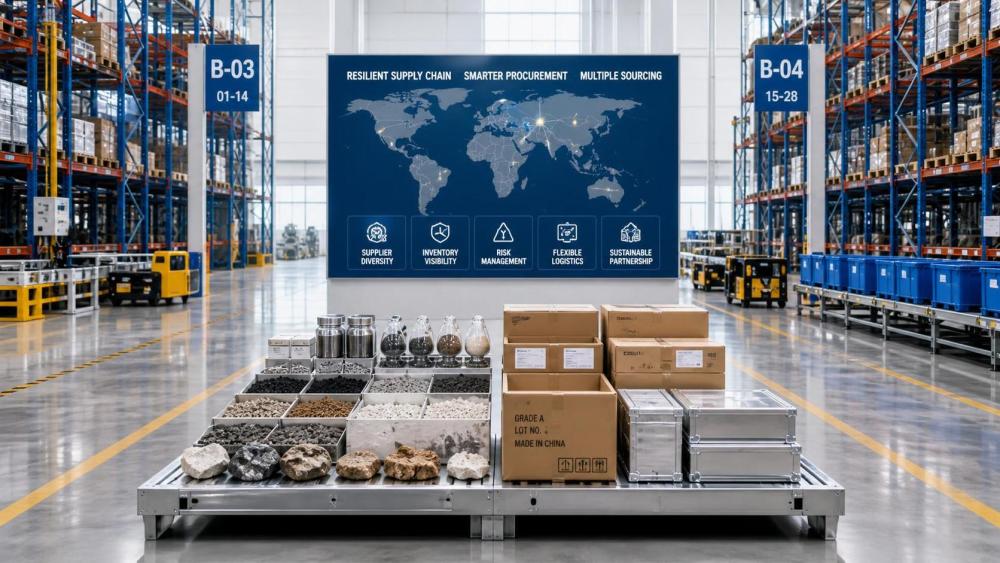
Executives searching for a supply chain resilience framework for sourcing are rarely looking for theory alone. They want to know when investment in resilience produces lower disruption exposure, better continuity, and stronger control over cost, lead time, and supplier performance.
The core search intent is practical: under what conditions does a structured sourcing framework actually reduce business risk, and how can leaders tell whether their current procurement model is too reactive?
For enterprise decision-makers, the biggest concern is not whether disruption exists. It is whether the organization can identify vulnerable supply points early enough to prevent production delays, contract failures, margin erosion, or customer service breakdowns.
When a Supply Chain Resilience Framework Actually Reduces Risk
A framework becomes effective when it improves decisions before disruption hits. If it only documents procedures after a crisis, it does little to reduce real exposure.
The first condition is visibility across suppliers, materials, and regions. A company cannot reduce sourcing risk if it lacks a clear map of who supplies critical inputs, where those inputs originate, and which routes or jurisdictions create concentration risk.
The second condition is prioritization. Not every purchased item requires the same resilience strategy. The framework should distinguish between strategic materials, hard-to-substitute components, regulated inputs, and routine commodities so resources go where disruption would hurt most.
The third condition is access to current market intelligence. Resilience depends on more than supplier scorecards. Buyers need pricing trends, export developments, policy shifts, freight constraints, and signals of tightening supply to make decisions before the market fully reacts.
The fourth condition is executable alternatives. A framework reduces disruption risk only when the business has backup suppliers, approved substitute materials, alternative shipping options, or regional diversification pathways that can be activated quickly.
The fifth condition is governance. If sourcing, operations, engineering, finance, and compliance evaluate risk differently, response slows down. A useful framework creates shared triggers, common metrics, and clear ownership for escalation and action.
What Business Leaders Should Evaluate First
Decision-makers should begin by identifying where disruption would create the largest business impact. That usually includes revenue-critical product lines, essential feedstocks, long-lead equipment, and materials with limited supplier pools or difficult qualification requirements.
They should then examine three layers of exposure. The first is supplier exposure, including financial stability, capacity reliability, quality consistency, and dependency on single facilities. The second is market exposure, such as price swings, shortages, and demand shocks. The third is geopolitical and regulatory exposure.
This matters across industries covered by GEMM, from chemicals and metals to polymers and energy systems. A sourcing model that appears stable in normal conditions may be highly vulnerable when export controls, environmental regulation, trade friction, or logistics interruptions affect a specific region.
Leaders should also ask whether their teams can compare technical substitutes without slowing projects. In sectors involving engineered materials, process chemicals, alloys, or industrial equipment, substitution decisions must consider performance, certification, and application fit, not just price.
How the Framework Creates Measurable Business Value
The strongest case for a supply chain resilience framework for sourcing is not abstract preparedness. It is measurable business value in continuity, speed, and margin protection.
First, it reduces the probability of sudden supply failure by identifying concentrated dependencies early. A company sourcing a critical polymer from one country or a specialized alloy from one processor gains time to qualify alternatives before a disruption affects production.
Second, it improves procurement speed under pressure. When supplier references, product specifications, standards, application guidance, and market signals are already structured, teams make faster sourcing decisions during volatile periods.
Third, it improves financial control. Early visibility into price movement, freight changes, and constrained supply allows buyers to adjust contract strategy, inventory policy, or sourcing mix before costs rise sharply.
Fourth, it supports stronger internal alignment. A resilience framework gives procurement, engineering, and leadership a common basis for discussing tradeoffs between cost, security of supply, qualification effort, and operational continuity.
For senior management, this is where resilience becomes economically credible. It should protect revenue, reduce emergency buying, shorten response time, and lower the cost of making high-stakes sourcing decisions under uncertainty.
What Weak Frameworks Get Wrong
Many resilience programs fail because they stay too general. They list risks but do not connect those risks to specific materials, suppliers, applications, or sourcing decisions.
Another common problem is overreliance on annual supplier reviews. In volatile sectors, a supplier that passed compliance checks six months ago may still face current stress from energy prices, trade restrictions, raw material shortages, or regional logistics bottlenecks.
Some companies also mistake multi-sourcing for resilience. Adding more suppliers helps, but it does not solve problems if all alternative sources depend on the same geography, feedstock, transport corridor, or regulatory environment.
Others focus too narrowly on direct suppliers. Real disruption often begins deeper in the chain, such as upstream mining concentration, refinery outages, reagent shortages, or equipment component dependencies that are not visible in ordinary procurement records.
How to Tell Whether Your Organization Is Ready
Business leaders can test framework readiness with a few direct questions. Do teams know which sourced items are most critical to revenue or operations? Can they identify single points of failure within suppliers, materials, and regions? Do they have qualified alternatives for the highest-risk categories?
They should also ask whether market and technical intelligence are connected. If product data, supplier references, application knowledge, standards information, and price trends sit in separate systems, decision quality slows and blind spots widen.
Readiness also depends on response discipline. A framework is useful when predefined thresholds trigger action, such as abnormal price movement, export restrictions, delivery instability, or signs of supplier distress.
If those triggers do not exist, companies tend to respond late. At that point, choices are limited, switching costs rise, and disruption management becomes more expensive than resilience planning would have been.
Why Structured Industry Intelligence Matters
In complex sourcing environments, fragmented information is a major risk factor. Decision-makers need more than supplier lists. They need structured context that connects products, technologies, applications, market movements, and supply capability.
This is especially relevant in industries where technical specifications, certification requirements, and upstream dependencies directly shape sourcing options. A platform such as GEMM becomes valuable when it helps users compare materials, understand application fit, assess supplier capability, and monitor changes affecting availability and cost.
That structured intelligence gives procurement and leadership teams a more realistic basis for resilience planning. It turns scattered market signals into sourcing insight that can support faster qualification, better scenario planning, and more defensible supplier decisions.
Conclusion
A supply chain resilience framework for sourcing reduces disruption risk when it gives decision-makers usable visibility, clear priorities, reliable market signals, and actionable alternatives. The framework must improve real procurement choices, not simply describe risk in general terms.
For enterprise leaders, the question is less about whether resilience matters and more about whether their current sourcing process can detect exposure early, evaluate options intelligently, and respond before disruption becomes a business loss. When supported by structured industry intelligence, resilience stops being a compliance exercise and becomes a practical sourcing advantage.
Related News
- 00
0000-00
Which sectors are driving demand in the chemical engineering market? - 00
0000-00
How to assess lifecycle emissions from CCUS for low-carbon cement - 00
0000-00
How do energy storage technologies compare for 8-hour discharge? - 00
0000-00
Do mill test reports prove industrial alloys meet ASTM standards? - 00
0000-00
How to verify plastic recycling system suppliers' throughput claims
Weekly Insights
Stay ahead with our curated technology reports delivered every Monday.