




How overcapacity shapes the ferrous metallurgy market outlook




Excess steelmaking capacity puts a persistent ceiling on pricing power, but it does not make every steel product cheap or every producer uncompetitive. The ferrous metallurgy market outlook depends on where surplus capacity sits, which products it can supply, and whether those tonnes can reach buyers profitably. For business leaders, the likely consequence is an uneven market: pressure on commodity steel margins alongside periods of tighter availability in particular grades, specifications, or regions.
A durable recovery therefore requires more than a rise in steel orders. Demand must absorb available output, or enough capacity must leave the market to change producers’ behavior. Until that balance improves, price increases can attract additional production and lose momentum. Buyers may gain negotiating room, while steelmakers and investors face a harder question: which assets can earn acceptable returns when competitors have strong incentives to keep operating?
Why surplus capacity can outlast weak demand
Steel plants have substantial fixed costs, and reducing production does not remove financing obligations, maintenance needs, or labor commitments. Integrated operations also face technical and financial constraints when adjusting output. A producer may continue selling at a weak margin if the revenue covers variable costs and contributes something toward unavoidable expenses.
This helps explain why poor profitability does not automatically produce rapid capacity closures. Owners may anticipate a demand recovery, lenders may support continued operation, and governments may weigh employment or industrial security when considering restructuring. These responses can prolong the gap between what the industry could produce and what customers will buy at remunerative prices.
Temporary production cuts offer less evidence of market repair than permanent capacity retirement. An idled furnace can return when prices improve. A closed site with equipment dismantled represents a more lasting change. Announced closures also need to be assessed against new plants, expansions, and productivity improvements elsewhere; removing older equipment does not necessarily reduce total supply potential.
Capacity utilization is useful, but its interpretation needs care. Nameplate capacity measures theoretical capability, while commercially available output depends on maintenance, energy access, raw materials, operating restrictions, and product qualification. A market can have substantial nominal overcapacity while lacking reliable supply for a demanding application.
For planning purposes, distinguish a cyclical improvement from a structural one. Stronger orders can lift utilization and margins for a period. A more durable improvement requires demand growth that persists, effective retirement of competing capacity, or barriers that materially limit access to a particular market.
Trade redistributes the pressure—and changes who benefits
When domestic demand cannot absorb production, mills have an incentive to seek export customers. Additional offers can weaken prices in accessible destinations and force local producers to choose between defending volume and protecting margins. The pressure can also travel indirectly: a producer displaced from one market may compete more aggressively in another.
Trade measures complicate this adjustment. Duties, quotas, safeguards, and other restrictions can raise the cost of imports or constrain volumes, depending on the jurisdiction and product. They can support domestic pricing, but they do not by themselves remove the underlying surplus. Exporters may redirect shipments, while buyers reassess origins, delivery routes, and eligible suppliers.
Consequently, a global surplus does not guarantee a low delivered price for an individual buyer. Freight, duties, financing, currency movements, and compliance costs can absorb an apparent discount. Product scope and origin rules also matter: two commercially similar offers may carry different import liabilities.
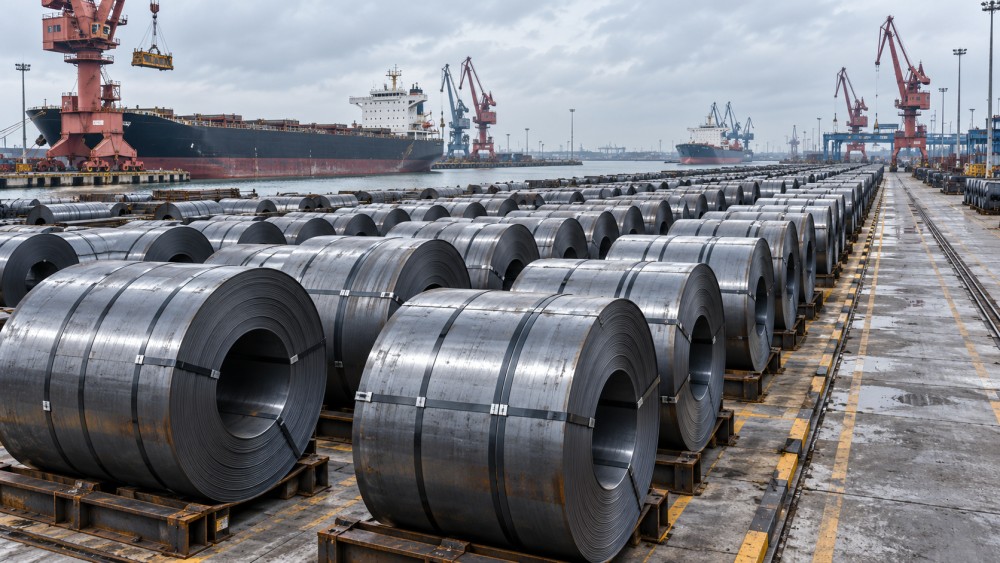
Consider a manufacturer comparing domestic coil with a lower-priced import offer. The relevant comparison is the cost of usable material arriving when required, including applicable duties, inventory financing, and the consequences of delay or rejection. An attractive mill quotation may lose its advantage if the shipment creates excess inventory or cannot satisfy the buyer’s qualification requirements.
For executives, regional price differences deserve as much attention as the global direction. A widening gap between domestic and export prices may reflect trade protection, freight constraints, or differences in specification. Before treating that gap as a sourcing opportunity, establish whether competing material can actually enter the market and serve the intended application.
Cost position and product mix determine who absorbs the damage
Overcapacity puts pressure on producer margins when competition forces steel prices down faster than production costs fall. Lower iron ore, coal, scrap, or energy costs can offer relief, but the benefit may pass through to customers as mills compete for orders. A favorable raw-material cycle does not automatically restore profitability.
The production route matters, although broad rankings can mislead. Blast furnace–basic oxygen furnace operations and electric arc furnace operations have different exposure to raw materials, power prices, operating flexibility, and emissions obligations. Neither route has a universal cost advantage. Local electricity economics, metallic feedstock quality, logistics, and plant efficiency can change the comparison substantially.
Emissions requirements add another layer. Where producers face carbon costs or customers require verified emissions performance, an efficient plant may gain a commercial advantage. Yet lower-emissions production still needs customers willing or required to pay enough to support its costs. Adding new capacity for a cleaner product can deepen the overall surplus if older capacity continues operating and demand does not expand.
Product mix can provide a degree of protection. Surplus commodity-grade capacity does not immediately translate into qualified supply for demanding automotive, electrical, or engineering applications. Chemistry control, processing capability, consistency, and customer approval can limit substitution. Even these segments remain exposed if additional producers qualify or customers reduce consumption.
Supplier assessment should therefore go beyond size and quoted price. Financial resilience, maintenance discipline, access to working capital, and the profitability of the relevant product line influence whether a mill can sustain dependable service. A heavily discounted offer deserves closer examination when the supplier is also extending lead times, seeking unusual payment terms, or struggling to maintain specification consistency.
What would change the outlook—and the business decision?
A useful market view separates a temporary price rebound from evidence that surplus supply is becoming less disruptive. Four developments deserve particular attention:
- Actual capacity exits relative to additions. Track commissioned plants, operating restarts, and completed closures. Announcements alone provide a weak basis for investment assumptions.
- Demand supported by end-user activity. Orders linked to construction execution, manufacturing output, or infrastructure spending offer stronger evidence than inventory rebuilding alone.
- Export behavior and market access. Changes in export offers, trade restrictions, and delivered costs can alter regional competition before headline production figures show the effect.
- Margins alongside utilization. Higher output with persistently weak margins may indicate continued competition for volume. Improving utilization and sustainable margins together provide a stronger recovery signal.
For procurement teams, these conditions favor flexibility over a blanket assumption that prices must keep falling. Shorter commitments can help when supply is abundant and qualified alternatives are readily available. Longer agreements may still be justified for critical grades, demanding delivery schedules, or applications with expensive supplier approval processes. Contract terms should reflect the cost of disruption as well as the expected direction of steel prices.
For producers, capacity investment needs a defensible source of demand or a measurable competitive advantage. A project based mainly on an assumed return to higher industry prices is vulnerable to idle capacity restarting. Stronger investment cases connect specific customer requirements with achievable operating costs, qualification milestones, and realistic utilization during the ramp-up period.
Investors should apply the same discipline to recovery forecasts. Test whether returns remain acceptable if selling prices recover slowly, export access narrows, or competing plants remain open longer than expected. Overcapacity can create acquisition opportunities, but a low purchase price does not compensate for assets that require sustained spending without a credible route to profitable sales.
The decisive signal is whether producers can retain better margins as output rises. If each improvement in demand brings enough additional tonnes back into the market to erase price gains, the surplus still governs the outlook. Business plans should allow for that response before treating a stronger quarter as the start of a durable recovery.
- Last One:No more articles
- Next Article:How do EU allowances differ from other carbon assets in Europe?Oct 26, 2026
Related News
- 00
0000-00
How overcapacity shapes the ferrous metallurgy market outlook - 00
0000-00
How do EU allowances differ from other carbon assets in Europe? - 00
0000-00
Can a digital supplier discovery platform verify overseas suppliers? - 00
0000-00
Which drilling systems are suited to long-lateral shale wells? - 00
0000-00
Which sectors are driving demand in the chemical engineering market?
Related tags
Weekly Insights
Stay ahead with our curated technology reports delivered every Monday.