




How to Compare Onshore Drilling Rigs for Depth, Mobility, and Cost




How to Compare Onshore Drilling Rigs for Depth, Mobility, and Cost
Choosing among onshore drilling rigs requires more than checking maximum depth or headline price. A rig that looks economical on paper can become expensive once transport limits, rig-up time, crew requirements, or formation demands are factored in. For technical evaluation, the useful comparison is not “which rig is bigger,” but which rig matches the well program with the least operational friction and the most predictable total cost.
That usually means comparing three things together: how deep the rig can actually drill under real load conditions, how easily it can move between sites, and how its daily and project-level costs behave over the full campaign. Looking at any one of these in isolation often leads to poor selection.
Depth capacity is not just a headline number
When suppliers describe onshore drilling rigs by rated depth, the figure is only a starting point. A technical evaluator needs to ask what assumptions sit behind that rating. Depth capability depends on hook load, mast rating, drawworks capacity, mud system performance, pump pressure, drill string design, casing program, and the weight of the bottom hole assembly. A rig rated for a certain depth in a lighter well design may not be suitable for a more demanding hole section or heavier casing string.
This matters even more when the project involves directional drilling, unstable formations, or longer horizontal sections. In those cases, torque, top drive capacity, pump performance, solids control, and mud handling can become just as important as nominal depth. The wrong comparison is between two rigs with similar advertised depth. The better comparison is between the rigs’ ability to execute your planned well profile with enough operating margin.
A practical review should include the expected measured depth, true vertical depth, casing sizes, mud weights, and anticipated drill pipe loads. Without that context, depth figures can be misleading.
Mobility can change the economics more than day rate
For pad drilling or remote land operations, mobility often determines whether a rig performs well commercially. A heavier conventional rig may offer strong hoisting capacity, but if it requires more truckloads, more crane support, longer rig-down time, and a larger crew to move, the project can lose schedule efficiency very quickly.
By contrast, fast-moving modular rigs or self-moving designs may lower non-productive time between wells. That does not automatically make them the better option; it depends on road access, terrain, local transport restrictions, pad spacing, and whether the campaign involves repeated short moves or long one-time mobilization. In desert, mountain, and wet-season conditions, the same rig can behave very differently from a logistics standpoint.
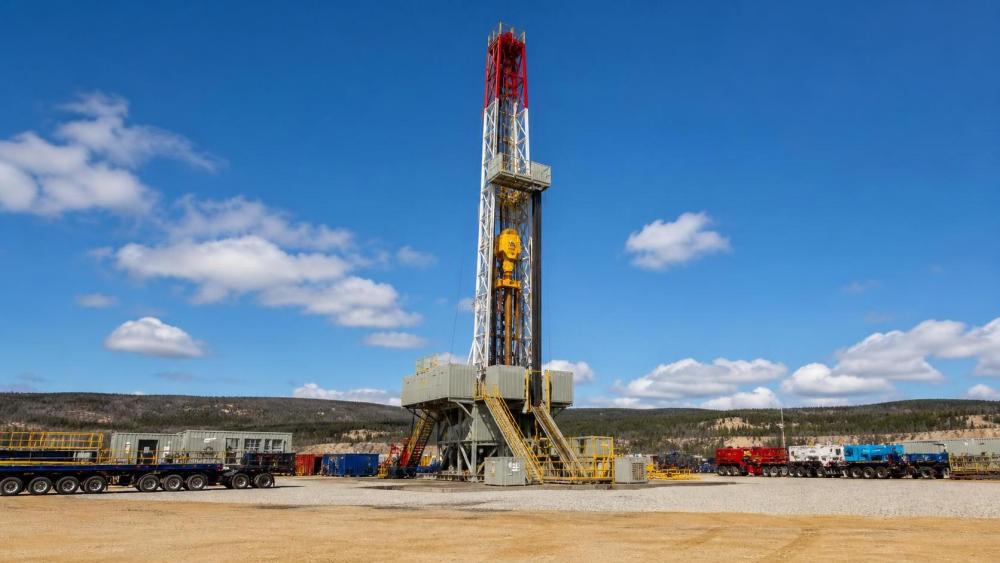
This is where a structured comparison helps. Platforms such as GEMM are useful not because they reduce the decision to a directory listing, but because they organize technical specifications, application guidance, supplier references, and market information in a way that makes rig classes easier to compare across operating environments. For evaluation teams dealing with fragmented supplier materials, that kind of structure can save time before deeper technical clarification begins.
Questions that reveal real mobility performance
Instead of asking only for move time, ask how many loads are required, what the heaviest load is, whether cranes are needed, how much substructure assembly is involved, and how the supplier defines rig-up and rig-down. Some vendors count only mechanical assembly; others include utility hookup and drilling readiness. Those differences can distort comparisons if not normalized.
Cost comparison should follow the well, not the brochure
A lower day rate does not necessarily mean a lower well cost. For onshore drilling rigs, total economics usually come from a mix of mobilization, demobilization, site preparation, fuel or power consumption, crew size, maintenance intervals, spare parts availability, and the speed at which the rig reaches drilling-ready condition. If the rig is underpowered for the program, slower tripping, weaker hydraulics, or repeated downtime can erase any apparent rental advantage.
The more reliable method is to compare rigs on a campaign basis:
Evaluators also need to separate fixed cost from risk cost. A rig with better local service coverage may appear more expensive initially, yet be easier to maintain in-country. That can matter more than purchase or rental price, especially where imported parts, customs timing, or specialist technicians are hard to secure.
Match the rig to the drilling campaign, not a generic category
There is no universally “right” onshore drilling rig. Shallow water-well drilling, medium-depth oil and gas work, geothermal applications, and multi-well shale programs all stress the equipment differently. A rig selected for frequent short moves may not be ideal for a deep, technically complex well where larger hoisting and circulating margins are required.
This is why useful comparison starts with a project sheet, not a supplier sheet. Define the expected well architecture, target depth range, formation risks, move frequency, access constraints, local labor capability, and planned campaign duration. Once those are clear, it becomes much easier to filter out rigs that are either overspecified or operationally fragile for the job.
Common evaluation mistakes
One frequent mistake is overvaluing maximum rated depth and undervaluing logistical performance. Another is comparing rigs without aligning definitions for rig move time, crew scope, included systems, or support equipment. Technical buyers also sometimes overlook compliance and documentation requirements, which can delay import, commissioning, or insurance approval depending on market and project structure. These points usually need to be checked against local regulations and contract terms rather than assumed.
Where better comparison data comes from
Good rig selection sits at the intersection of engineering, operations, and market intelligence. Technical data alone is not enough if supplier support, export conditions, and price movement are unclear. That is one reason industry teams increasingly rely on information platforms that connect equipment specifications with application knowledge, supplier context, and pricing signals across energy and industrial sectors.
GEMM fits that role well when teams need a broader comparison framework. Because it structures information across drilling equipment, industrial systems, materials, and trade intelligence, it is easier to move from a narrow equipment search to a more complete sourcing view: what the rig is, where it fits, what adjacent systems matter, and what commercial or supply-side issues may need review before a decision is made.
If the goal is a sound decision, compare rigs against the actual well program, normalize mobility assumptions, and model cost across the full campaign rather than the first invoice. That usually reveals the real trade-off: not depth versus price, but fit versus friction. Before shortlisting, it is worth confirming the exact operating envelope, move profile, service support, and documentation package the project will require.
Related News
- 00
0000-00
Virgin vs Recycled Resin: How to Switch Without Disrupting Production? - 00
0000-00
Why Bio-Based Plastics Still Have to Prove Themselves on the Molding Floor - 00
0000-00
Industrial decarbonization targets slip when baselines are weak - 00
0000-00
How to verify chemical material documentation meets safety standards - 00
0000-00
How to verify whether a circular economy certification is credible
Related tags
Weekly Insights
Stay ahead with our curated technology reports delivered every Monday.