




How Often Should Pipeline Transportation Systems Be Inspected?




Pipeline Inspection Frequency: A Risk-Based Guide for Transportation Systems
How often should pipeline transportation systems be inspected? Most operators need continuous monitoring, routine field checks, and periodic in-line or direct examinations based on risk.
There is no single interval that fits every pipeline. Inspection frequency depends on age, material, pressure, product characteristics, environmental conditions, and regulatory obligations.
For decision-makers, the practical objective is not simply complying with a calendar. It is identifying integrity threats early enough to prevent leaks, failures, shutdowns, environmental damage, and costly repairs.
Pipeline operators, project managers, engineers, and procurement teams should therefore use a documented integrity management program rather than relying on annual visual inspections alone.
What Inspection Frequency Should Operators Use?
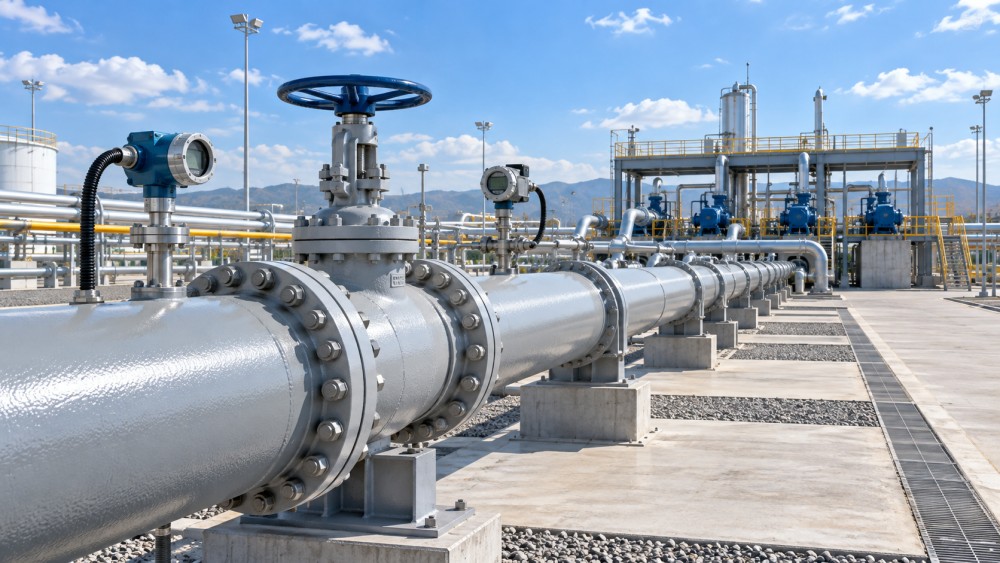
A useful starting point is continuous operational monitoring, routine surface inspections every few weeks or months, and detailed integrity assessments every three to seven years.
However, high-consequence pipelines may require more frequent inspection. Systems carrying hazardous liquids, natural gas, hydrogen, corrosive chemicals, or high-temperature media often need tighter intervals.
Low-risk pipelines in stable environments may justify longer periods between detailed internal inspections. That decision should be supported by verified condition data and formal risk assessment.
Operators should never treat a generic interval as a replacement for engineering judgment. A pipeline with active corrosion can require reassessment within months rather than years.
The most reliable approach combines several inspection layers. Each layer detects different failure mechanisms and provides information that supports maintenance and investment decisions.
Continuous systems can identify pressure deviations, flow imbalances, temperature changes, and potential leak signals. They provide rapid warning but cannot replace physical condition assessment.
Routine patrols can identify third-party interference, erosion, unauthorized excavation, exposed pipe, damaged markers, vegetation concerns, and visible signs of leakage or settlement.
Detailed inspections assess wall thickness, crack growth, coating condition, weld quality, deformation, corrosion morphology, and internal deposits. These examinations establish the pipeline's actual integrity condition.
Why a Fixed Calendar Alone Is Not Enough
Calendar-based inspection programs are easy to administer, but they can waste resources on low-risk assets while missing accelerating threats in critical pipeline segments.
Risk-based inspection prioritizes the locations where failure is more likely or where consequences would be severe. This approach directs inspection budgets toward meaningful risk reduction.
A pipeline beneath a river crossing, dense residential area, industrial facility, or environmentally sensitive zone deserves closer attention than an equivalent remote segment.
Similarly, a line transporting dry, non-corrosive gas may have different degradation patterns from one carrying wet crude oil, acidic chemicals, slurry, or produced water.
Inspection planning should consider both probability and consequence. Probability reflects threats and observed deterioration, while consequence reflects safety, environmental, commercial, and supply-chain impacts.
Risk ranking also supports executive decisions. It helps management distinguish between work that improves reliability and work that merely creates inspection activity without measurable integrity value.
For global sourcing and project teams, risk-based planning creates clearer demand for inspection tools, in-line inspection services, corrosion monitoring systems, coating products, and repair materials.
Key Factors That Determine Inspection Intervals
Pipeline age is important, but age alone does not determine inspection needs. A well-maintained older pipeline may perform better than a poorly protected newer asset.
Material selection matters because carbon steel, stainless steel, duplex alloys, polyethylene, composite pipe, and lined systems respond differently to pressure, chemicals, temperature, and stress.
Operating pressure influences inspection urgency. Higher pressure generally increases stored energy and can accelerate the consequences of wall loss, defects, fatigue, and mechanical damage.
Pressure cycling is equally significant. Repeated changes in pressure can contribute to fatigue damage, especially around welds, fittings, bends, pump stations, valves, and supports.
The transported medium should be assessed for water content, acidity, sulfur compounds, solids, bacteria, abrasiveness, temperature, and potential for deposits or internal corrosion.
External exposure includes soil resistivity, moisture, coastal salinity, stray current, groundwater chemistry, seismic activity, flood risk, landslides, freezing conditions, and surface development.
Third-party damage remains a major threat for many onshore pipelines. Construction, farming, drilling, road works, unauthorized excavation, and vehicle impact can rapidly change risk conditions.
Previous inspection findings should strongly influence the next interval. Corrosion growth rates, crack characteristics, coating failures, repairs, leaks, and recurring anomalies are critical evidence.
Changes in service require reassessment. Increasing throughput, changing product composition, raising pressure, reversing flow direction, or converting a line for carbon dioxide or hydrogen service can alter risks.
Recommended Inspection Activities by Time Horizon
Continuous or near-continuous monitoring should be used for pressure, flow, temperature, pump performance, valve status, leak detection, cathodic protection, and alarm management where applicable.
Control room data should be reviewed against established operating limits. Unexplained trends, repeated alarms, pressure instability, and inventory imbalances should trigger investigation rather than simple reset actions.
Weekly or monthly field patrols are common for accessible pipelines, especially in areas exposed to construction activity, public access, unstable terrain, or changing land use.
Patrol frequency should increase after storms, flooding, earthquakes, landslides, construction near the right-of-way, security incidents, or reports of unusual odors and vegetation changes.
Quarterly or semiannual tasks may include valve inspections, above-ground piping checks, support examinations, marker verification, cathodic protection readings, and drainage assessment at stations and crossings.
Annual programs typically include a broader review of integrity records, corrosion control performance, leak detection performance, emergency readiness, repair history, and management system compliance.
In-line inspection intervals often range from three to seven years, depending on threat severity and previous results. Some high-risk assets require shorter intervals or complementary methods.
Direct assessment, hydrostatic testing, ultrasonic testing, radiography, magnetic particle testing, guided wave testing, and excavation may be necessary when in-line tools are unsuitable.
Operators should define clear escalation rules. A significant anomaly, unexpected corrosion rate, coating failure, pressure excursion, or suspected leak should accelerate inspection independently of the schedule.
Choosing the Right Inspection Method
Visual inspection is useful for exposed pipe, stations, supports, valves, leaks, coating damage, and external mechanical damage. It cannot reliably assess buried internal wall loss.
Smart pigs, also called in-line inspection tools, are widely used for long transmission pipelines. Different tools detect metal loss, cracks, geometry changes, and mapping information.
Magnetic flux leakage tools identify many types of metal loss in ferromagnetic pipelines. They are commonly selected for corrosion screening and wall-thickness-related integrity programs.
Ultrasonic in-line inspection can provide highly detailed wall thickness data. It is especially valuable where accurate corrosion measurement or crack characterization is required.
Caliper tools detect dents, buckles, ovality, wrinkles, restrictions, and deformation. Geometry data is particularly important where mechanical damage or ground movement is a concern.
Hydrostatic testing verifies pressure containment under controlled conditions. It can be valuable after construction, major repair, reassessment, or when other inspection technologies cannot address identified threats.
External corrosion direct assessment combines data review, indirect surveys, excavation, and direct examination. It is useful when pigging is impractical or when localized external threats require confirmation.
Internal corrosion direct assessment focuses on locations likely to collect water or deposits. It is often used for systems with operational conditions that make internal corrosion plausible.
Method selection should be based on the threat. A technology that detects corrosion may not adequately identify crack-like defects, fatigue, coating disbondment, or geotechnical movement.
How Regulations and Standards Influence Inspection Plans
Regulatory requirements vary by country, product type, pipeline location, and operator classification. Operators should verify local obligations before defining inspection frequencies or documentation practices.
Many pipeline programs reference standards from organizations such as API, ASME, NACE, AMPP, ISO, CSA, EN, and national pipeline safety authorities.
Commonly referenced frameworks include API 1160 for hazardous liquid pipeline integrity management and ASME B31.8S for gas pipeline integrity management.
These documents support risk assessment, data integration, inspection selection, anomaly evaluation, repair prioritization, and continual improvement. They do not eliminate the need for site-specific engineering decisions.
Standards also influence procurement requirements. Buyers should confirm tool capability, calibration records, personnel qualifications, reporting formats, data ownership, and compatibility with existing integrity software.
Compliance documentation should demonstrate more than inspection completion. It should show that results were reviewed, anomalies were assessed, repairs were prioritized, and lessons informed future intervals.
When Should a Pipeline Be Inspected Earlier Than Planned?
An inspection should be advanced when monitoring indicates unexplained pressure loss, abnormal flow behavior, repeated leak alarms, contamination, product loss, or declining cathodic protection performance.
Severe weather and geotechnical events can create immediate concerns. Flooding may expose pipe, while landslides, subsidence, and seismic activity can introduce bending or displacement.
Unexpected corrosion findings are another trigger. If measured metal loss exceeds predicted growth rates, the operator should reassess similar segments and revise the integrity plan.
Construction close to the pipeline should prompt additional surveillance. Excavation damage can occur even when permit systems, markers, and right-of-way controls are in place.
Changes in transported products may require new compatibility analysis. A pipeline previously used for one hydrocarbon service may face different corrosion or material risks after conversion.
Repeated operational upsets deserve investigation. Frequent pressure cycling, pump failures, valve malfunction, slugging, and temperature excursions can indicate conditions not reflected in the original inspection interval.
After a repair, operators should inspect the repaired area according to the repair method, defect type, pressure history, and verification requirements. Repairs should feed back into risk modeling.
Building an Effective Pipeline Integrity Program
An effective program begins with complete asset records. Operators need accurate route data, design specifications, materials, weld information, pressure history, repairs, inspection results, and operating changes.
Data quality is often the limiting factor. Incomplete drawings, inconsistent naming, missing inspection files, and unverified historical assumptions can weaken otherwise sophisticated risk models.
Integrity teams should establish threat registers for each pipeline system. Typical categories include external corrosion, internal corrosion, cracking, mechanical damage, equipment failure, and natural hazards.
Each threat should have defined indicators, inspection methods, acceptance criteria, escalation thresholds, and responsible personnel. This turns integrity management into a repeatable operational process.
Inspection findings should be integrated with maintenance planning. The goal is to repair, replace, derate, monitor, or reassess assets before anomalies become failures.
Operators should also evaluate supplier capability carefully. The lowest service price may not provide suitable detection performance, analysis quality, mobilization capacity, or reporting depth for critical assets.
For capital planning, integrity data supports more defensible decisions about rehabilitation, coating replacement, pipeline replacement, automation upgrades, corrosion inhibition, and spare-parts strategy.
How Often Should Pipeline Transportation Systems Be Inspected? The Practical Answer
Pipeline transportation systems should be monitored continuously where practical, checked routinely in the field, and assessed in depth at intervals determined by documented risk.
Many operators use three-to-seven-year detailed inspection cycles as a starting range, but high-risk pipelines may require annual, biennial, or event-driven assessment.
The correct frequency is the one that identifies credible threats before they exceed safe operating limits. It should reflect actual operating data, not only asset age.
Organizations that combine monitoring, field surveillance, in-line inspection, direct examination, and disciplined data review can reduce unplanned outages and improve regulatory confidence.
Ultimately, inspection frequency is an integrity management decision. A structured, risk-based program helps operators protect people, assets, supply continuity, and long-term pipeline investment value.
Related News
- 00
0000-00
Can biofuels for industrial boilers reduce fuel costs at high load? - 00
0000-00
How to assess the reliability of offshore drilling safety systems - 00
0000-00
How to verify quality systems at oil and gas industry suppliers - 00
0000-00
Which carbon capture materials grades suit high-humidity flue gas? - 00
0000-00
How commodity intelligence analytics can improve price risk decisions
Weekly Insights
Stay ahead with our curated technology reports delivered every Monday.