




Petroleum refining technology trends reshaping refinery decarbonization




Petroleum Refining Technology Trends Reshaping Refinery Decarbonization
Petroleum refining technology trends are changing the decarbonization conversation from a long-range corporate commitment into a set of practical decisions about furnaces, hydrogen networks, feedstock flexibility, power supply, and capital timing. Refinery leaders are under pressure to lower emissions without compromising product quality, safety, throughput, or reliability. That balance is difficult because a refinery is not a single emissions source. It is a tightly connected system in which an improvement in one unit can shift energy demand, hydrogen consumption, maintenance exposure, or carbon intensity elsewhere.
The most credible transition plans therefore tend to start with the existing asset base. Before committing to highly visible projects such as carbon capture or renewable fuel conversion, operators are looking closely at where energy is lost, which process units constrain flexibility, and whether the site can support lower-carbon feedstocks at commercial scale. The market is moving away from one-size-fits-all decarbonization roadmaps. A coastal export refinery, an inland fuels producer, and an integrated refinery-petrochemical complex face very different economics.
Energy efficiency is still the first serious lever
It may sound less dramatic than clean hydrogen or carbon capture, but energy efficiency remains the most immediate area of refinery decarbonization. Fired heaters, boilers, steam systems, heat exchangers, compressors, and distillation trains are often where emissions reduction begins. These assets may have operated for decades, sometimes through changes in crude slate, product specifications, and maintenance philosophy. Their design duty is not always their current duty.
For many sites, the first task is not replacing equipment. It is establishing a reliable operating baseline. Heat-exchanger fouling, steam leakage, excess oxygen in furnaces, unstable combustion, poor insulation, and suboptimal pump or compressor control can all add fuel consumption without appearing as a single major failure. A refinery can spend heavily on a new technology package while overlooking these persistent losses.
Pinch analysis, advanced combustion controls, waste-heat recovery, improved steam integration, and electrification of selected utilities are receiving renewed attention. The important qualification is “selected.” Electrification only lowers site emissions when local power availability, grid carbon intensity, electrical infrastructure, and operating reliability support it. Replacing a fuel-fired load with electricity is not automatically a decarbonization win if the site must depend on constrained or carbon-intensive power during peak operation.
Digital optimization is becoming operational infrastructure
Digital tools are often presented as a separate technology trend, but in refineries they increasingly sit inside core operating decisions. Advanced process control, real-time optimization, digital twins, predictive maintenance, and emissions monitoring can help operators manage the trade-offs between yield, energy use, equipment condition, and product specifications.
The value is strongest when the data is connected to an operational decision. A model that shows furnace efficiency deterioration is useful only if maintenance teams trust the signal and can act on it. Likewise, an optimizer that recommends a lower-energy operating point must still respect unit constraints, blending requirements, catalyst condition, and downstream bottlenecks. Refinery teams are understandably cautious about black-box recommendations in units where a poor decision can trigger off-spec product, coking, or an unplanned shutdown.
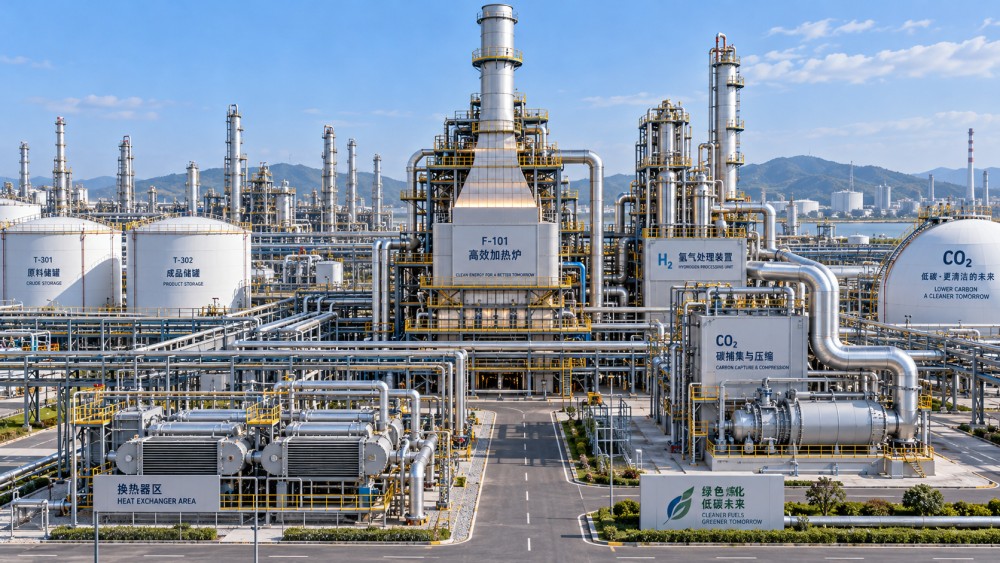
A sensible approach is to begin with high-energy, high-variability units such as crude distillation, fluid catalytic cracking, hydrogen production, and fired heating systems. Data quality should be assessed before software selection. Missing instrument calibration records, inconsistent tag structures, or disconnected laboratory data can limit a digital project long before the analytics become the issue.
Hydrogen strategy is moving beyond supply volume
Hydrogen is central to cleaner fuels, hydroprocessing, renewable feedstock treatment, and sulfur management. Yet the decarbonization question is no longer simply whether a refinery needs more hydrogen. It is whether that hydrogen can be supplied with lower lifecycle emissions, at a cost and reliability level that fits the refinery’s operating model.
Existing hydrogen networks are commonly tied to steam methane reforming or other fossil-based production routes. Lower-carbon alternatives may include carbon capture on existing production, imported low-carbon hydrogen, electrolysis, or shared regional infrastructure. Each option introduces different dependencies. Carbon capture requires a practical route for transport and storage or utilization. Electrolysis depends on power economics, water management, and electrical interconnection. Imported hydrogen or derivatives can create logistics and supply-security questions that are unfamiliar to refinery procurement teams.
Decision-makers should avoid treating low-carbon hydrogen as a standalone procurement category. The right assessment includes hydrogen purity, pressure, delivery continuity, integration with existing networks, turnaround requirements, and the emissions accounting method used by customers or regulators. A technically available supply route may still be unsuitable if it creates a reliability risk in critical hydrotreating operations.
Renewable co-processing offers flexibility, but not a shortcut
Co-processing renewable feedstocks in existing refinery units is attracting attention because it may allow operators to use established hydroprocessing, storage, and distribution assets. Depending on feedstock characteristics and unit design, refiners may assess materials such as used cooking oil, animal fats, vegetable oils, bio-intermediates, or other renewable hydrocarbon streams.
In practice, compatibility is the hard part. Renewable feedstocks can introduce contaminants, corrosion concerns, catalyst impacts, handling challenges, and variability in composition. Their availability may also fluctuate with agricultural markets, waste collection systems, competing demand, and regional trade conditions. A feedstock that looks attractive in a planning model can become difficult to secure at the required quality over several years.
This is why refinery teams usually need a joint review involving process engineering, catalyst specialists, materials experts, procurement, quality assurance, and commercial planning. The question is not merely how much renewable material can be blended. It is whether the unit can process it consistently without reducing run length, causing off-spec output, or increasing a hidden cost elsewhere in the system.
Carbon capture is shifting from ambition to integration work
Carbon capture is one of the most consequential petroleum refining technology trends, particularly for concentrated emissions sources such as hydrogen plants, certain process heaters, and power generation units. Its role will vary by refinery configuration and local infrastructure. Sites near viable transport networks and permitted storage options may see a clearer pathway than isolated facilities with no established carbon dioxide handling chain.
The engineering conversation should extend beyond capture rate. Capture systems consume energy, require space, affect utilities, and introduce compression, dehydration, transport, monitoring, and long-term liability considerations. A project can appear viable at the capture unit boundary yet become difficult when pipeline access, storage agreements, permitting schedules, and outage planning are examined.
For that reason, many operators are screening capture opportunities unit by unit rather than announcing broad site-wide assumptions. Hydrogen production may be an early candidate where carbon dioxide streams are relatively concentrated, while dilute flue-gas applications can require a different economic and technical case. The correct sequence depends on the refinery’s emissions profile, available infrastructure, and the credibility of its carbon accounting requirements.
Investment choices now depend on information quality
Decarbonization projects increasingly cross traditional procurement categories. A heater upgrade affects refractory materials, burner systems, controls, steel supply, and maintenance planning. Renewable co-processing involves feedstock markets, laboratory testing, catalyst performance, tankage, and transport. Carbon capture connects process engineering with compressors, pipelines, carbon dioxide specifications, and regional storage development.
This makes fragmented information a genuine project risk. Decision-makers need a way to compare technology options, supplier capabilities, material requirements, process constraints, market developments, and trade conditions without relying on isolated product listings or generic claims. Platforms such as GEMM are useful in this context because they organize information across refining systems, pipeline technologies, carbon capture equipment, biofuels, industrial energy storage, chemicals, metals, and related supply chains. The practical benefit is not simply finding vendors; it is building a clearer picture of how a proposed change fits the wider operating system.
The next phase of refinery decarbonization will not be decided by a single breakthrough technology. It will be shaped by disciplined choices: which units to optimize first, where low-carbon hydrogen is genuinely dependable, which renewable feedstocks match existing assets, and whether carbon capture has a complete route beyond the capture plant. Refiners that test those assumptions early are less likely to commit capital to a technically impressive project that cannot perform under real operating conditions.
- Last One:No more articles
- Next Article:Which Metal Alloys Are Best for High-Temperature Furnace Parts?Oct 11, 2026
Related News
- 00
0000-00
Petroleum refining technology trends reshaping refinery decarbonization - 00
0000-00
How energy storage strengthens sustainable energy reliability - 00
0000-00
How trade compliance solutions reduce export documentation errors - 00
0000-00
How material intelligence is reshaping sourcing decisions in Southeast Asia - 00
0000-00
Which Metal Alloys Are Best for High-Temperature Furnace Parts?
Weekly Insights
Stay ahead with our curated technology reports delivered every Monday.