




How energy storage strengthens sustainable energy reliability




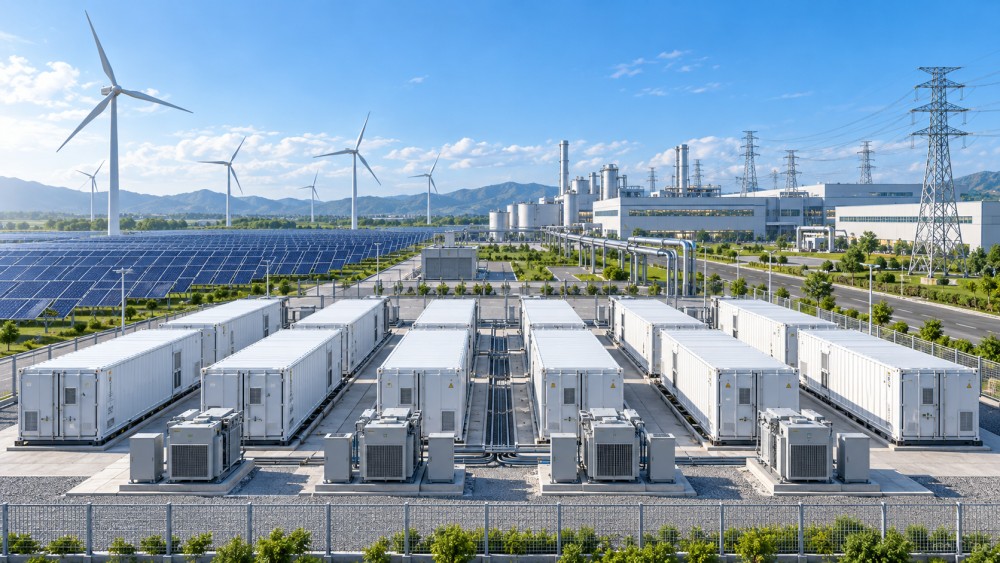
Energy storage strengthens sustainable energy reliability when it is designed around the variability of the power system it serves. Adding renewable generation alone may reduce fuel consumption and emissions, but it does not guarantee that electricity will be available at the required time, duration, quality, or location. Storage provides the operational flexibility that converts variable generation into a more controllable resource.
For technical evaluators, the first conclusion is straightforward: storage should be assessed as part of a power system, not as an isolated battery asset. A system that performs well in a two-hour peak-shifting model may be unsuitable for backup power, renewable firming, microgrid islanding, or grid frequency support. Reliability depends on matching storage duration, response speed, control architecture, safety design, and degradation profile to a defined operating duty.
Storage closes the gap between generation and demand
Solar and wind output are governed by weather and time of day, while industrial loads, commercial facilities, and power networks must meet demand continuously. Energy storage absorbs surplus electricity when generation exceeds local demand or grid export capacity, then discharges when renewable output falls or the system needs support.
This function is often described simply as “shifting energy,” but reliability gains come from several distinct services:
- Reducing short-term renewable output fluctuations that can disturb voltage or frequency.
- Moving energy from high-generation periods to predictable demand peaks.
- Providing fast reserve capacity when a generator, feeder, or renewable plant output changes unexpectedly.
- Supporting critical loads during grid interruptions where the storage system can operate with suitable switching and control equipment.
- Relieving congestion at constrained grid connection points, within the limits of the storage system's power and energy capacity.
These services impose different technical requirements. Fast frequency response may require high power for relatively short periods. Evening solar shifting depends more heavily on usable energy capacity and repeated cycling. Backup applications require dependable availability after potentially long standby periods. Treating these duties as interchangeable is a common source of underperforming projects.
Duration matters as much as rated power
A battery energy storage system is commonly described by two ratings: power, expressed in kilowatts or megawatts, and energy capacity, expressed in kilowatt-hours or megawatt-hours. Power determines how much load the system can support at a given moment. Energy capacity determines how long it can sustain that output. Their relationship, often expressed as duration, is central to reliability planning.
A high-power, short-duration system can stabilize rapid fluctuations and provide ancillary services, yet it may contribute little during a prolonged supply deficit. Conversely, a longer-duration system may sustain a facility through an extended evening peak but still require enough inverter capacity to cover the critical load at startup.
Evaluators should begin with an operating profile rather than a preferred battery size. Important questions include the expected load shape, renewable production pattern, outage duration to be covered, minimum state-of-charge reserve, recharge window, and acceptable level of curtailed load. The answer may point to one storage duration for daily dispatch and a separate reserve strategy for resilience.
Battery chemistry affects the operating envelope
Lithium-ion systems are widely considered for industrial and grid-connected storage because they offer high efficiency, fast response, and mature system integration pathways. Within that category, chemistry selection still affects safety behavior, cycle life, power capability, temperature tolerance, and the trade-off between energy density and operational conservatism.
For example, an application with frequent full or deep cycles should be evaluated against the expected capacity retention under that exact cycling pattern, not only against a headline cycle-life figure. Ambient temperature, discharge rate, state-of-charge window, calendar aging, and charging behavior all influence usable life. A storage project designed around daily energy shifting may age differently from one held at high state of charge for emergency backup.
Alternative storage technologies can be relevant when the duty calls for long duration, high cycling resilience, or different safety and siting characteristics. The appropriate comparison is not limited to installed cost. It should include usable capacity over time, round-trip efficiency at the intended dispatch pattern, auxiliary power demand, maintenance requirements, footprint, replacement assumptions, and operational constraints.
Reliability is a controls and integration question
Storage cannot improve sustainable energy reliability if the control system cannot recognize and respond to changing conditions. The battery management system protects individual cells and modules by monitoring voltage, current, and temperature. Above it, the energy management system decides when to charge, discharge, preserve reserve capacity, or follow grid signals. Site-level controls coordinate inverters, renewable generation, switchgear, loads, and protection devices.
These layers need defined priorities. A facility may want to reduce demand charges, maximize renewable self-consumption, maintain backup reserve, and participate in grid services. Those objectives can conflict. Dispatching the battery to reduce a daily peak may leave insufficient energy for an outage later that day. Reliability therefore requires an explicit reserve policy rather than an assumption that capacity will always be available when needed.
Grid-forming and grid-following behavior also deserves close review. Grid-following inverters depend on an existing stable grid reference. A microgrid intended to operate during an outage may need grid-forming capability, coordinated protection settings, black-start logic where relevant, and a clearly defined sequence for separating from and reconnecting to the utility network.
Safety standards should be evaluated at system level
Cell test results alone do not establish the safety of a complete energy storage installation. System safety includes enclosure design, thermal management, fault detection, fire mitigation, ventilation, emergency shutdown, spacing, access control, and the interaction between battery containers, power conversion equipment, and site infrastructure.
Technical review should identify the standards and local requirements applicable to the installation jurisdiction, then verify how the proposed configuration demonstrates compliance. Documentation should cover battery modules, racks, enclosures, inverters, control hardware, protection equipment, and installation procedures. Fire authority requirements, building rules, utility interconnection rules, and electrical codes can materially affect layout and cost.
A useful evaluation also examines fault scenarios: loss of cooling, communication failure, inverter trip, overtemperature alarm, utility outage, water ingress, and emergency isolation. The question is not whether every fault can be prevented; it is whether the system detects abnormal conditions early, transitions to a safe state, and supports emergency response without creating avoidable operational risk.
Use lifecycle performance rather than nameplate capacity
Nameplate capacity represents the energy available under specified conditions when the system is new. Planning on that figure alone can overstate the reliability contribution over the operating life. Usable capacity is affected by depth-of-discharge limits, reserve settings, temperature, degradation, inverter losses, and availability during maintenance or fault conditions.
Technical assessments should model performance at the end of the intended operating period. This includes the warranted capacity trajectory, expected cycling schedule, augmentation or replacement strategy, and the energy retained for emergency reserve. A project may meet its first-year dispatch target yet fall short later if degradation allowances were not incorporated into the original design.
For sustainable energy reliability, storage is most effective when its role is stated precisely: firm a renewable output profile, cover a defined critical load, manage a constrained connection, stabilize a microgrid, or supply a combination of services under controlled priorities. Once that role is clear, chemistry, duration, controls, safety measures, and lifecycle assumptions can be evaluated against the same operating requirement. That produces a more defensible decision than selecting equipment primarily by nominal capacity or initial price.
Related News
- 00
0000-00
How energy storage strengthens sustainable energy reliability - 00
0000-00
How trade compliance solutions reduce export documentation errors - 00
0000-00
How material intelligence is reshaping sourcing decisions in Southeast Asia - 00
0000-00
Which Metal Alloys Are Best for High-Temperature Furnace Parts? - 00
0000-00
What Is the Typical Lifespan of Grid-Scale Energy Storage?
Related tags
Weekly Insights
Stay ahead with our curated technology reports delivered every Monday.