




Is Biofuel Production Profitable Without Government Subsidies?




Is biofuel production profitable without government subsidies? Sometimes—but not by default. A well-positioned plant with reliable low-cost feedstock, efficient conversion, valuable co-products, and a nearby customer base can generate positive operating margins without direct public support. Many projects, however, look far less attractive once tax credits, blending mandates, carbon credits, or preferential financing are removed from the model.
The practical answer is not really about whether “biofuel” is profitable as a single category. Ethanol made from a mature agricultural supply chain, renewable diesel produced from waste lipids, biogas upgraded from a treatment facility, and advanced fuel made from residues have fundamentally different cost structures. A project can be technically sound and still fail commercially because its feedstock is seasonal, its logistics are expensive, or its output competes with lower-priced fossil fuel in a weak energy market.
For investors, producers, and industrial buyers, the better question is this: can the plant cover feedstock, utilities, labor, maintenance, debt service, compliance, logistics, and working capital from market-based fuel and co-product revenues? If the answer is only “yes” when policy incentives are assumed, then subsidies are not a bonus—they are part of the project’s core economic engine.
Profitability starts with the feedstock, not the fuel label
Feedstock is usually the largest and most volatile cost in a biofuel operation. That is why the same processing technology can perform very differently in two regions. A facility close to a stable source of used cooking oil, animal fats, agricultural residues, landfill gas, or food-processing waste may have a structural advantage over a plant that must compete for material on the open market.
The important distinction is between a feedstock that is merely available and one that is economically secured. Availability on a market report does not guarantee daily delivery at a workable price. Collection systems, contamination, moisture, pretreatment needs, storage losses, and transport distance can quietly erode the apparent discount of low-value waste materials.
Waste-derived feedstocks are often presented as the obvious path to unsubsidized profitability. In reality, they can be difficult to scale. Once several producers enter the same collection area, waste oil or organic residues may become a traded commodity rather than a cheap disposal problem. Long-term supply agreements help, but the contract should clearly address quality specifications, volume commitments, rejection rights, pricing formulas, and who bears the cost when incoming material falls outside specification.
Agricultural feedstocks bring another set of trade-offs. They may be more standardized and easier to finance, yet their price can be linked to food, feed, weather, export demand, and crop cycles. A plant that buys feedstock at spot prices while selling fuel under fixed-price contracts is carrying a risk that no process improvement can fully solve.
Conversion efficiency matters, but plant reliability matters more
It is tempting to focus on headline yields: liters of fuel per tonne of feedstock, methane recovery, oil conversion, or stated nameplate capacity. Those figures matter, but they are not the same as realized economics. Commercial performance is shaped by uptime, off-spec batches, catalyst replacement, water treatment, corrosion control, wastewater handling, unplanned shutdowns, and the ability to keep the plant operating when feedstock quality changes.
A marginal gain in yield can be valuable, but not if it requires a more sensitive process, expensive consumables, or highly skilled operators that are difficult to retain locally. In early project assessment, developers should test the economics using conservative operational assumptions rather than ideal design conditions. The useful question is not “What can this technology achieve in a controlled demonstration?” but “What does it deliver through a full year of variable feedstock, maintenance stops, and commercial dispatch constraints?”
For biogas and biomethane projects, the point is especially clear. Gas production depends on the consistency of the organic stream, retention time, digester stability, contaminant management, and gas-cleaning performance. For liquid fuels, pretreatment and impurity removal can decide whether lower-cost feedstock is genuinely cheaper after processing.
Which biofuel pathways have a better chance without subsidies?
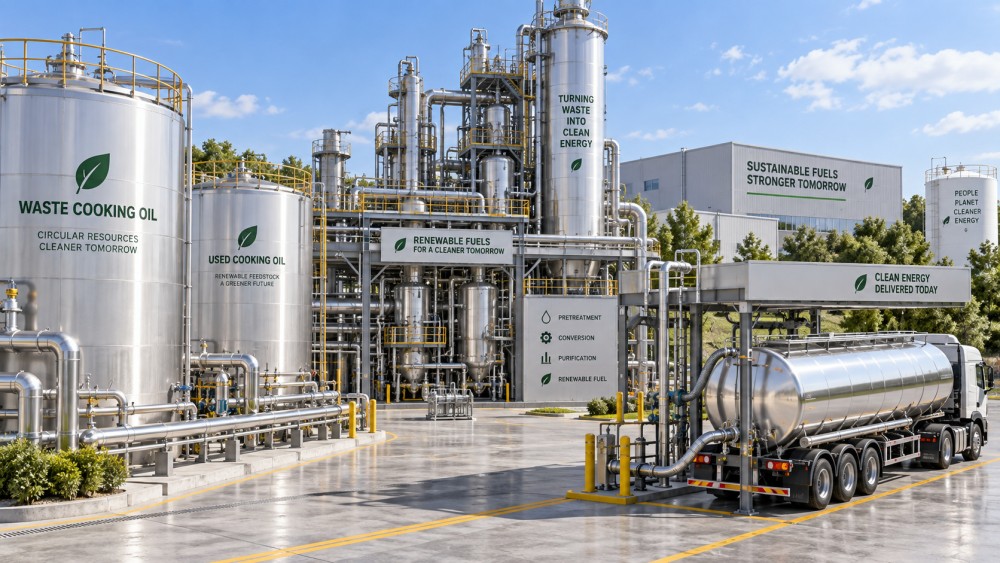
No pathway is automatically subsidy-independent, but some have more credible routes to market-based returns than others. The strongest projects tend to solve an existing industrial problem in addition to producing fuel. For example, an anaerobic digestion project may reduce waste-treatment costs for a food processor or livestock operation while producing biogas. In that situation, fuel revenue is only one side of the economics.
Co-products can make the difference between a thin-margin operation and an unbankable one. Distillers grains, glycerol, captured carbon dioxide, digestate, recovered heat, renewable gas certificates, and certain chemical intermediates may have value, depending on local markets and applicable rules. But co-product revenue should be modeled with the same discipline as fuel sales. A co-product is not a guaranteed profit center if there is no nearby buyer, quality is inconsistent, or transport costs exceed its delivered value.
Scale is useful, but the wrong scale can destroy a project
Larger plants can spread fixed costs across more output and often have stronger purchasing power. Yet scale also expands the feedstock catchment area. At some point, a bigger facility begins competing for increasingly distant material, which adds freight cost, emissions, handling losses, and supply risk. This is common in residue-based projects: the resource may look abundant on a map but becomes expensive once collection routes and seasonal access are considered.
Smaller distributed systems can make sense when they sit beside a dependable waste generator and avoid hauling wet, low-energy-density material over long distances. Their weakness is that they may carry higher unit costs for equipment, maintenance, monitoring, and financing. There is no universally “correct” capacity. The sensible scale is the one that matches secured feedstock, utility connections, labor availability, storage capacity, and contracted offtake.
Capital structure deserves the same scrutiny. A plant can be operationally profitable but still fail to meet debt obligations if construction costs rise, commissioning takes longer than expected, or interest costs are high. Developers sometimes talk about profitability when they mean positive EBITDA. Buyers and investors should separate operating margin, free cash flow, and returns after financing. They answer different questions.
Fuel price exposure is the hard reality
Biofuels ultimately compete in energy markets influenced by crude oil, natural gas, electricity, refining capacity, seasonal demand, and regional logistics. When fossil fuel prices fall, an unsubsidized biofuel producer may have limited room to pass through its own cost increases. This is particularly difficult for fuels that require blending, dedicated distribution, or modifications at the end user’s site.
The most resilient commercial arrangements usually reduce pure spot-market exposure. They may include long-term offtake agreements, indexed pricing, supply relationships with fleets or industrial users, or integration with an existing refinery, waste operator, food processor, or utility. A contract is not automatically protective, though. It must define fuel quality, delivery point, volume flexibility, testing method, penalties, force majeure provisions, and how price adjustments work when feedstock and energy costs move in opposite directions.
For export-oriented producers, maritime freight, port storage, customs treatment, sustainability documentation, and destination-market specifications can materially alter the margin. A fuel that is competitive at the plant gate may not remain competitive after it reaches another region.
Subsidies, mandates, and carbon markets should be treated as risk factors—not ignored
Government support can take many forms: production incentives, blending requirements, tax treatment, capital grants, renewable energy certificates, carbon-credit systems, loan support, or rules that create demand for lower-carbon fuels. These mechanisms may be central to a project’s revenue, even when they are not described as a subsidy.
That does not mean policy-supported biofuel projects are inherently weak. Public policy often exists because fuel markets do not fully price emissions, waste impacts, or energy-security concerns. The issue is transparency. A robust investment model should show at least three views: economics with current incentives, economics under reduced incentive value, and economics with no policy-derived revenue. If the third case is deeply negative, stakeholders should recognize that the project has significant regulatory exposure.
Eligibility also depends on documentation. Feedstock origin, chain of custody, land-use considerations, lifecycle-emissions methodology, mass balance, and audit requirements can affect whether a fuel qualifies for a particular market. These requirements vary by jurisdiction and program, so they need to be checked against current local rules rather than assumed from a general project presentation.
A practical way to test an unsubsidized biofuel business case
Before committing to equipment or a supply contract, build the model from physical flows rather than broad market assumptions. Start with annual feedstock volumes by source, expected quality, collection cost, storage limitations, conversion yield, plant availability, energy consumption, consumables, wastewater or residue costs, and delivered fuel price. Then stress-test the variables that can move against the project at the same time.
A useful review normally asks:
- Can the project still operate if feedstock costs rise or supply falls below plan?
- Is the stated fuel price based on actual offtake terms, a local benchmark, or an optimistic forecast?
- What happens when uptime is lower than design capacity during the first operating years?
- Are co-products sold under credible arrangements, or simply assigned a theoretical value?
- What additional equipment, testing, permits, and logistics are required to meet the buyer’s fuel specification?
- How much of the projected margin comes from incentives, certificates, or carbon-related revenue?
This is where structured market intelligence is more useful than a simple supplier list. Platforms such as GEMM organize product categories, process information, technical references, supplier capabilities, application guidance, trade updates, and pricing intelligence across energy, chemicals, materials, recycling, and sustainable energy markets. For a biofuel project, that kind of comparison can help teams connect feedstock options with processing technologies, storage and pipeline requirements, quality-control equipment, export conditions, and competing material uses before a procurement decision is made.
The honest conclusion
Biofuel production can be profitable without government subsidies, but the profitable cases are usually specific rather than generic. They tend to have a defensible feedstock position, disciplined operating control, an outlet for co-products, sensible logistics, and customers willing to pay for a fuel that solves a practical problem. They are rarely built on the assumption that all waste is free, all nameplate capacity will be achieved, or all low-carbon attributes will retain their value indefinitely.
If a project only works after adding every available incentive, it may still be viable under current policy—but it should be valued as a policy-sensitive asset. If it works on fuel, waste-management savings, and co-product revenue before incentives are counted, subsidies become a cushion rather than the foundation. That distinction is the one worth establishing before selecting technology, signing feedstock contracts, or treating a headline production capacity as proof of commercial viability.
- Last One:No more articles
- Next Article:How commodity intelligence analytics can improve price risk decisionsSep 30, 2026
Related News
- 00
0000-00
How commodity intelligence analytics can improve price risk decisions - 00
0000-00
Terephthalic Acid CAS 100-21-0: The Technical Checks Behind Stable Polyester Supply - 00
0000-00
What determines biofuel production capacity at commercial scale? - 00
0000-00
How to select industrial chemicals for pulp processing by furnish type - 00
0000-00
Is Biofuel Production Profitable Without Government Subsidies?
Weekly Insights
Stay ahead with our curated technology reports delivered every Monday.