




How to select industrial chemicals for pulp processing by furnish type




How to Select Industrial Chemicals for Pulp Processing by Furnish Type
Selecting industrial chemicals for pulp processing starts with the furnish, not with a supplier catalogue or a standard chemical recipe.
Technical evaluators need to connect fiber source, contamination, process conditions, and final pulp targets before comparing chemical programs or commercial products.
The correct selection can improve yield, brightness, drainage, strength, machine runnability, water management, and total production cost across different pulp grades.
Start with a Furnish-Specific Chemical Selection Framework
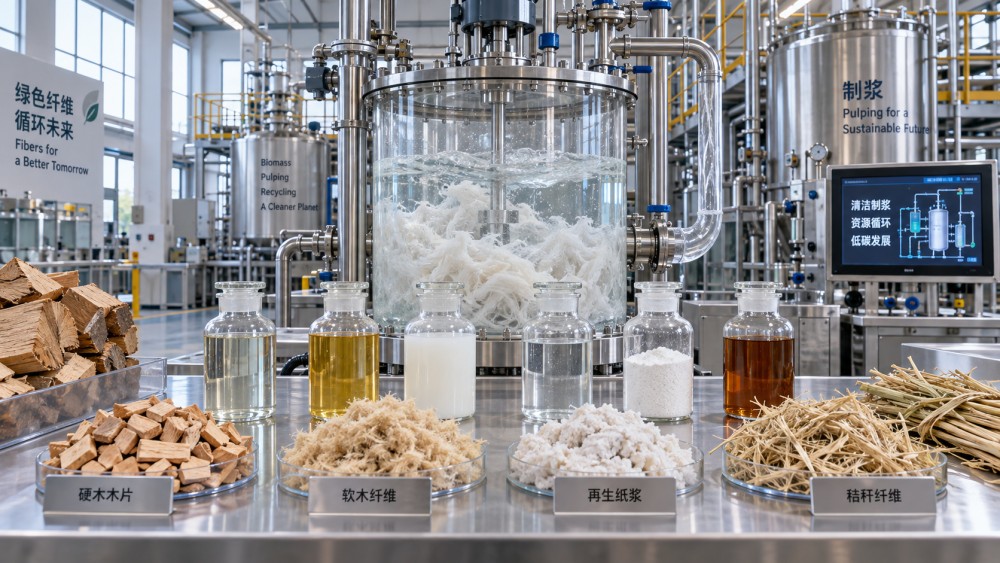
Industrial chemicals for pulp processing should be evaluated against measurable furnish characteristics, including fiber length, lignin content, ash, extractives, ink, stickies, and moisture.
A practical assessment begins by defining whether the mill processes virgin wood, recycled paper, agricultural residue, or a blended furnish with changing proportions.
Next, establish the required output properties. These may include brightness, viscosity, tensile strength, drainage rate, cleanliness, residual lignin, or compatibility with papermaking additives.
Process conditions matter equally. Chemical performance can change substantially with pH, temperature, retention time, stock consistency, water hardness, and existing equipment limitations.
Technical evaluators should also identify the true constraint. A chemical program designed for maximum brightness may be unsuitable when the primary issue is deposits or poor dewatering.
Compare options using operating data rather than dosage alone. Lower chemical consumption does not necessarily mean lower cost if it reduces yield, increases steam use, or creates effluent problems.
A useful evaluation matrix includes chemical function, expected performance gain, dosage range, application point, storage requirements, safety classification, byproduct impact, and supplier support capability.
Choose Chemicals for Hardwood Furnish Around Brightness and Fiber Preservation
Hardwood furnish commonly contains shorter fibers and is frequently selected for smoothness, formation, printing quality, and bulk in tissue, printing, and packaging grades.
Because hardwood fibers are shorter, excessive chemical treatment can reduce bonding potential or create fines that challenge drainage and retention during subsequent papermaking.
For kraft hardwood pulping, cooking chemicals such as sodium hydroxide and sodium sulfide must be balanced to remove lignin while maintaining acceptable carbohydrate retention.
Oxygen delignification chemicals, including oxygen and sodium hydroxide, can reduce lignin before bleaching, but process severity must be controlled to protect pulp viscosity.
Bleaching selection often includes chlorine dioxide, hydrogen peroxide, oxygen, ozone, or chelating agents, depending on brightness targets and elemental chlorine-free process requirements.
Chelants such as DTPA or EDTA may be necessary before peroxide stages when transition metals could decompose peroxide and reduce bleaching efficiency.
Hardwood pulp evaluations should prioritize brightness stability, viscosity retention, shive reduction, and strength development rather than focusing only on initial optical brightness.
When extractives create pitch-related deposits, dispersants, talc, fixatives, or enzyme programs may be considered, but their performance must be verified under mill water conditions.
Manage Softwood Furnish for Delignification, Strength, and Resin Control
Softwood furnish provides longer fibers and strong bonding potential, making it valuable for linerboard, sack paper, specialty papers, and reinforcement pulp applications.
Its longer fibers often support high tensile and tear strength, but softwood can present more demanding resin, pitch, and extractives management requirements.
In kraft pulping, white liquor composition and effective alkali control are central to achieving uniform delignification without excessive yield loss or rejects.
Anthraquinone may be evaluated in certain cooking systems to improve delignification selectivity, although its commercial suitability depends on regulations, recovery systems, and mill practice.
Softwood bleaching programs often require careful sequencing because residual lignin, hexenuronic acids, and metal content can influence chlorine dioxide or peroxide consumption.
Resin control chemicals may include detackifiers, dispersants, cationic fixatives, talc, surfactants, and lipase enzymes, depending on deposit composition and process location.
Do not select a pitch-control product solely from laboratory turbidity results. Deposit risk should be tested using white-water chemistry, temperature cycles, and real furnish variation.
For softwood-based pulp, the best chemical program usually protects fiber strength while controlling deposits, reducing bleach consumption, and avoiding unnecessary load on recovery operations.
Evaluate Recycled Fiber Chemicals by Contamination Profile
Recycled furnish is the most variable category because incoming material can contain inks, adhesives, coatings, fillers, wet-strength resins, plastics, and food residues.
Technical evaluators should classify recycled fiber by source grade, collection region, age, printing technology, moisture, ash content, and seasonal quality variation before chemical selection.
Deinking applications may require combinations of sodium hydroxide, hydrogen peroxide, sodium silicate, fatty acid collectors, surfactants, and chelating agents.
The correct deinking program depends on whether the system uses flotation, washing, or both, because ink particle behavior differs across separation technologies.
Peroxide supports brightness improvement, but excessive alkalinity or poor metal control can accelerate decomposition and increase costs without delivering equivalent optical benefits.
Stickies control is often more critical than brightness in recycled fiber systems. Screen rejects, dissolved colloidal substances, and deposit history should guide treatment choices.
Fixatives can immobilize anionic contaminants, while dispersants can keep hydrophobic particles suspended. These approaches should not be treated as interchangeable solutions.
Enzyme treatments may improve drainage, fiber modification, or contaminant release, but mill trials must confirm that they do not worsen fines generation or sheet strength.
For recycled furnish, chemical selection should include compatibility with existing retention aids, wet-end starch, sizing chemicals, defoamers, and wastewater treatment programs.
Address Non-Wood Furnish Through Ash, Silica, and Fiber Preparation
Non-wood furnish, including bamboo, bagasse, wheat straw, rice straw, and other agricultural residues, requires a different chemical assessment than conventional wood fiber.
These materials can offer local availability and short fiber supply chains, but they may contain high ash, silica, pith, fines, and variable moisture levels.
Alkaline cooking chemicals remain important, yet high silica can complicate chemical recovery and increase scaling risk in evaporators and recovery equipment.
Depithing, washing, screening, and fiber preparation should be considered alongside chemical treatment because mechanical impurities can undermine an otherwise effective chemical program.
For straw pulping, evaluators should examine sodium hydroxide demand, black liquor viscosity, silica behavior, and the downstream impact on recovery or effluent treatment systems.
Bleaching may use peroxide, oxygen, chlorine dioxide, ozone, or enzyme-assisted stages, selected according to brightness requirements and local environmental restrictions.
Non-wood fibers can respond differently to refining and wet-end additives. Chemical choices should therefore be reviewed with the intended paper grade, not only the pulping stage.
A laboratory program should include ash analysis, metal profiling, fiber morphology, extractives characterization, and handsheet testing to avoid incorrect assumptions based on wood furnish experience.
Compare Chemical Programs by Total Process Value
When selecting industrial chemicals for pulp processing, the most reliable comparison is a furnish-specific trial supported by clear operating and quality metrics.
Define baseline values before testing. Relevant indicators include screened yield, kappa number, brightness, viscosity, drainage, dirt count, deposit frequency, chemical consumption, and effluent load.
Trials should include realistic furnish variability. A program that performs well with one delivery of recycled paper may fail when ink, adhesive, or ash levels increase.
Ask suppliers for active content, recommended dosage basis, product stability, storage temperature, safety data, application equipment requirements, and evidence from comparable operations.
Evaluate the impact on the entire process. A bleaching chemical that reduces its own dosage may still increase steam demand, washing needs, corrosion exposure, or wastewater treatment cost.
Environmental review should cover AOX exposure where relevant, chemical oxygen demand, residual toxicity, sludge generation, water reuse compatibility, and regulatory reporting obligations.
Supply resilience is also operationally important. Confirm regional availability, batch consistency, technical service response, transport classification, and contingency supply options before standardizing a program.
For high-value decisions, use staged validation: laboratory screening, pilot verification, controlled mill trial, and post-trial financial review using stable production data.
Build a Defensible Selection Decision
The right chemical program is not universal because every furnish brings a different balance of fiber value, contamination, process risk, and quality opportunity.
Hardwood programs should protect shorter fibers while meeting brightness targets. Softwood programs should preserve strength and control resin-related deposits throughout the process.
Recycled furnish requires contamination-led selection, while non-wood materials demand particular attention to ash, silica, preparation, and recovery-system implications.
Technical evaluators should use structured product information, supplier documentation, mill data, and controlled trials to compare industrial chemicals for pulp processing on total value.
By linking chemical selection to furnish characteristics and final pulp requirements, mills can make decisions that improve product consistency, lower avoidable risk, and support measurable process performance.
Related News
- 00
0000-00
How to select industrial chemicals for pulp processing by furnish type - 00
0000-00
Do Metal Physical Properties Change After Welding? - 00
0000-00
How can polymer buyers reduce disruption risk from single-source supply? - 00
0000-00
How to verify traceability in circular economy material sourcing - 00
0000-00
How to store laboratory chemicals to avoid degradation from humidity
Weekly Insights
Stay ahead with our curated technology reports delivered every Monday.