








Is CCUS Technology Mature Enough for Widespread Use?
Is CCUS technology mature enough for widespread use? As industries face mounting pressure to reduce emissions while maintaining reliable production, carbon capture, utilization, and storage is moving from pilot projects to commercial decision-making.
This article examines CCUS readiness across capture technologies, transport infrastructure, storage capacity, costs, regulations, and supply-chain capabilities, helping energy, chemical, metals, and manufacturing professionals assess where deployment is viable today.
The Short Answer: Mature for Selected Industrial Applications, Not Yet Universal
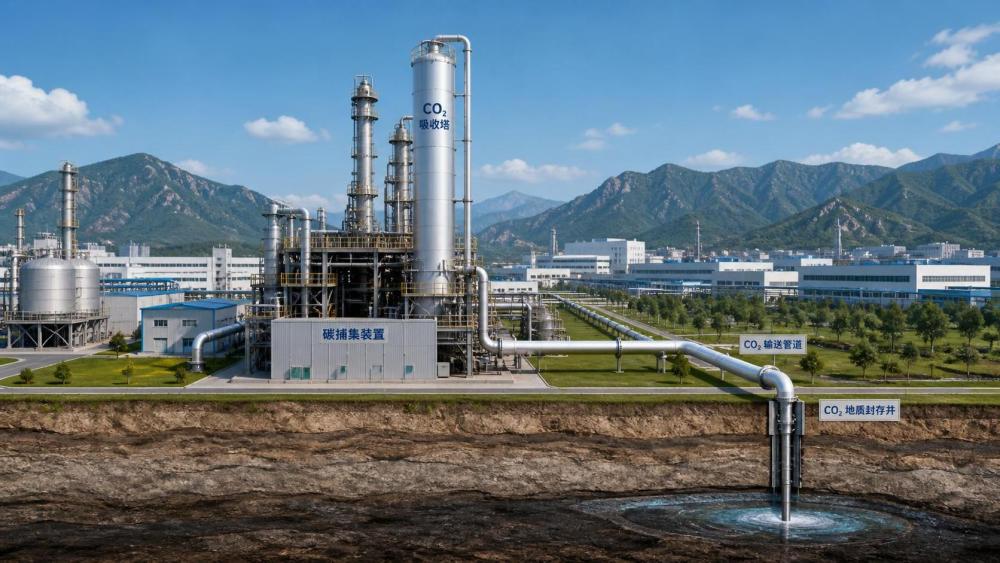
CCUS is technically mature enough for widespread deployment in selected applications, particularly where emissions are concentrated, carbon dioxide streams are relatively pure, and storage access exists.
However, it is not yet mature as a universal decarbonization solution for every facility, region, fuel, or industrial process. Project economics remain highly location-specific.
The technology itself is not a single product. CCUS combines capture equipment, gas treatment, compression, transport, injection wells, monitoring systems, permits, contracts, and long-term liability arrangements.
That system-level complexity explains why a proven capture unit does not automatically create a bankable, scalable carbon management project for an industrial operator.
For buyers and project leaders, the practical question is not whether CCUS works. It is whether a specific emission source can connect reliably to an affordable, permitted storage pathway.
Current deployment is strongest in natural gas processing, ammonia production, hydrogen, ethanol fermentation, and certain refining operations. These sectors often handle high-concentration carbon dioxide streams already.
Harder applications include cement kilns, steelmaking, waste-to-energy plants, petrochemical furnaces, and dispersed manufacturing sites. These sources require more energy-intensive capture and more complicated integration.
Therefore, widespread use should be understood as phased expansion. Large industrial hubs can deploy CCUS today, while broader adoption depends on infrastructure buildout, cost reduction, and regulatory certainty.
Where Carbon Capture Technology Is Commercially Proven Today
Post-combustion chemical absorption is the most established capture approach for flue gases. It commonly uses solvents to selectively remove carbon dioxide before treated gas is released.
This approach is relevant to power plants, cement facilities, refineries, boilers, and chemical plants. Its major advantage is the ability to retrofit some existing emission sources.
Its main limitation is energy demand. Solvents must be regenerated using heat, often steam, which can reduce plant efficiency and increase operating costs significantly.
Pre-combustion capture is also well understood. It separates carbon dioxide during hydrogen or synthesis gas production, typically before fuels are combusted in downstream equipment.
Because carbon dioxide is often under higher pressure in these systems, separation can be more efficient. This helps explain the relative readiness of hydrogen and ammonia projects.
Natural gas processing has deployed carbon dioxide separation for decades where raw gas contains excess carbon dioxide. The key change is storing captured gas rather than venting it.
Oxy-fuel combustion, membranes, solid sorbents, cryogenic separation, and calcium looping can offer advantages for particular processes. Yet most remain less broadly commercial than solvent-based systems.
For procurement teams, technology maturity should be assessed at the operating condition level. Ask for references involving similar gas composition, pressure, contaminants, capacity, uptime, and integration constraints.
A vendor may have an impressive pilot unit, but pilots do not necessarily demonstrate reliable multi-year performance at full industrial scale. Reference verification matters more than presentation claims.
Why Capture Is Often the Hardest Economic Decision
Capture commonly represents the largest share of total CCUS cost, especially for dilute flue gases. Lower carbon dioxide concentration generally means higher energy use per tonne captured.
Facilities should characterize their emissions before selecting equipment. Important variables include annual volume, concentration, temperature, pressure, impurities, oxygen content, moisture, sulfur compounds, and operating variability.
Cement and steel producers face particularly demanding conditions because process emissions cannot be eliminated merely by switching electricity supply. CCUS may be essential, but implementation remains capital-intensive.
Retrofitting an operating plant introduces additional risks. Space limitations, steam availability, electrical upgrades, shutdown windows, corrosion concerns, and control-system integration can alter expected project economics.
New-build projects can incorporate capture requirements earlier. This allows designers to optimize heat integration, plot plans, compression systems, utility capacity, and future pipeline connections.
Management teams should evaluate avoided emissions cost rather than capture cost alone. The relevant comparison includes carbon taxes, allowance prices, compliance exposure, product premiums, and alternative decarbonization investments.
A project can be technically successful yet commercially weak if it depends on volatile carbon markets or uncertain policy support. Revenue and compliance assumptions should be stress-tested carefully.
Energy supply also deserves scrutiny. Electrified compression and solvent regeneration can raise electricity or fuel demand, potentially undermining emissions benefits if the energy source remains carbon-intensive.
Lifecycle accounting should include capture efficiency, fuel use, methane leakage where relevant, transport emissions, compression power, and storage monitoring. Gross capture rates alone can mislead decision-makers.
Transport and Storage Determine Whether CCUS Can Scale
Carbon dioxide pipelines, shipping terminals, intermediate storage, compression stations, and injection wells are the essential backbone of widespread CCUS. These assets are often slower to develop than capture plants.
A single industrial facility can build capture equipment, but it usually cannot economically develop an entire transport-and-storage network alone. Shared infrastructure changes the business case substantially.
Pipeline transport is usually most attractive for large, continuous volumes in regions with concentrated industrial clusters. It requires route approvals, land access, technical standards, and dependable throughput commitments.
Shipping can connect coastal emitters to offshore storage hubs and may suit early projects with varied volumes. It also introduces port capacity, liquefaction, vessel scheduling, and transfer requirements.
Permanent geological storage is commercially established in certain regions, especially depleted hydrocarbon reservoirs and deep saline aquifers with strong geological data and supportive regulations.
Storage suitability cannot be assumed from regional geology alone. Operators need reservoir characterization, injection modeling, well integrity assessments, seismic surveys, monitoring plans, and regulatory approval.
The most credible storage projects demonstrate containment through measurement, monitoring, and verification. These systems track injected volumes, plume movement, pressure behavior, and potential migration pathways over time.
Long-term liability remains a major concern for investors and emitters. Clear rules are needed to define responsibility during operation, after closure, and after a potential transfer to government stewardship.
Projects near proven storage basins will generally mature faster than inland facilities without access to pipelines, shipping routes, licensed wells, or cross-border carbon dioxide transport agreements.
Utilization Can Add Value, But It Will Not Absorb Every Tonne
Carbon utilization includes enhanced oil recovery, chemical production, mineralization, synthetic fuels, concrete curing, algae processes, and other pathways that use captured carbon dioxide as an input.
Utilization can improve project economics when it replaces an existing purchased carbon dioxide supply or creates a differentiated product. It should not automatically be treated as permanent removal.
Many utilization markets are limited compared with global industrial emissions. A regional beverage, food, welding, or chemical market may consume valuable carbon dioxide volumes, but not megatonne-scale emissions.
Enhanced oil recovery has proven carbon dioxide handling capabilities, although its climate value requires transparent lifecycle analysis. Incremental hydrocarbon production can offset part of the storage benefit.
Mineralization offers strong permanence potential because carbon dioxide becomes chemically bound in stable materials. Its feasibility depends on feedstock availability, reaction rates, logistics, and product-market acceptance.
Industrial buyers should separate utilization opportunities from storage requirements. A robust CCUS strategy may include both, but long-term storage is necessary for emissions volumes exceeding local utilization demand.
What Makes a CCUS Project Bankable for Industrial Decision-Makers
A mature CCUS project needs more than reliable equipment. It needs a coordinated commercial structure that allocates volume, quality, timing, cost, performance, and liability risks among participants.
First, quantify the emissions source with high-quality operating data. Annual averages are not enough when capture units must handle load changes, maintenance cycles, and process upsets.
Second, define the carbon dioxide specification required by transport and storage providers. Water, oxygen, nitrogen, hydrocarbons, sulfur compounds, and particulates can affect corrosion and injection performance.
Third, secure an integrated transport and storage route before making a final investment decision on capture. Capture equipment without contracted offtake can become a stranded asset.
Fourth, examine counterparties carefully. Storage operators, pipeline developers, engineering contractors, technology licensors, insurers, and monitoring providers all influence project delivery and long-term operability.
Fifth, build conservative financial cases. Model lower plant utilization, delays in storage availability, higher power prices, carbon-price volatility, construction inflation, and capture-performance degradation.
Sixth, confirm the accounting framework. Buyers increasingly need verifiable emissions reductions for compliance reporting, product declarations, sustainability claims, and low-carbon procurement requirements.
For multinational businesses, jurisdictional differences are critical. Permitting timelines, tax credits, grants, storage rights, cross-border rules, and carbon accounting methodologies vary materially across markets.
Well-designed hub models can reduce risk because multiple emitters share transport and storage capacity. They also require clear rules for access, expansion, tariff structures, and capacity allocation.
Supply-Chain Readiness Is Improving, but Capacity Constraints Remain
The CCUS supply chain has expanded rapidly, supported by demand for decarbonization equipment across energy, chemicals, cement, steel, and waste-management sectors. Yet bottlenecks remain significant.
Key equipment includes absorbers, regenerators, heat exchangers, compressors, dehydration units, membranes, cryogenic systems, pipelines, injection pumps, monitoring instruments, and specialized well components.
Large compressors, corrosion-resistant materials, high-capacity heat-transfer equipment, engineering labor, drilling rigs, and offshore installation resources can all create schedule pressure for major developments.
Technology providers should provide realistic delivery schedules and performance guarantees. Buyers should distinguish between guaranteed conditions, design assumptions, exclusions, and performance-test protocols before contract award.
Material selection is especially important because carbon dioxide streams can become highly corrosive when water and contaminants are present. Drying specifications and impurity control require disciplined engineering.
Qualified suppliers should demonstrate familiarity with relevant pressure equipment codes, pipeline standards, hazardous-area requirements, emissions monitoring rules, and the environmental regulations governing the project location.
Local manufacturing capacity can reduce logistical risk, but specialized international suppliers may be necessary for critical process equipment. Procurement plans should balance delivery certainty with technical capability.
Early engagement with suppliers helps projects reserve fabrication slots and identify long-lead components. Waiting until permitting is complete can create avoidable timing conflicts in crowded markets.
Which Industries Should Move First?
Industries should prioritize CCUS when alternatives cannot adequately address process emissions, when carbon dioxide is concentrated, and when dependable storage infrastructure is nearby or contractually secured.
Ammonia, hydrogen, ethanol, natural gas processing, and certain refinery units are logical early candidates. Their carbon dioxide streams can be more favorable than typical combustion exhaust.
Cement producers should assess CCUS seriously because calcination releases unavoidable process carbon dioxide. Capture may be one of the few routes to deeply reduce residual clinker-related emissions.
Steelmakers should compare CCUS with direct reduced iron, scrap-based electric arc furnaces, hydrogen, biomass, and process redesign. The preferred pathway depends on existing assets and energy availability.
Chemical producers may find value in integrating capture with hydrogen production, syngas operations, ammonia plants, and industrial gas systems. Feedstock quality and energy integration are decisive factors.
Smaller, dispersed facilities should generally avoid treating CCUS as an immediate default. Energy efficiency, electrification, renewable power, material substitution, and production optimization may offer lower-cost reductions first.
The correct sequencing is sector-specific. CCUS works best as part of a broader decarbonization portfolio, not as a reason to postpone cost-effective emissions reductions already available.
How to Decide Whether CCUS Is Ready for Your Facility
Start with a screening study that combines emissions data, energy integration analysis, nearby transport routes, storage options, policy incentives, and a preliminary view of total delivered cost.
Then compare multiple cases: no capture, partial capture, phased capture, hub connection, utilization sales, and permanent storage. Include realistic construction, operating, and closure assumptions.
Technical due diligence should examine capture performance under actual operating conditions rather than idealized design cases. Site testing and front-end engineering can reveal integration issues early.
Commercial due diligence should test the durability of storage contracts, access rights, tariff arrangements, tax-credit eligibility, carbon accounting, force majeure clauses, and post-closure obligations.
Do not evaluate suppliers solely on capture efficiency. Evaluate maintainability, solvent management, energy consumption, spare-parts availability, emissions guarantees, operator training, and integration support.
A facility is a strong candidate when it has sizable and stable emissions, a favorable gas stream, manageable utility demand, credible storage access, and predictable policy or customer value.
A facility is a weak candidate when its emissions are small, intermittent, geographically isolated, highly dilute, or exposed to uncertain storage access. In those cases, defer or pursue alternatives.
Conclusion: CCUS Is Ready to Deploy, but Readiness Is Local
CCUS technology is mature enough for widespread use in priority industrial clusters and favorable emission sources. It is no longer limited to laboratory concepts or isolated demonstration projects.
Its limiting factors are increasingly commercial and infrastructural rather than purely technical. Capture systems, transport networks, storage permits, financing structures, and regulation must develop together.
For energy, chemical, metals, and manufacturing leaders, the most useful conclusion is practical: assess CCUS by facility, basin, and supply chain rather than by global headlines.
Projects with concentrated emissions and credible storage pathways should move from screening to detailed engineering. Other facilities should monitor infrastructure development while prioritizing more immediate reduction measures.
CCUS will not replace efficiency, electrification, renewable energy, or material innovation. But for hard-to-abate emissions, it is becoming an increasingly necessary and commercially actionable tool.