




How Do You Evaluate a Sustainable Energy Project's Viability?




A sustainable energy project can promise lower emissions yet struggle to deliver reliable returns. A solar installation may produce inexpensive electricity when the grid needs it least. A bioenergy plant may have dependable customers but uncertain feedstock supply. A battery may solve a real operational problem without earning enough revenue to cover replacement costs.
Understanding how to evaluate sustainable energy project viability means looking beyond installed capacity and comparing technical performance, lifecycle costs, market access, environmental outcomes, and implementation risk. For investors, engineers, buyers, and project managers, the central question is not simply “Does this technology work?” It is “Will this particular project work here, under realistic commercial conditions?”
Start with the service you need—not the technology you prefer
Comparisons become misleading when projects serve different purposes. A wind farm selling electricity to the grid, a rooftop solar system reducing factory purchases, and a battery providing backup power should not be ranked solely by cost per installed kilowatt.
Define the required service before requesting proposals: annual electricity production, dependable heat, peak-demand reduction, dispatchable capacity, transport fuel, or resilience during outages. Specify the location, operating schedule, project life, and acceptable interruptions. For industrial users, power quality and integration with existing equipment may matter as much as energy volume.
Then establish a credible baseline. Compare the proposed project with continued operation, efficiency improvements, equipment replacement, or another energy supply option. A project can outperform an expensive alternative while still being less attractive than reducing demand first.
A useful comparison holds the service constant. If continuous supply is required, evaluate renewable generation alongside the storage, backup, grid connection, and controls needed to deliver it—not as a stand-alone plant with an attractive headline price.
Different technologies need different evidence
The same financial framework can cover multiple technologies, but the underlying evidence should change. A generic feasibility checklist often misses the factor that determines whether a project survives.
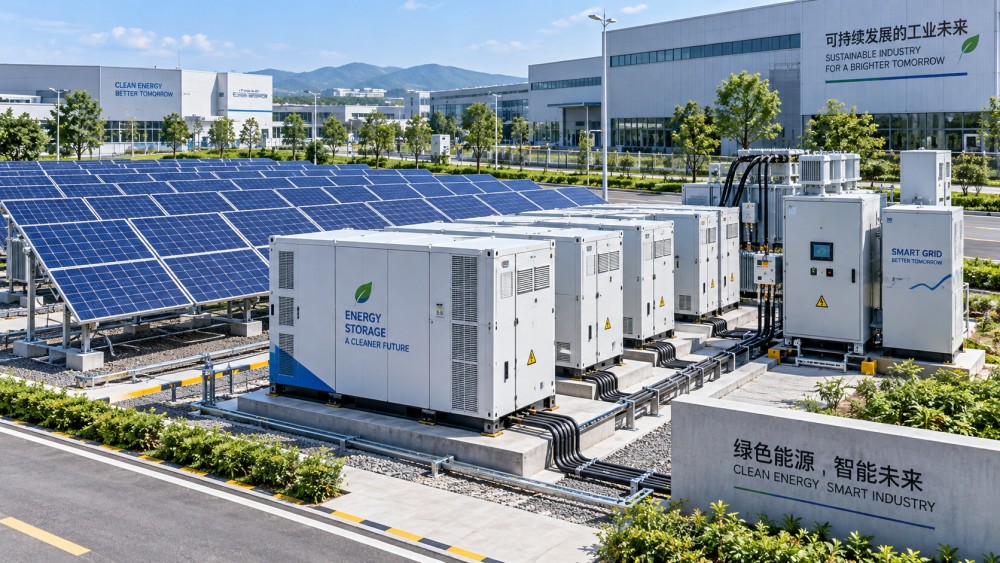
Storage deserves particular care: it shifts energy rather than creating it. Its value depends on when it charges and discharges, which services it can provide, and whether those services can legally and physically be combined. Adding every possible revenue stream to one forecast can substantially overstate earnings.
Technology maturity also changes the evaluation. Established equipment requires site-specific validation; an emerging process may additionally require pilot evidence, scale-up analysis, and stronger performance guarantees. A successful demonstration does not automatically establish commercial-scale reliability.
How to evaluate sustainable energy project viability with a defensible model
A useful model connects physical output to cash flow. It should allow reviewers to trace each important assumption back to measurements, contracts, quotations, operating evidence, or clearly identified estimates.
Translate the resource into saleable output
Installed capacity is only the starting point. Estimate hourly or otherwise appropriately time-resolved production, then account for equipment losses, auxiliary consumption, downtime, degradation, grid constraints, and curtailment. For heat or fuel projects, include conversion losses and product quality requirements.
Distinguish gross generation from energy delivered at the contractual settlement point. Where relevant, review both P50 and P90 production estimates. P90 represents an output level expected to be exceeded with 90% probability under the assessment’s assumptions and specified period; it is not a guarantee.
For behind-the-meter projects, align production with the customer’s actual demand profile. Annual totals can hide substantial exports or periods of unmet demand. An installation that offsets expensive purchased electricity may have different economics from one selling most of its output at wholesale prices.
Capture costs beyond the equipment quotation
Capital expenditure should include development, engineering, civil works, interconnection, installation, commissioning, owner’s costs, and appropriate contingency. Depending on the project, land rights, network upgrades, import duties, or drilling may outweigh the apparent equipment-price advantage.
Operating expenditure includes maintenance, labor, insurance, land payments, network charges, feedstock, consumables, and compliance. Model major replacements, battery augmentation, inverter replacement, waste handling, and eventual decommissioning where applicable.
Compare supplier offers on equivalent scope and commercial terms. A low equipment price may exclude freight, controls, installation support, spare parts, or performance testing. Currency exposure and long lead times can also change the delivered cost before construction begins.
Use several financial measures—not one winning number
- Net present value (NPV): tests whether expected cash flows exceed investment and other costs at a stated discount rate.
- Internal rate of return (IRR): supports comparison with return requirements, but should be read alongside project scale, cash-flow timing, and NPV.
- Debt service coverage ratio (DSCR): compares cash available for debt service with required debt payments in the relevant period.
- Levelized cost of energy (LCOE): compares discounted lifecycle costs with discounted energy output, using consistent boundaries and assumptions.
- Payback period: provides a simple view of capital recovery but misses value and liabilities after the payback date.
LCOE is useful for comparing generation costs, but it does not measure the market value of production, reliability, or profitability. For storage, examine levelized storage costs together with charging costs, operating strategy, and achievable revenues. Keep nominal and real values consistent, and distinguish project returns from equity returns after financing.
Compare revenue quality, not just projected revenue
Two projects with identical forecast income can carry very different risks. A long-term power purchase agreement with a creditworthy buyer may support financing more readily than an optimistic merchant-price forecast. Yet a contract can introduce its own obligations: delivery commitments, imbalance exposure, penalties, or limited price indexation.
Review who pays, what triggers payment, how prices change, and what happens if output is unavailable. For self-consumption projects, examine the avoided tariff components individually. Some charges fall with energy consumption; others remain, and demand-charge savings depend on reducing the relevant billing peak.
Separate revenues into three categories: contracted, reasonably forecast but uncontracted, and contingent. Subsidies, renewable certificates, carbon credits, capacity payments, and ancillary-service revenues require explicit checks on eligibility, duration, market access, and potential rule changes.
A practical comparison asks whether the project remains acceptable without its least secure income stream. If removing speculative carbon-credit revenue makes the investment fail, that uncertainty belongs at the center of the decision—not in a footnote.
Environmental credibility and permission to operate are separate tests
A positive financial result does not prove sustainability. Assess lifecycle greenhouse gas emissions against a defined baseline and functional unit, such as electricity delivered or useful heat supplied. Consider equipment production, construction, fuel sourcing, operations, and end-of-life treatment where material.
Bioenergy should not automatically be treated as carbon-neutral. Feedstock origin, alternative uses, land-use change, transport, and methane leakage can materially affect its climate performance. Likewise, the emissions benefit of storage depends partly on which electricity it consumes and which generation its discharge displaces.
Environmental review should also cover water, biodiversity, waste, hazardous materials, local air quality, and community impacts. Carbon savings do not cancel out an unacceptable impact elsewhere.
Alongside this review, build a jurisdiction-specific permit register. Identify land rights, planning approval, environmental authorization, grid agreements, construction permits, operating licenses, and relevant safety requirements. Assign an owner and expected completion date to each. Equipment certification alone does not establish project-level approval.
Early community engagement can reveal constraints that desktop analysis misses: access-road concerns, competing land uses, noise sensitivities, or local expectations about employment. These issues can affect both project design and schedule.
Stress-test the comparison before choosing a winner
A base case shows what happens if assumptions unfold as expected. A viability decision also needs to show what happens when they do not. Begin with individual sensitivities, then test combined scenarios that reflect plausible relationships between risks.
- Construction downside: higher capital costs, delayed commissioning, and additional financing costs.
- Operating downside: lower output, more downtime, higher maintenance costs, or faster degradation.
- Market downside: weaker realized prices, greater curtailment, lower price spreads, or rising feedstock costs.
- Policy and financing downside: reduced incentives, changed market rules, higher borrowing costs, or unfavorable exchange rates.
Calculate break-even values for the assumptions that matter most: minimum sale price, maximum delivered feedstock cost, required self-consumption, or tolerable construction delay. These thresholds make negotiations and risk management more concrete.
Consider a hypothetical factory comparing solar alone with solar plus storage. The combined system may increase self-consumption and reduce certain peaks, but it also adds capital cost, conversion losses, and future replacement expenditure. If the tariff rewards neither peak reduction nor time shifting sufficiently, the simpler system may offer better financial value. If continuity of operations is essential, storage may still be justified—but its backup capability must be designed and valued explicitly.
Turn the evidence into a go, redesign, or stop decision
Do not let a weighted score conceal a fatal constraint. Secure site access, achievable permitting, workable interconnection, and acceptable safety should be decision gates. Once these are satisfied, compare financial resilience, emissions benefits, operational fit, supply-chain strength, and delivery confidence.
For procurement and market research, structured industry information can improve the quality of those comparisons. GEMM brings together product categories, technical knowledge, supplier references, application guidance, market trends, export updates, and pricing intelligence across energy and related materials sectors. These resources can support specification checks, supplier screening, and cost benchmarking; they do not replace site studies, binding quotations, legal review, or independent engineering.
The final recommendation should state what is known, what remains uncertain, and what must happen before capital is committed. Proceed when the project meets its service requirement and survives credible downside conditions. Redesign when a fixable issue—such as system size, tariff exposure, or procurement scope—undermines the result. Stop when essential constraints cannot be resolved.
A viable sustainable energy project is not simply the one with the lowest quoted cost or highest forecast return. It is the one whose technical evidence, commercial structure, environmental case, and delivery plan support the same conclusion—even when the assumptions become less comfortable.
Related News
- 00
0000-00
Which sectors are driving demand in the chemical engineering market? - 00
0000-00
How to assess lifecycle emissions from CCUS for low-carbon cement - 00
0000-00
How do energy storage technologies compare for 8-hour discharge? - 00
0000-00
Do mill test reports prove industrial alloys meet ASTM standards? - 00
0000-00
How to verify plastic recycling system suppliers' throughput claims
Weekly Insights
Stay ahead with our curated technology reports delivered every Monday.