








For eight-hour electricity delivery, lithium-ion and flow batteries usually lead site-flexible evaluations. Pumped hydro and compressed air deserve attention where geography and project scale justify development.
Thermal storage belongs on the shortlist when the required output is heat. Electricity delivery requires additional conversion equipment, changing efficiency, cost, and operating requirements substantially.
A useful energy storage technology comparison therefore starts with guaranteed output, charging availability, and lifetime duty. Initial equipment prices alone cannot identify the strongest project.
Technical evaluators should compare usable capacity, round-trip efficiency, degradation, site constraints, and lifecycle economics under one operating profile. Those assumptions often determine the preferred technology.
What must an eight-hour storage system actually deliver?
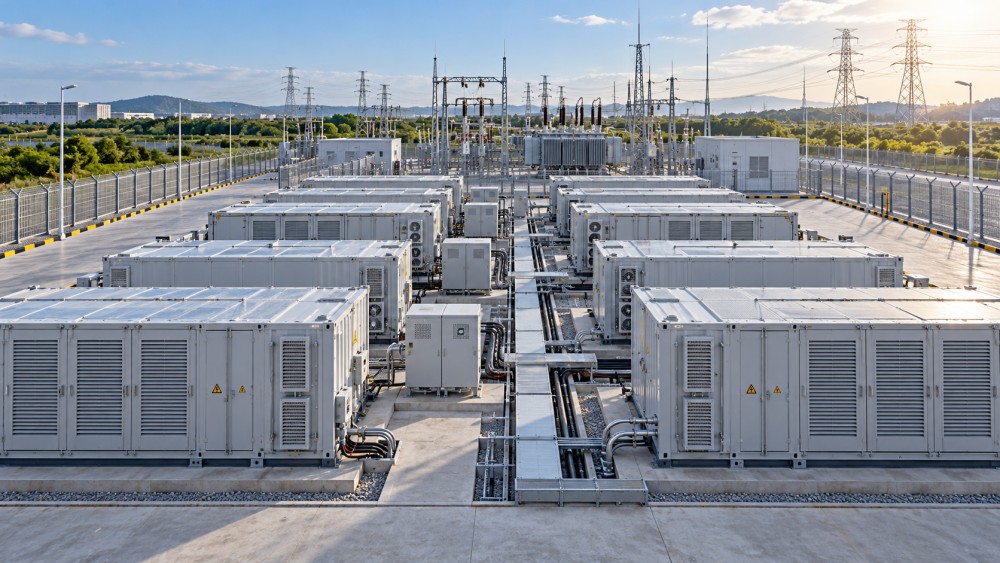
Define discharge duration at the grid connection or customer delivery point. A 100 MW project supplying full power for eight hours must deliver 800 MWh.
That requirement should apply under specified ambient conditions and at a defined project age. Beginning-of-life nameplate capacity does not establish dependable performance throughout the contract.
Request separate values for installed capacity, usable stored energy, and net delivered electricity. Include inverter losses, transformer losses, cooling, pumps, and other auxiliary consumption explicitly.
Specify discharge frequency, minimum charging time, reserve obligations, and expected downtime. Daily cycling creates a different engineering problem from occasional backup or seasonal energy shifting.
Also identify whether full output must remain available after an equipment outage. Redundancy requirements can increase installed capacity and materially alter the apparent cost advantage.
How do the main technologies compare?
The following ranges are indicative screening values for electricity-to-electricity round-trip efficiency. Actual performance depends on system boundaries, operating conditions, equipment design, and auxiliary energy consumption.
These figures support initial screening, rather than procurement guarantees. Require bidders to calculate efficiency at the same delivery boundary and across the intended operating profile.
Technology maturity also varies within each category. Assess the proposed configuration and reference installations, because experience with one design may not transfer to another automatically.
When should lithium-ion or flow batteries lead the shortlist?
Lithium-ion deserves consideration where efficient electricity delivery, limited space, and established integration capability carry substantial value. Eight-hour duration remains feasible, although additional battery capacity raises investment.
For lithium-ion, assess usable energy after calendar aging and cycling degradation. Verify the proposed depth of discharge, temperature limits, and capacity warranty against actual dispatch.
Determine whether the supplier meets future capacity commitments through initial oversizing or later augmentation. Include replacement modules, installation labor, downtime, and warranty conditions in financial models.
Flow batteries become attractive when frequent cycling and longer discharge periods reward separate sizing of power and energy. Larger electrolyte inventories can extend duration without proportionally increasing stack power.
However, flow systems still require maintenance and component replacement. Examine stack service life, pump reliability, electrolyte management, containment requirements, and auxiliary consumption at partial load.
Neither chemistry wins automatically at eight hours. Compare vendor proposals using identical lifetime energy delivery, charging costs, availability commitments, land assumptions, and financing conditions throughout.
When do pumped hydro, compressed air, or thermal storage make sense?
Pumped hydro merits detailed assessment where suitable elevation, reservoir arrangements, and transmission access exist. Its infrastructure can operate for decades, subject to refurbishment and maintenance.
Its principal screening challenge is development feasibility. Geological investigations, water rights, environmental approvals, civil works, and construction schedules can outweigh favorable equipment economics at unsuitable sites.
Compressed air can suit large projects with appropriate underground storage or engineered containment. Confirm reservoir integrity, pressure cycling behavior, air treatment, and available operating evidence.
Distinguish fuel-assisted compressed-air plants from designs that store compression heat. Their energy inputs differ, so a single round-trip efficiency percentage can obscure fuel consumption and emissions.
For thermal storage, first establish whether customers need electricity, steam, or process heat. Direct heat delivery avoids the additional losses associated with converting heat into electricity.
If electrical output is required, evaluate the complete charging, storage, and generation system. Include minimum operating load, startup time, cooling demand, and power-block capital costs.
How much do efficiency and charging windows change the economics?
At 90% round-trip efficiency, delivering 800 MWh requires approximately 889 MWh of charging electricity. At 75%, the same delivery requires approximately 1,067 MWh of input.
The difference is about 178 MWh per cycle. At a uniform charging price of $50/MWh, that adds roughly $8,900 per cycle before other operating costs.
Actual charging costs depend on hourly prices and dispatch constraints. A lower-efficiency system may still compete if its capital savings outweigh additional lifetime electricity purchases.
Charging power is another potential constraint. Replenishing 889 MWh within six hours requires approximately 148 MW average input, potentially exceeding the project's available import capacity.
Evaluate charging and discharging ratings independently. Grid import limits, renewable generation profiles, and recovery time between events may eliminate configurations that otherwise satisfy discharge duration.
Calculate levelized cost of storage using consistent boundaries. Include charging electricity, financing, maintenance, replacements, augmentation, decommissioning, and defensible residual value across the same assessment period.
Then test project value separately against expected revenues or avoided costs. Low storage cost alone does not establish profitability when dispatch opportunities or connection capacity remain uncertain.
What evidence should evaluators request before selecting a supplier?
Issue one technical specification across shortlisted technologies. Ask every bidder to demonstrate the same delivered power, discharge duration, environmental conditions, project age, and operating schedule.
- Guaranteed performance: Net discharge power, usable energy, charging requirements, efficiency measurement boundaries, and performance across the expected temperature range.
- Lifetime obligations: Degradation assumptions, throughput limits, augmentation schedules, replacement responsibilities, availability exclusions, and remedies when guaranteed performance is missed.
- Site and safety requirements: Layout, access, noise, containment, emergency response, applicable certifications, and evidence supporting local permitting.
- Commercial evidence: Comparable operating references, maintenance capability, delivery schedules, spare-parts availability, and financial responsibility for long-term service commitments.
Require an acceptance test that measures net delivery over eight continuous hours. Define starting conditions, metering accuracy, auxiliary loads, and permissible interruptions before contract signature.
For an eight-hour project, shortlist technologies through site feasibility and output requirements, then compare guaranteed lifetime delivery. This produces a defensible decision grounded in operating reality.