




Comparing 316 Stainless Steel Plate Options for Service Life and Value




Why 316 Plate Selection Has Become a More Strategic Decision
In many industrial purchasing cycles, stainless steel plate is no longer treated as a routine commodity line. Buyers are being asked to justify not only the initial material price, but also the downstream effect on maintenance intervals, unplanned shutdown risk, fabrication efficiency, and asset life. That shift is especially visible when comparing 316-grade options, because the material is commonly chosen for environments where corrosion risk is high enough to make early failure expensive, but not every project has the same exposure level or budget tolerance.
For procurement teams, finance approvers, and operating managers, the practical question is not simply whether 316 stainless steel is suitable. The more important issue is which plate specification delivers the strongest balance between service life and total value under actual operating conditions. A lower unit price may look attractive during quotation review, yet it can become less competitive if the plate requires more frequent replacement, introduces fabrication complications, or performs inconsistently in aggressive process environments.
This is why material selection discussions increasingly involve more than one department. Engineering may focus on corrosion allowance and weldability, procurement may compare lead time and supply consistency, and finance may look at lifecycle cost rather than invoice price alone. When these priorities are aligned early, businesses are usually in a better position to avoid overspecification on one project and costly underperformance on another.
What Buyers Are Really Comparing
A purchasing review for 316 plate often starts with grade confirmation, but that is only the first layer. In practice, buyers may be comparing a broader set of variables: thickness tolerance, surface condition, dimensional stability, origin, test documentation, and how reliably the material matches the intended fabrication route. These factors affect both how the plate behaves in service and how efficiently it moves through the supply chain.
Corrosion resistance is usually the headline reason for selecting this grade. Because 316 contains molybdenum, it is commonly considered for chloride-bearing environments and applications where 304 may offer less long-term confidence. Even so, not all service settings place the same demands on the plate. Indoor equipment cladding, chemical storage structures, marine-adjacent fabrication, and food processing support systems may all call for stainless steel, but their exposure patterns differ significantly. The best-value option is therefore linked to use conditions rather than grade name alone.
Another comparison point is how the plate contributes to fabrication economics. Material that cuts cleanly, maintains flatness, and performs predictably during forming and welding may help reduce shop-floor delays. That matters for manufacturers working on tight delivery schedules, because seemingly minor inconsistencies can increase scrap, rework, or labor hours. From a finance perspective, these indirect costs are often overlooked during early vendor comparison.
Key Criteria That Influence Service Life and Value
A useful evaluation framework usually combines technical suitability with commercial reliability. Buyers often benefit from separating the decision into a few core questions rather than relying on a single price-per-ton comparison.
- Exposure environment: Will the plate face chlorides, moisture cycling, cleaning chemicals, elevated temperatures, or stagnant contamination that may increase localized corrosion risk?
- Mechanical and fabrication demands: Does the project require bending, welding, polishing, or machining that could expose inconsistencies in plate quality?
- Dimensional and surface requirements: Are tolerance control and finish quality important for downstream assembly, hygiene expectations, or visible architectural use?
- Documentation and traceability: Can the supplier provide test certificates and material records needed for internal quality processes or regulated applications?
- Supply continuity: Is the source capable of delivering repeat orders with consistent specifications over time?
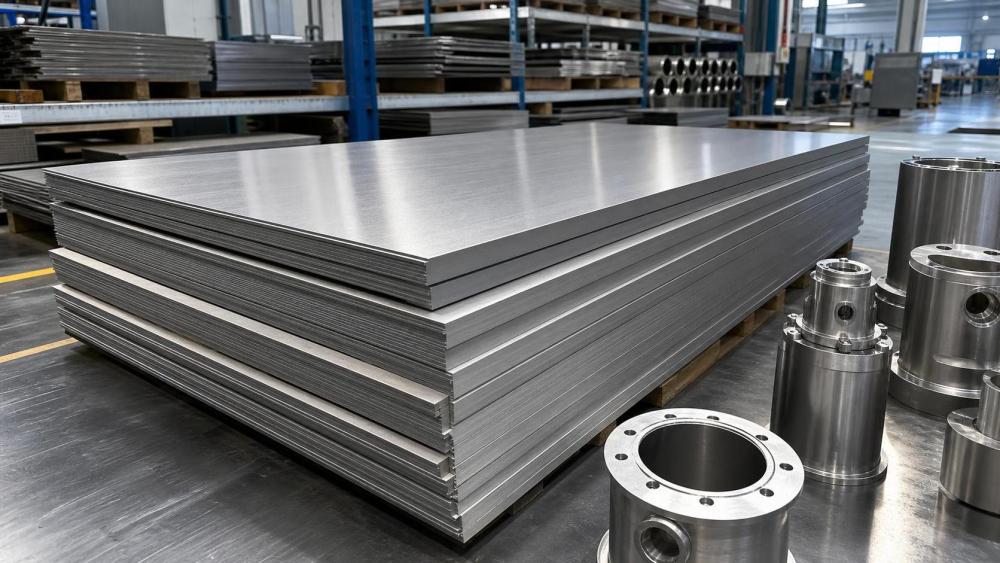
Service life is rarely determined by chemistry alone. Storage conditions before fabrication, weld quality, edge finishing, and cleaning practices after installation can all influence real-world durability. Still, the base material remains one of the most important control points, because it sets the ceiling for expected performance. For teams comparing 316 Stainless Steel Plate, the most reliable approach is to evaluate the plate within the entire operating system rather than as a standalone purchase item.
Where Buyers Can Misjudge the Cost Equation
One common mistake is assuming that all products labeled as the same grade will create equivalent long-term value. In reality, apparent savings can narrow quickly when delivery inconsistency causes production rescheduling or when plate condition increases fabrication losses. A procurement decision that looks efficient on paper may become expensive if the material requires additional inspection, extra processing, or premature replacement in service.
Another risk is overbuying performance that the application may never use. In lower-corrosion settings, some companies specify premium material without fully checking whether the operating environment justifies the added spend. That approach can protect against uncertainty, but it may also tie up budget that could be used for inspection, maintenance planning, or broader asset upgrades. Smart buying depends on matching performance margin to realistic exposure, not maximum theoretical exposure.
There is also a timing issue. During volatile procurement periods, some buyers focus heavily on immediate availability. Fast delivery is important, but it should not displace quality review. If a project accepts a poorly matched plate because it is in stock, the business may simply move the delay from purchasing to fabrication or operations. That is not a true time saving; it is a cost shift.
How Application Context Changes the Selection Priority
Different sectors tend to rank decision criteria differently. In food and beverage processing, surface condition, cleanability, and resistance to washdown environments may carry significant weight. In marine-adjacent fabrication, corrosion behavior under salt exposure may dominate the discussion. In chemical handling or process support equipment, buyers may place more emphasis on compatibility with cleaning agents, process moisture, and temperature cycling. The material itself may be the same nominal grade, but the purchasing logic is not.
This is where cross-functional review becomes useful. Procurement teams often gain better results when they ask operations how the plate will actually be cleaned, exposed, inspected, and repaired. Engineering teams can then translate those service conditions into technical requirements, while finance can compare the added acquisition cost against the likely cost of downtime, contamination risk, or replacement intervals. That process may take more effort upfront, but it generally improves confidence in the final sourcing decision.
A Practical Comparison Approach for Procurement and Finance
For organizations that need a more disciplined method, a side-by-side comparison table can make discussions more objective. Instead of debating only quoted price, decision-makers can review which option is more likely to hold value over the service window the business actually cares about.
This kind of framework also helps finance teams participate without getting lost in metallurgy details. They do not need to judge every technical nuance directly. They need a clear picture of where a higher upfront material cost could reduce downstream risk, and where a premium may not produce measurable business benefit.
Selection Guidance for Different Buying Scenarios
If the project involves corrosive exposure, hygiene-sensitive processing, or difficult replacement access, buyers often benefit from leaning toward stronger quality assurance and more rigorous specification review. In those cases, durability and consistency may be more valuable than small differences in purchase price.
If the plate is intended for less aggressive service or for equipment with simpler maintenance access, the evaluation may shift toward balancing acceptable performance with inventory flexibility and fabrication efficiency. Here, the business may gain more from disciplined requirement matching than from automatically choosing the highest-cost option available.
For repeat buyers, supplier performance history should also be part of the decision. A source that reliably delivers the same condition, dimensions, and documentation may create more value over time than one that occasionally offers a lower quote. Consistency supports planning, and planning supports cost control.
Closing Perspective
Comparing 316 stainless steel plate options is ultimately a business decision shaped by technical exposure, fabrication realities, and financial discipline. The strongest purchasing outcomes usually come from looking beyond the headline grade and asking how the material will behave across the full service cycle. When buyers evaluate corrosion demands, processing requirements, documentation quality, and supplier consistency together, they are more likely to choose a plate option that protects both operating life and budget value.
In a market where every material line is expected to justify its place in the cost structure, careful selection of stainless plate can support longer asset life, steadier production, and fewer avoidable surprises after installation. That makes the comparison process worth treating as a strategic procurement task rather than a basic price exercise.
Related News
- 00
0000-00
How do EU allowances differ from other carbon assets in Europe? - 00
0000-00
Can a digital supplier discovery platform verify overseas suppliers? - 00
0000-00
Which drilling systems are suited to long-lateral shale wells? - 00
0000-00
Which sectors are driving demand in the chemical engineering market? - 00
0000-00
How to assess lifecycle emissions from CCUS for low-carbon cement
Related tags
Weekly Insights
Stay ahead with our curated technology reports delivered every Monday.