




An export controls compliance guide to checking U.S. license requirements




A U.S. export license requirement depends on several connected facts: which regulations cover the item, its technical classification, where it is going, who will receive it, and how it will be used. A familiar product or a repeat customer does not remove the need to check those facts.
This export controls compliance guide follows the order needed to reach a practical shipment decision. Start with a documented product description, establish the applicable controls, then assess the complete transaction. An EAR99 designation alone does not authorize shipment, and a customs tariff code does not establish export control classification.
Build the transaction file before checking license requirements
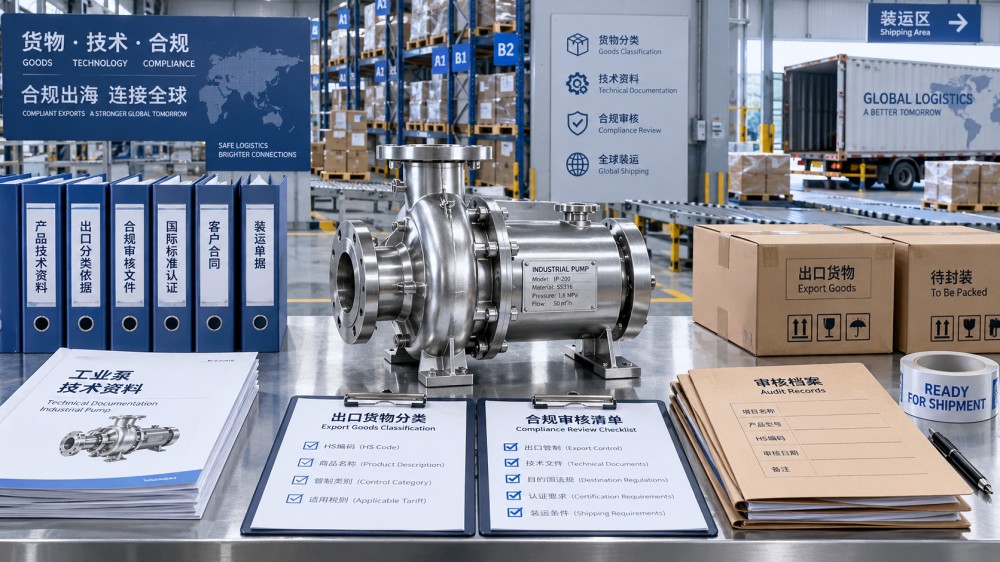
A description such as “industrial pump,” “metal alloy,” or “laboratory chemical” is too broad for a reliable decision. Controls can depend on construction materials, performance capabilities, chemical composition, or features that a commercial invoice leaves out.
Collect enough information to identify both the item and its intended movement:
- Product details: manufacturer, model, part number, specifications, composition, and relevant accessories.
- Technical scope: software, drawings, operating instructions, or technical assistance supplied with the goods.
- Transaction parties: purchaser, consignee, end user, intermediaries, and relevant addresses.
- Movement and purpose: origin, destination, transit route, installation location, and intended application.
For chemicals, include identifiers and concentration where relevant. For alloys, record composition and material form. For equipment, capture the performance and design characteristics needed to compare it with control-list descriptions. Safety data sheets and catalog pages can support the review, but may omit decisive details.
GEMM’s structured industry resources can help organize product categories, applications, and technical information across equipment, chemicals, metals, and advanced materials. This preparation supports classification research; GEMM’s industry categories do not themselves determine a legal export classification.
Establish which U.S. rules apply
Many commercial industrial goods, software, and technologies fall under the Export Administration Regulations (EAR), administered by the Bureau of Industry and Security (BIS). Certain defense articles and defense services fall under the International Traffic in Arms Regulations (ITAR), administered by the State Department. Other specialized items can involve additional agencies.
A military customer does not automatically make an ordinary commercial item ITAR-controlled. Equally, describing a product as “industrial” does not establish that it falls under the EAR. Jurisdiction depends on the item and the applicable regulatory criteria.
The physical shipping location also does not settle the question. U.S. controls can apply to reexports and transfers within foreign countries. Certain foreign-made items can fall under the EAR through rules involving controlled U.S. content or specified U.S. technology and software.
If jurisdiction is unclear, pause the release and have the responsible compliance specialist resolve it. Using the wrong regulatory framework makes every later license check unreliable.
Determine the ECCN—or establish why EAR99 applies
For an item subject to the EAR, determine whether it falls within an Export Control Classification Number (ECCN) on the Commerce Control List. An ECCN identifies a controlled category and provides information needed to assess licensing requirements.
Compare the exact product against the entry’s technical scope, subparagraphs, and notes. A keyword match is only a starting point. Two pumps used in the same process may have different classifications because their construction or capabilities differ. Different grades of the same material can also produce different results.
A manufacturer’s classification can be useful when it covers the exact model and configuration being shipped. Retain its supporting documentation. For difficult classifications, a BIS commodity classification request can help resolve how an item is classified, but classification does not replace the transaction-level licensing review.
EAR99 means an item is subject to the EAR but is not listed under an ECCN on the Commerce Control List. It does not mean “outside export controls.” EAR99 items can still face license requirements because of the destination, recipient, or end use.
Keep customs classification separate. Harmonized System and Schedule B codes serve customs and statistical purposes; they are not substitutes for ECCNs. A supplier’s tariff code cannot establish that a shipment qualifies for export without a license.
Connect the classification to the destination
For an item with an ECCN, identify the reasons for control in the relevant entry. Where applicable, compare them with the destination country using the Commerce Country Chart. Read the entry’s additional licensing provisions as well: the chart does not capture every restriction.
Then review destination-specific rules, including relevant provisions in EAR Part 746, and applicable sanctions administered by the Office of Foreign Assets Control (OFAC). BIS licensing and OFAC authorization address different legal requirements. A favorable result under one does not settle the other.
Check the ultimate destination and relevant routing details. Shipping through a distributor or an intermediate country does not remove controls associated with the eventual recipient or use. If the delivery address differs from the installation site, record and assess both.
The practical sequence is: jurisdiction, classification, destination controls, party screening, end-use review, and documented authorization.
Screen everyone involved and understand what a match means
Screen the purchaser, consignee, end user, and relevant intermediaries against applicable U.S. restricted-party lists. The U.S. Consolidated Screening List is a useful search resource, but the underlying list entry determines the restriction and its scope.
A possible name match needs investigation. Compare addresses, aliases, locations, and other identifying details before concluding that it concerns the same entity. Different lists impose different consequences; some create license requirements, while others involve denial of export privileges or sanctions prohibitions.
Ownership can matter even when the company’s own name does not appear. For example, OFAC blocking rules can extend to entities owned, directly or indirectly, 50 percent or more in aggregate by blocked persons. Name-only screening therefore has limits.
A screening result also cannot establish that the proposed activity is acceptable. A company may have no list match while a particular transaction remains restricted. Refresh the review before release and whenever parties, ownership, routing, or destination change.
Check whether the end use changes the decision
End-use controls can create a license requirement even when the item’s classification and destination would otherwise allow shipment. Relevant restrictions can involve nuclear activities, missile programs, chemical or biological weapons, and certain military or military intelligence activities. Their scope depends on the applicable rule and transaction.
Ask for an application description specific enough to assess. “Manufacturing” provides little insight. The facility, production process, equipment role, and ultimate user help explain whether the purchase fits its stated purpose.
For example, a laboratory reagent intended for routine quality testing presents a different review question from the same reagent connected to a restricted weapons activity. The product identity alone cannot settle the shipment decision.
Unexplained routing, specifications inconsistent with the stated application, or refusal to identify the end user are reasons to stop and resolve the discrepancy. An end-use statement is useful evidence, but it does not override contradictory information elsewhere in the transaction.
Document the authorization that allows release
After completing the checks, the transaction may require a license, qualify for a license exception, or proceed under the EAR as No License Required (NLR). Some transactions may be prohibited or require separate authorization under another regulatory regime.
NLR is a documented conclusion about a particular transaction. It should identify why no EAR license requirement applies after considering classification, destination, parties, and end use.
A license exception requires a separate eligibility review. Its conditions can limit destinations, recipients, uses, quantities, or handling arrangements. A temporary demonstration, repair, or replacement shipment is not automatically exempt simply because no sale occurs.
If a license is required, obtain it before the controlled activity occurs and check its conditions against the shipment. Confirm that it covers the items, parties, destination, scope, and period involved.
The release file should contain the classification rationale, screening results, end-use information, licensing determination, and applicable authorization. Record who approved release and retain the supporting records under the relevant requirements. Include software delivery and technical-data access in the workflow when applicable. If the configuration, recipient, installation site, or intended use changes, reopen the affected checks before proceeding.
Related News
- 00
0000-00
An export controls compliance guide to checking U.S. license requirements - 00
0000-00
Petroleum refining technology trends reshaping refinery decarbonization - 00
0000-00
How energy storage strengthens sustainable energy reliability - 00
0000-00
How trade compliance solutions reduce export documentation errors - 00
0000-00
How material intelligence is reshaping sourcing decisions in Southeast Asia
Related tags
Weekly Insights
Stay ahead with our curated technology reports delivered every Monday.