




Does the Energy Transition Require Complete Equipment Replacement?




Does the Energy Transition Require Complete Equipment Replacement?
Does the energy transition require complete equipment replacement? For most industrial operators, no. The right decision depends on asset condition, emissions targets, process compatibility, safety requirements, and lifecycle economics.
Modernizing existing systems can often reduce emissions and operating costs without sacrificing reliability. However, some aging assets cannot accommodate cleaner fuels, digital controls, electrification, or stricter compliance standards economically.
This article explains how energy, materials, chemical, and manufacturing businesses can compare replacement, retrofit, and hybrid transition strategies before committing capital to major projects.
Start With the Business Question, Not the Technology Trend
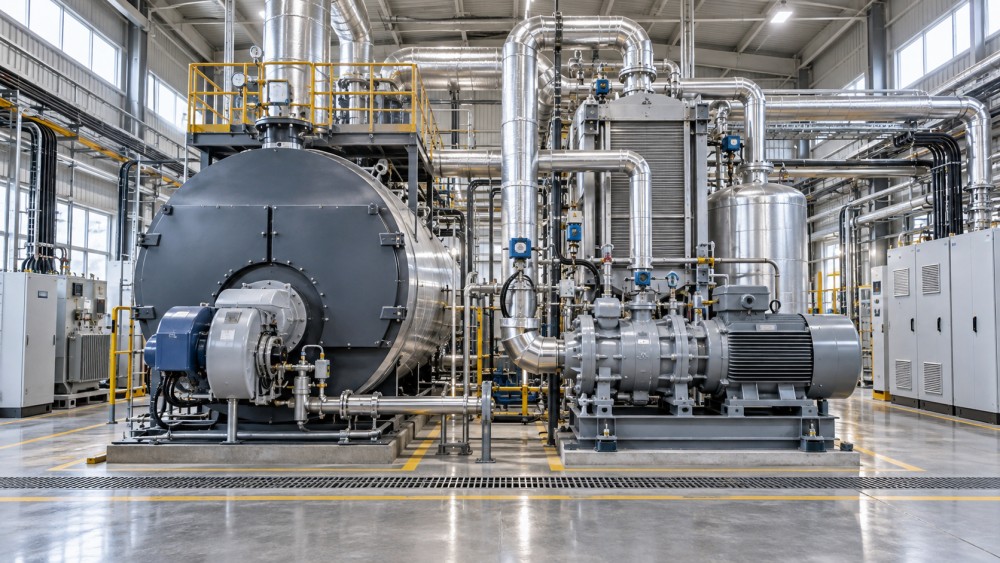
The energy transition does not automatically require companies to replace every boiler, furnace, pump, pipeline, compressor, reactor, vehicle, or production line they operate today.
Instead, operators should ask whether an existing asset can continue delivering safe, compliant, efficient production while supporting the organization’s future energy and carbon objectives.
This distinction matters because industrial equipment usually has long operating lives. Refineries, chemical plants, steel mills, pipelines, drilling systems, and molding lines may remain active for decades.
Replacing functioning equipment too early can destroy value, interrupt production, increase capital pressure, and create supply chain risks that offset some expected environmental gains.
At the same time, delaying upgrades can expose a company to rising energy costs, emissions penalties, customer requirements, reliability failures, and reduced competitiveness in lower-carbon markets.
The practical question is therefore not simply whether equipment is old. It is whether the asset remains economically and technically fit for the transition pathway.
For example, an industrial boiler may support lower-carbon operation through burner modifications, heat recovery, advanced controls, fuel switching, or partial electrification of nearby processes.
Conversely, an outdated furnace with poor thermal efficiency, limited automation, damaged refractory systems, and incompatible combustion design may justify full replacement instead of incremental upgrades.
When Retrofitting Existing Equipment Makes Financial Sense
Retrofitting is often the most attractive option when core mechanical systems remain sound, production demand is stable, and targeted upgrades can address the largest energy or emissions losses.
Common retrofit measures include variable-speed drives, high-efficiency motors, waste heat recovery units, insulation improvements, smart sensors, automation controls, and leak detection systems.
In process industries, relatively small control upgrades can improve combustion stability, reduce excess air, optimize feedstock use, and lower unplanned downtime without replacing major equipment.
Retrofits are especially valuable when equipment has substantial remaining useful life. A recently installed compressor, pump train, or molding machine may need modernization rather than replacement.
Operators should also consider retrofit projects when production cannot tolerate long shutdowns. Component-level upgrades may be installed during planned maintenance windows with limited operational disruption.
Fuel flexibility is another major factor. Some systems can be adapted for natural gas, biogas, renewable diesel, biofuels, hydrogen blends, or electrified auxiliary processes.
However, fuel switching requires more than replacing a burner or connection point. Material compatibility, pressure ratings, flame characteristics, safety controls, storage, and permits must be assessed.
A retrofit case becomes stronger when the project produces measurable savings quickly. Energy intensity, maintenance reduction, carbon costs, and improved throughput should all be quantified.
Signals That Full Equipment Replacement Is the Better Decision
Complete replacement becomes more compelling when existing equipment has reached end of life, creates persistent safety issues, or requires increasingly expensive maintenance to remain operational.
Repeated failures often indicate deeper system limitations. Replacing worn components may temporarily restore output, but it may not resolve obsolete design, poor efficiency, or limited process control.
Replacement may also be necessary when regulations require emission levels that an older asset cannot reach through practical modifications or supplemental pollution-control equipment.
For energy-intensive sectors, newer equipment can deliver step-change improvements. Electric arc furnaces, advanced heat pumps, high-efficiency electrolyzers, and modern process controls may transform operating performance.
Space constraints can make retrofitting impractical. Carbon capture systems, larger electrical infrastructure, thermal storage, or emissions-control equipment may require redesigning the broader facility layout.
Digital integration is another replacement trigger. Legacy equipment may lack compatible sensors, secure control interfaces, data connectivity, or automation capabilities needed for modern energy management.
Replacement should also be considered when a facility’s product portfolio is changing. New materials, recycled inputs, bio-based feedstocks, or higher purity specifications may require different process equipment.
Importantly, replacement decisions should include decommissioning costs, installation risks, commissioning requirements, workforce training, and lost production during transition periods.
Use Total Cost of Ownership Instead of Purchase Price
The initial equipment price rarely provides an adequate basis for energy transition decisions. Businesses need a total cost of ownership model covering the asset’s expected operating life.
This model should include energy consumption, fuel costs, maintenance expenses, spare parts, labor requirements, downtime exposure, emissions charges, insurance, and compliance obligations.
Capital expenditure remains important, but operating expenditure often determines the long-term value of a transition project. Efficient equipment can justify higher upfront investment through lower lifecycle costs.
Carbon pricing and customer procurement standards should be incorporated into forecasts. A low-cost legacy asset may become financially unattractive as environmental requirements become stricter.
Scenario analysis is particularly useful where electricity, hydrogen, natural gas, recycled feedstock, or carbon credit prices are uncertain. A single forecast can create false confidence.
Companies should model conservative, expected, and high-cost operating cases. This approach reveals whether a retrofit remains resilient if energy prices rise or incentives change.
Residual value also matters. Equipment that can be sold, redeployed, upgraded, or converted to another application has a different financial profile than an asset requiring disposal.
Decision makers should compare payback period, net present value, internal rate of return, and operational risk. No single metric captures every transition investment tradeoff.
Assess Technical Compatibility Before Choosing a Transition Path
Technical compatibility determines whether a promising decarbonization concept can operate reliably in the real plant environment. This assessment should precede supplier selection and budget approval.
Start with process conditions such as temperature, pressure, flow rate, heat demand, feedstock properties, operating cycles, and product quality tolerances.
Hydrogen illustrates the importance of detailed evaluation. Existing pipelines, valves, seals, compressors, and burners may require changes because hydrogen behaves differently from conventional fuels.
Electrification projects also require careful study. Available grid capacity, power quality, peak demand charges, backup requirements, and electrical safety systems may determine project feasibility.
For carbon capture, businesses must evaluate exhaust gas composition, capture technology requirements, solvent handling, compression needs, transport access, and long-term storage or utilization options.
In plastics and chemicals manufacturing, recycled or bio-based feedstocks can affect viscosity, contamination levels, reaction behavior, material properties, and downstream processing performance.
Testing should include pilot trials, laboratory analysis, engineering calculations, and supplier performance data. Vendor claims should be validated against the specific operating conditions of the site.
Technical studies also need to account for maintenance teams. A complex new system delivers limited value if the organization lacks skills, procedures, spare parts, or service support.
Prioritize the Assets With the Largest Transition Impact
Not every piece of equipment deserves equal attention. Industrial businesses should prioritize assets that create the largest energy use, emissions, production risk, or maintenance burden.
An energy and emissions baseline provides the starting point. Metering data should identify where electricity, fuels, steam, compressed air, and process heat are consumed.
Often, a small number of systems account for most site emissions. Furnaces, boilers, dryers, compressors, pumps, refrigeration units, and thermal processes frequently dominate consumption.
Companies can then rank opportunities using a practical matrix: emissions reduction potential, capital requirement, implementation complexity, downtime risk, and expected financial return.
Quick-return projects should not be dismissed because they appear modest. Better insulation, steam trap maintenance, motor upgrades, and control optimization can fund larger transformation projects.
High-impact projects may require longer planning cycles. Grid connection upgrades, plant electrification, carbon capture installations, and process redesign often need permits and external infrastructure.
A phased roadmap reduces risk by sequencing actions. Businesses can begin with monitoring and efficiency improvements before advancing toward fuel switching, electrification, or full asset replacement.
This staged approach also creates better data. Early projects help teams understand actual savings, operational constraints, and supplier performance before making irreversible capital commitments.
Consider Supply Chains, Standards, and Supplier Capability
Equipment decisions increasingly depend on external supply conditions. Availability of transformers, specialized alloys, high-voltage components, capture systems, electrolyzers, and advanced controls can affect project schedules.
Long lead times should be included in transition planning. A technically justified replacement project may still require years of procurement, engineering, construction, and commissioning.
Supplier evaluation should go beyond product brochures. Buyers should review technical specifications, manufacturing capacity, regional service support, reference installations, certifications, and warranty terms.
Standards and certifications are particularly important in energy infrastructure. Applicable requirements may cover pressure equipment, electrical safety, hazardous areas, emissions, material traceability, and cybersecurity.
For global projects, standards may differ by jurisdiction. A system accepted in one market may need redesign, recertification, or additional documentation before installation elsewhere.
Industrial buyers should ask suppliers about spare parts availability and lifecycle support. A lower-priced system can become costly if critical components have limited availability.
Material selection also deserves attention. Corrosion resistance, heat tolerance, hydrogen compatibility, chemical resistance, and recyclability can affect both transition performance and asset longevity.
Structured market intelligence helps procurement teams compare suppliers, technologies, trade activity, and price movements before committing to long-term equipment contracts.
Build a Practical Replacement Versus Retrofit Decision Framework
A disciplined framework helps organizations avoid decisions driven solely by equipment age, marketing pressure, or short-term budget constraints. The process should combine engineering and commercial evidence.
First, define the business objective. It may involve lowering emissions, reducing energy costs, meeting customer requirements, improving reliability, expanding capacity, or enabling a new product line.
Second, assess asset condition through inspections, maintenance history, efficiency data, failure analysis, and remaining-life estimates. Equipment age alone is an unreliable indicator.
Third, identify feasible options. These may include maintenance optimization, controls upgrades, component retrofits, fuel conversion, partial electrification, process redesign, or full replacement.
Fourth, compare each option using consistent assumptions. Include capital cost, operating savings, emissions impact, downtime, permitting complexity, workforce needs, and supply chain risk.
Fifth, test the preferred option against future scenarios. Consider energy prices, regulations, production volumes, carbon costs, technology availability, and customer demand over the asset lifecycle.
Finally, establish measurable implementation targets. Energy consumption, emissions intensity, uptime, product quality, maintenance costs, and financial performance should be tracked after project completion.
Clear measurement protects the investment case. It allows management to confirm savings, correct underperformance early, and use proven results to guide future transition decisions.
Conclusion: Modernize Selectively, Replace Strategically
Does the energy transition require complete equipment replacement? In many cases, it does not. Targeted modernization can deliver meaningful emissions reductions, better efficiency, and lower operating costs.
Retrofitting is often suitable for sound assets with remaining useful life, manageable compatibility requirements, and clear efficiency opportunities. It can reduce investment risk and shorten implementation time.
Full replacement is more appropriate when equipment is unsafe, unreliable, inefficient, incompatible with future processes, or unable to meet emerging environmental and regulatory requirements.
The strongest decisions come from combining asset condition data, lifecycle economics, technical compatibility studies, supplier capability reviews, and a realistic view of future energy markets.
Rather than treating decarbonization as a single replacement event, industrial operators should build phased transition roadmaps that prioritize the assets with the greatest operational and environmental value.
Related News
- 00
0000-00
Can industrial energy storage for factories lower demand charges? - 00
0000-00
How energy costs are shaping the global heavy industry outlook - 00
0000-00
Which metal property standards apply to tensile testing of steel? - 00
0000-00
Can polymer processing simulation predict injection molding warpage? - 00
0000-00
An export controls compliance guide to checking U.S. license requirements
Weekly Insights
Stay ahead with our curated technology reports delivered every Monday.