




How energy costs are shaping the global heavy industry outlook




How energy costs are shaping the global heavy industry outlook
Energy costs are reshaping the heavy industry outlook, influencing where companies invest, how plants operate, and which suppliers remain competitive. For executives across steel, chemicals, and metals, exposure to electricity, natural gas, and fuel prices can change both operating margins and long-term project economics. Yet the impact varies by region, production process, and access to reliable power. A lower wholesale electricity price does not automatically mean a more competitive factory.
The important shift is that energy is increasingly a capital-allocation question, not just a purchasing expense. Companies considering capacity expansion must assess whether an apparent energy advantage will survive grid constraints, contract renewals, carbon-related costs, and changes in customer demand.
The energy bill matters more than the headline price
Industrial buyers rarely pay the price shown on a commodity-market screen. Their delivered cost may include network charges, capacity fees, balancing costs, taxes, and contractual minimum purchases. Two plants connected to the same electricity market can therefore face quite different economics.
Exposure also depends on when contracts reset. A producer protected by an older fixed-price agreement may look structurally efficient when its advantage is actually temporary. Conversely, a supplier struggling with expensive contracted power may become more competitive when that agreement expires. Procurement teams should distinguish operating efficiency from favorable contract timing before drawing conclusions about supplier quality.
For investment comparisons, the useful measure is energy cost per tonne of saleable output at realistic utilization—not simply the tariff per kilowatt-hour. Yield losses, standby consumption, and restart requirements can erase an attractive tariff advantage.
Different production routes create different winners
“Energy-intensive industry” is too broad a category for investment decisions. An aluminum smelter, an ammonia plant, and a steel mill respond to different price signals.
Primary aluminum is particularly sensitive to electricity costs and supply continuity. Sustained power interruptions can damage operations, while curtailment and restart decisions require careful technical assessment. Access to dependable power can matter more than occasional periods of very cheap electricity.
In conventional natural-gas-based ammonia production, gas serves as both feedstock and fuel. Rising gas prices therefore affect more than utility spending. Within chemicals, the distinction continues: ethane-based and naphtha-based production routes do not respond identically to movements in gas and oil markets, and their product mixes differ.
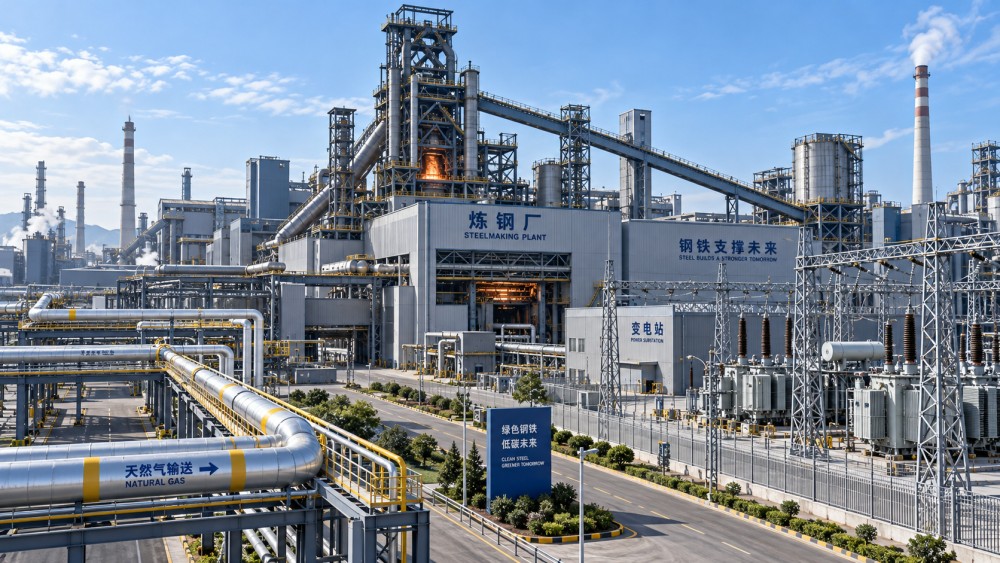
Steel requires another comparison. Electric arc furnaces have direct electricity exposure, while integrated blast-furnace routes depend heavily on coal and coke economics. Gas-based direct reduced iron adds another layer of exposure. Comparing steel suppliers without identifying their production routes can conceal the very risk a sourcing review is supposed to uncover.
Regional advantages are real, but rarely transferable
North American access to domestic natural gas can support gas-intensive manufacturing. That does not guarantee attractive electricity economics at every location: utility territories, transmission constraints, and connection schedules still matter. A proposed plant can sit near abundant energy resources yet face an expensive or delayed grid connection.
European producers must assess gas-market exposure alongside electricity procurement structures and applicable carbon obligations. Existing customer relationships, integrated production sites, and specialist capabilities may justify continued investment despite energy disadvantages. Relocating one process can also disrupt the steam, hydrogen, or by-product exchanges that make an industrial complex economical.
China is not a single industrial power-cost market. Provincial generation mixes, tariffs, grid conditions, and local operating requirements affect competitiveness. Similarly, projects in the Middle East need to verify actual industrial energy contracts rather than assume that proximity to hydrocarbons guarantees low-cost supply.
The practical consequence is selective capacity expansion rather than a simple migration toward one “cheap-energy” region. Energy advantages must survive freight costs, market-access requirements, raw-material logistics, and customer qualification.
Operational flexibility has value—and limits
Where electricity prices vary by hour, manufacturers may benefit from shifting flexible loads. Grinding, pumping, compressed-air production, or certain batch operations can sometimes be rescheduled without interrupting the main production line. The opportunity depends on storage capacity, maintenance requirements, and delivery commitments.
Continuous thermal and chemical processes are less forgiving. Reducing output may worsen specific energy consumption, destabilize process conditions, or create off-spec material. A model that assumes production can stop whenever power becomes expensive is not bankable until operations teams validate the shutdown and restart sequence.
Efficiency projects deserve the same discipline. Waste-heat recovery and improved controls can reduce consumption, but savings should be evaluated against actual operating hours and usable heat demand. Recoverable heat has limited financial value if no nearby process can use it at the available temperature.
Low-carbon power changes the calculation, not the need for scrutiny
Electrification can reduce exposure to fossil fuels while increasing dependence on power prices and grid availability. Renewable power purchase agreements may improve price visibility, but their value depends on contract structure. A plant consuming electricity continuously still needs arrangements for hours when contracted wind or solar generation is insufficient.
Battery storage can address some short-duration requirements; it should not automatically be treated as a substitute for continuous industrial supply. Hydrogen and carbon capture likewise require project-specific energy balances. Capture, compression, and supporting utilities can increase energy demand, while hydrogen economics depend strongly on production route and utilization.
For new investments, securing credible power availability may need to precede equipment selection. An efficient furnace is not an operating asset until the site can energize it reliably.
What decision-makers should verify before committing capital
A useful heavy industry outlook connects market prices to plant-level exposure. Before approving expansion or changing strategic suppliers, examine:
- Contract duration: When do energy agreements expire, and what pricing mechanism replaces them?
- Operating resilience: What happens to yield, equipment condition, and delivery schedules during curtailment?
- Project readiness: Are grid capacity and connection dates confirmed, or merely assumed?
- Commercial exposure: Can higher costs be passed through, and how quickly do customer prices adjust?
This requires connecting technical and commercial information. GEMM’s structured coverage of energy, materials, equipment, market trends, and pricing intelligence can help teams compare production routes and supplier context rather than assess isolated quotations. Plant-specific contracts and performance claims still require direct verification.
Before relying on a favorable energy scenario, test the project against higher delivered prices, lower utilization, and a delayed connection. If the investment works only when all three assumptions go right, the apparent energy advantage is too fragile to anchor the decision.
Related News
- 00
0000-00
How energy costs are shaping the global heavy industry outlook - 00
0000-00
Which metal property standards apply to tensile testing of steel? - 00
0000-00
Can polymer processing simulation predict injection molding warpage? - 00
0000-00
An export controls compliance guide to checking U.S. license requirements - 00
0000-00
How Can Producers Assess Biofuel Feedstock Availability in 2026?
Weekly Insights
Stay ahead with our curated technology reports delivered every Monday.