




How to write procurement specifications that suppliers can quote




A supplier can only quote accurately when the requirement makes clear what must be supplied, under what conditions, and at what point delivery is complete. A specification that says “industrial-grade valve” or “high-purity chemical” leaves too much open: suppliers may price different materials, testing regimes, packaging, or delivery scopes while appearing to quote the same item.
Effective specification preparation for procurement combines technical requirements with the commercial information needed to price them. The objective is not to describe every conceivable detail, but to distinguish mandatory requirements from preferences, identify the evidence needed for acceptance, and give all bidders the same basis for their quotations.
Start with the duty, then define the item
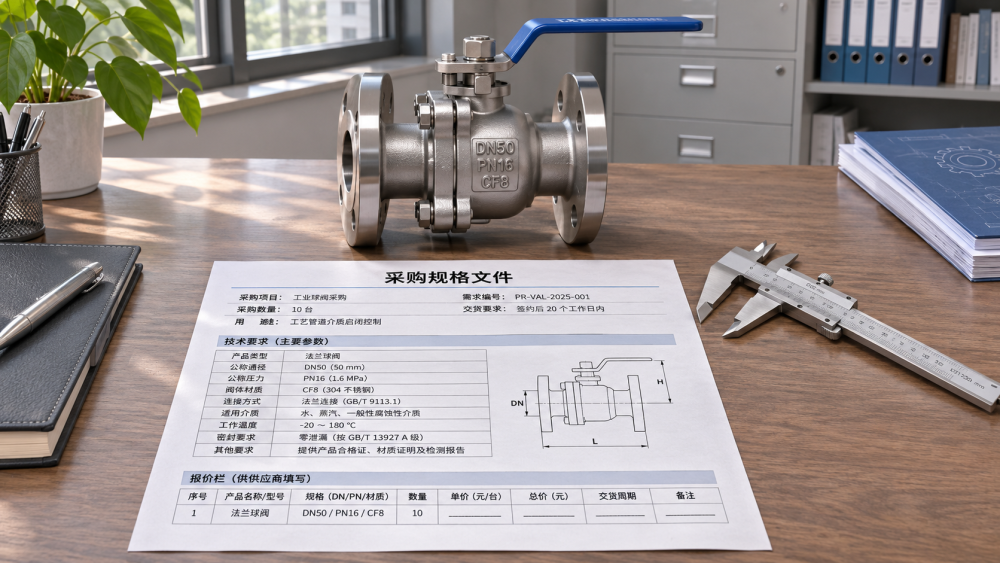
Describe what the purchase must do and the conditions in which it will operate. For a valve, that could mean the fluid, operating and design pressures, temperature range, connection size, and required flow characteristics. For a chemical, it could mean the intended process, minimum assay, relevant impurity limits, and storage conditions.
Use measurable requirements wherever they affect suitability or price. “Corrosion resistant” does not tell a supplier enough to select a material; the medium, concentration, temperature, and exposure conditions provide a more useful basis. Similarly, “fast delivery” should become a required delivery date or a stated lead-time requirement with a defined starting point.
Separate the operating requirement from a preferred design. If an existing component must fit a particular connection, the dimensions and interface may be mandatory. If several materials or designs could meet the duty, specifying one without a technical reason can unnecessarily restrict competition. Where alternatives are acceptable, ask suppliers to identify them and explain any effect on performance, compatibility, cost, or delivery.
A brand or manufacturer part number can be a useful reference, especially for replacement parts, but it should not be the only description if equivalents are acceptable. State whether an equivalent may be offered, which characteristics are essential, and what evidence is needed to assess it. If only the original part is acceptable, explain the relevant compatibility or approval constraint in the request.
Give suppliers a common technical baseline
List the characteristics that determine whether the item is fit for purpose. Depending on the purchase, these may include dimensions and tolerances, material grade, composition, capacity, power supply, surface finish, operating environment, or shelf life. Include drawings, data sheets, and interface details where a written description alone would leave room for interpretation.
For each critical value, state the unit and whether it is a minimum, maximum, nominal value, or allowable range. A requirement for “purity: 99%,” for example, needs a defined basis and any critical impurity limits; the headline figure alone may not control a contaminant that affects the process.
Reference applicable standards precisely enough for suppliers to identify what they must meet. Where relevant, name the standard, edition, and applicable sections, and distinguish product compliance from a test method or management-system certification. Confirm that the selected requirements suit the destination, application, and intended date of purchase; a standard reference does not replace project-specific performance requirements.
Document priority matters when requirements conflict. State which document governs if a drawing, data sheet, purchase specification, and referenced standard contain different values. Avoid resolving a conflict by silently accepting whichever interpretation produces the lowest price.
Define quantity, scope, and delivery before asking for a price
A technically complete description can still produce incomparable bids if suppliers make different assumptions about quantities or included services. Specify the unit of measure, total quantity, permitted overdelivery or underdelivery, and whether the request covers a one-time order or scheduled releases. For bulk materials, clarify whether the quantity is based on net delivered weight, volume at stated conditions, or another agreed measurement basis.
For equipment, identify the supply boundary. A quotation for a pump, for example, may or may not include the motor, baseplate, controls, spare parts, inspection, packaging, commissioning support, or freight. List required components and services separately, and ask for optional items to be priced separately rather than included without distinction.
Delivery instructions should identify the destination, required date or schedule, packing and marking requirements, and any restrictions on unloading or site access. For international shipments, specify the agreed Incoterms® rule, its edition, and the named place or port. The delivery term allocates certain costs and risks, but it does not by itself settle every contractual question, including transfer of ownership or payment terms.
Ask suppliers to state their quoted lead time and when the clock starts: purchase order receipt, drawing approval, advance payment, or another event. A short manufacturing lead time may not translate into an acceptable arrival date if engineering approval, inspection, transit, or customs clearance has been excluded.
Make quality and acceptance requirements priceable
Inspection and documentation affect both cost and schedule. State which tests are required, when they are performed, who witnesses them if applicable, and which acceptance criteria apply. Distinguish a supplier’s standard certificate from a batch-specific test report or independent inspection; they are not interchangeable forms of evidence.
For a material purchase, the request might require identification of the manufacturing batch, test results against specified properties, and traceability to the delivered quantity. For equipment, it might require dimensional checks, a performance test, or an inspection and test plan. Specify the required documents at quotation, before shipment, and with delivery so suppliers can price the work and plan the release of goods.
Acceptance should also be connected to a practical remedy. The purchase terms can define how discrepancies are reported and whether nonconforming goods are repaired, replaced, rejected, or otherwise resolved. Avoid making an undefined requirement such as “subject to satisfactory inspection” the sole acceptance criterion: suppliers cannot reliably price an unknown test or approval process.
Use a quote schedule that exposes differences
Attach a response schedule that asks every supplier for the same commercial and technical information. This can be a spreadsheet or a structured section of the request; the format matters less than ensuring that each bidder responds on the same basis.
- Item pricing: unit price, quantity, currency, extended price, and any minimum order charge.
- Included scope: components, packaging, testing, documents, freight, and services included in the price.
- Separate charges: tooling, optional tests, spare parts, installation support, and other non-included items.
- Delivery: lead time, starting event, delivery schedule, named destination, and applicable delivery term.
- Commercial conditions: quotation validity, payment terms, taxes or duties included or excluded, and any price-adjustment basis.
- Technical response: confirmation against each mandatory requirement, with proposed alternatives and deviations clearly identified.
Require a deviation list even when suppliers believe their offers comply. A response such as “no deviations” is easier to evaluate than a generic statement that the offer is “generally compliant.” Check that supporting data sheets and commercial exclusions do not contradict that declaration.
When comparing bids, normalize identifiable differences before ranking prices. For example, add the cost of separately quoted freight or mandatory inspection where it is absent from one offer, using a consistent basis. Do not treat an unpriced exclusion as zero cost; obtain a price or record the unresolved exposure before making the comparison.
Resolve ambiguity before the quotation deadline
Issue the same specification revision and attachments to every invited supplier. Set a deadline for questions and distribute answers that affect the requirement to all bidders, while protecting confidential supplier information. If a clarification changes the scope, quantity, or delivery basis, issue a revised document or formal addendum and allow sufficient time for suppliers to revise their offers.
Before release, test the request against a simple scenario: could two competent suppliers reasonably submit different products and both claim compliance? If so, determine whether the difference is acceptable. If it is, ask for the information needed to evaluate it; if it is not, turn the constraint into a measurable requirement. That review is particularly valuable for interfaces, testing, included services, and delivery assumptions, where an apparently minor omission can change the quoted cost.
Related News
- 00
0000-00
How to verify product purity claims from chemical feedstock distributors - 00
0000-00
Will feedstock availability constrain biofuel production in 2026? - 00
0000-00
How to select corrosion-resistant agrochemical manufacturing reactors - 00
0000-00
How to verify an injection molding supplier in China - 00
0000-00
How to account for supplier lead times in raw material supply chain planning
Related tags
Weekly Insights
Stay ahead with our curated technology reports delivered every Monday.