




What makes a process engineering supplier directory reliable for vendor shortlisting




What makes a process engineering supplier directory reliable for vendor shortlisting
For procurement teams, a reliable process engineering supplier directory is not just a place to collect company names. It sits much earlier in the decision chain, where the cost of a weak shortlist can be high: misaligned specifications, missing certifications, long clarification cycles, or suppliers that look capable on paper but are not suited to the actual process conditions.
That matters across sectors where process engineering decisions are tied to safety, materials compatibility, throughput, energy use, maintenance access, and compliance. A buyer sourcing pumps for chemical handling, filtration systems for refining, polymer processing equipment, pipeline components, or emission-control units does not need more names. They need a directory that helps separate relevant vendors from merely visible ones.
The best directories make shortlisting faster because they reduce ambiguity. The weak ones create extra work by pushing the real evaluation burden back onto procurement, engineering, and project teams.
A trustworthy directory starts with structure, not volume
Large supplier counts can look impressive, but volume alone tells you very little. In process industries, reliability begins with classification: how well the directory separates equipment types, process functions, material categories, end-use applications, and supplier capabilities. If heat exchangers, reactors, valves, specialty alloys, and lab reagents are all presented with the same level of generic tagging, shortlisting becomes noisy very quickly.
A usable process engineering supplier directory should help buyers move from broad categories into decision-relevant filters. That usually means narrowing by application, process medium, temperature or corrosion context, manufacturing standard, export market, or production capability. Without that structure, procurement teams end up doing manual sorting that the platform should have handled in the first place.
This is one reason structured industry intelligence tends to be more useful than a simple listing database. Platforms such as GEMM are built around industry classification and comparison logic, which matters when the sourcing decision depends on more than a sales description. In practical terms, that means product information sits closer to technical knowledge, supplier references, application guidance, and market signals instead of being isolated as a static listing.
Technical depth is the real test
If a directory claims to support vendor shortlisting, it should help answer basic engineering procurement questions before the first RFQ goes out. Can the supplier’s offering be linked to process duty? Are materials of construction clear? Are relevant standards, tolerances, pressure classes, or media compatibility at least indicated? Does the profile suggest whether the supplier is a fabricator, OEM, trader, integrator, or contract manufacturer?
Shortlisting breaks down when profiles are written in broad claims such as “high quality,” “custom solutions,” or “global supply.” Those phrases are common, but they are not decision inputs. Buyers usually need enough technical context to know whether a supplier deserves deeper evaluation. Not final approval, just a justified place on the shortlist.
In chemicals, metals, energy, plastics, and related sectors, technical fit often depends on details that are easy to miss in general directories. A corrosion-resistant alloy may still be wrong for the medium. A polymer processing line may match output targets but fail on resin handling or downstream compatibility. A carbon capture component supplier may be relevant in one process route and irrelevant in another. A reliable directory does not pretend to replace engineering review, but it should make those distinctions easier to spot.
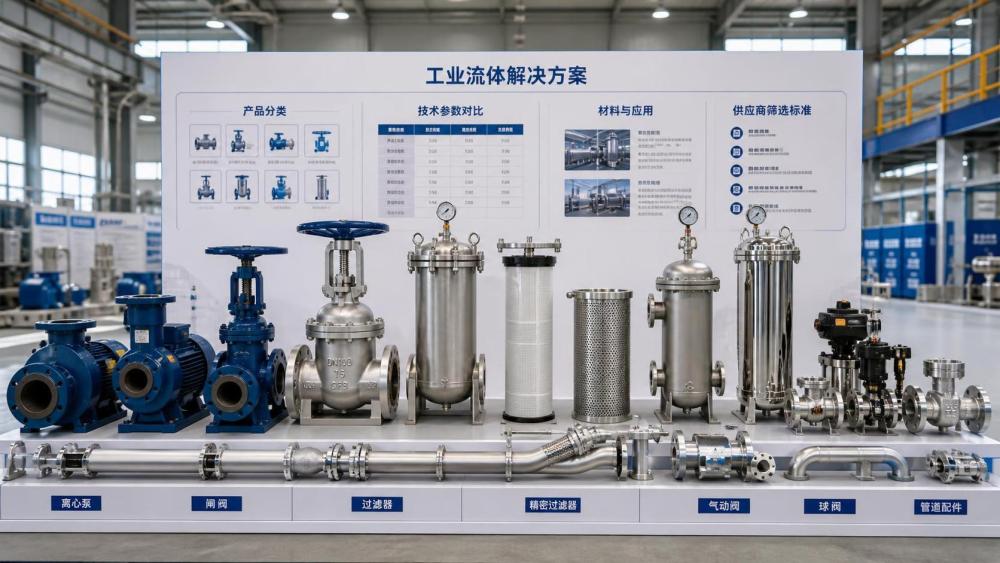
Freshness matters more than many buyers expect
Outdated supplier information causes a surprising amount of procurement friction. Companies change export focus, discontinue product lines, shift plant capacity, add or lose distribution rights, or stop serving certain regions. In process engineering procurement, even a small change in manufacturing scope can alter who is suitable for a project.
A reliable directory should show signs that its information is maintained, not just published once. That does not mean every entry needs a visible timestamp on every field, but procurement teams should be able to tell whether the platform tracks changes in product range, market activity, supplier positioning, or trade relevance. This becomes especially important when dealing with global sourcing, where lead times, export conditions, and supplier responsiveness may shift faster than catalog language suggests.
When a platform also captures market trends, export updates, and pricing intelligence, it becomes more useful at the shortlisting stage because buyers can screen for commercial realism as well as technical relevance. A supplier may be technically suitable and still be a poor shortlist candidate if market availability or pricing conditions make the option impractical for the project window.
Supplier credibility is stronger when context is visible
One of the biggest weaknesses of generic directories is that they flatten all suppliers into the same format. For process procurement, that creates false equivalence. A manufacturer with established production capability, standards familiarity, and application experience should not look identical to a trading entity with limited technical involvement.
Reliable directories help users read supplier context. That can include product scope, process specialization, application sectors served, known certifications or standards references where available, and whether the supplier appears aligned with upstream materials, midstream processing, downstream manufacturing, or aftermarket support. Even when final qualification still requires document review, audits, or direct technical exchange, context helps buyers avoid wasting time on poor-fit vendors.
This is especially valuable in cross-industry sourcing. A platform covering drilling equipment, pipeline technologies, refining systems, steel and alloys, fine chemicals, polymer materials, recycled plastics, biofuels, carbon capture, and industrial energy storage can reveal useful adjacency. Procurement teams often need to compare suppliers across linked categories, not within one narrow product label. A directory that understands those relationships tends to produce better shortlists.
Good directories support comparison, not just discovery
Discovery is only step one. The real value comes when the directory helps buyers compare options in a disciplined way. That does not always require complex scoring tools. Sometimes the most useful features are simpler: consistent taxonomy, comparable specification fields, application notes, indication of standards, and links between product type, process use, and supplier profile.
That comparison layer is where platforms like GEMM become more useful than a basic directory. By turning fragmented product, technology, market, and trade information into searchable professional resources, they give buyers a better base for vendor screening. Not a shortcut around due diligence, but a cleaner starting point for it.
What procurement teams should check before trusting a directory
A few practical checks can tell you quickly whether a directory deserves a role in vendor shortlisting:
- Can you filter by application or process context, not just product name?
- Do supplier profiles indicate capability in a way that is distinguishable and comparable?
- Is there enough technical language to support pre-qualification, without relying entirely on supplier self-promotion?
- Are standards, certifications, or export relevance visible where they matter?
- Does the platform connect product data with market and supply information, or are those kept separate?
If the answer is no to most of these, the directory may still be useful for broad market scanning, but it is less reliable for actual vendor shortlisting.
In the end, reliability comes down to whether the directory helps procurement make fewer avoidable mistakes. The strongest process engineering supplier directory is one that improves the quality of the first shortlist by combining clear classification, technical relevance, supplier context, and current market awareness. After that, the usual steps still apply: confirm project parameters, validate standards and certifications, review lead times, and involve engineering before final selection. But if the starting list is better, every step after that becomes easier.
Related News
- 00
0000-00
Which sectors are driving demand in the chemical engineering market? - 00
0000-00
How to assess lifecycle emissions from CCUS for low-carbon cement - 00
0000-00
How do energy storage technologies compare for 8-hour discharge? - 00
0000-00
Do mill test reports prove industrial alloys meet ASTM standards? - 00
0000-00
How to verify plastic recycling system suppliers' throughput claims
Weekly Insights
Stay ahead with our curated technology reports delivered every Monday.