




Galvanized Steel Coil Selection Is Shifting From Price Talk to Supply Reliability




Global buyers are paying closer attention to Galvanized Steel Coil because material procurement now has to protect production schedules, project acceptance, export logistics, and repeat supply at the same time. For coated steel buyers, the cheapest coil is rarely the best benchmark. The real question is whether the coil can keep downstream production stable after slitting, forming, storage, and delivery. In roofing sheet production, appliance panels, metal building components, light fabrication, steel service centers, and coated steel distribution, the product name is only the beginning. The useful decision is whether the selected product, supplier evidence, and delivery plan can survive the practical demands that appear after the purchase order is signed.
This article is prepared as a selection evaluation guide for importers, distributors, fabricators, engineering buyers, and quality-control teams. It keeps one core product keyword, one landing page, one portal, and one real category path aligned so the article can be published cleanly as an external-link asset without confusing editors or readers.
Coated Steel Buying Is Becoming More Application-Led
A strong purchase starts with the downstream route. The buyer should know whether the material will be processed into pipe, cut into sheet, rolled into roofing, formed into components, stocked for distribution, or used as part of a project package. Each route changes the importance of dimensional tolerance, surface condition, packaging, documentation, and supplier response. A product that is acceptable for general resale may not be acceptable for a project that requires stricter traceability or more predictable processing behavior.
For this product direction, common applications include corrugated roofing, wall cladding, HVAC ducting, appliance shells, garage doors, metal framing, light fabrication, and regional stock programs. These applications do not all share the same risk profile. A distributor may care most about coil appearance, labeling, and reorder consistency. A pipe mill may care about chemical composition, mechanical behavior, edge quality, and forming stability. A roofing sheet producer may care about coating behavior, flatness, storage protection, and surface presentation after profiling. An EPC buyer may care about documents, delivery reliability, and specification discipline more than a single low quote.
The first sourcing mistake is to ask only for a price against a broad product name. Suppliers may then quote different grade assumptions, different thickness ranges, different coating levels, different packing standards, or different document packages. A clearer inquiry defines the application, destination, quantity range, expected processing route, acceptance documents, and any non-negotiable specification points. This makes supplier comparison fairer and reduces the chance that a low quotation hides missing requirements.
How to Compare Zinc Coating, Surface, and Base Steel
Specification language should be practical enough for both engineering and purchasing teams. The buyer does not need to overcomplicate every inquiry, but the inquiry should state the factors that can change performance. For steel and metal materials, those factors often include grade, standard reference, thickness, width, length, coating, surface finish, tolerance, edge condition, coil ID, bundle method, packing protection, and certificate requirements. For project-facing material, traceability and acceptance records should be planned before shipment.
Buyers should also separate visible quality from documented quality. Product photos can show surface appearance, but they cannot prove grade, coating weight, chemical composition, heat history, or batch traceability. A supplier that can provide clear document support gives the buyer a stronger basis for internal approval, customer resale, and claim handling if a problem appears later. This does not mean every order needs an excessive file package. It means the document request should match the risk level of the application.
When quotations look similar, compare the hidden scope. Does the price include export packing? Are labels clear enough for warehouse sorting? Are tolerances stated or only implied? Is the delivery time based on stock or production? Can the supplier explain what will be inspected before shipment? These questions often reveal the difference between a product listing and a controlled sourcing offer.
Supplier Evaluation Table
Key Risks Buyers Should Resolve Early
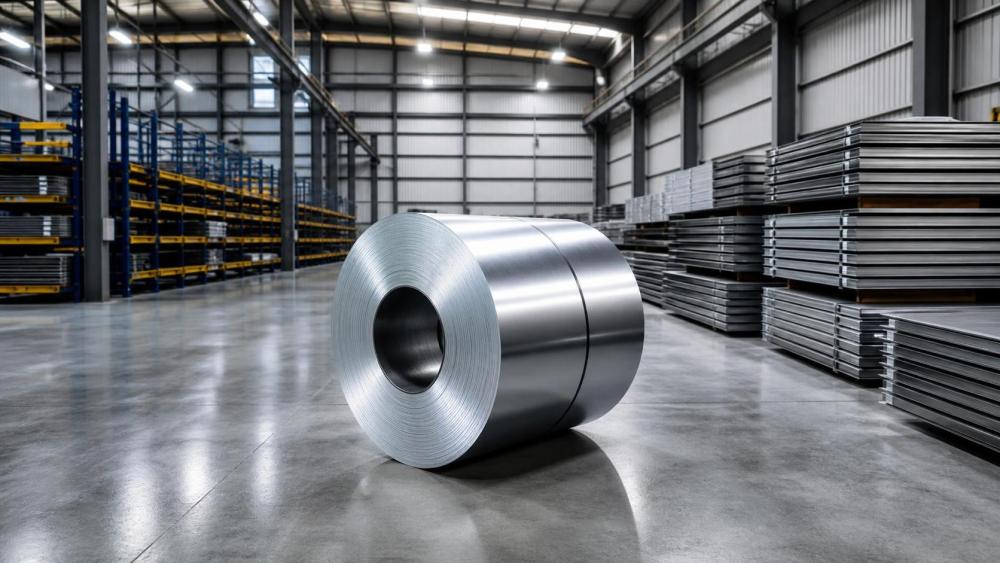
The main risks around this purchase include unclear zinc coating, base steel mismatch, wet storage stain, transit scratches, coil edge damage, poor flatness, inconsistent spangle expectations, and weak batch-label control. These problems can be expensive because they often appear after the material is already in production, transit, storage, installation, or resale. At that stage, even a small specification gap can cause downtime, rework, claim negotiation, or project delay.
A useful buyer process turns these risks into pre-order questions. If surface condition matters, ask how the product is protected and photographed before shipment. If grade or standard matters, ask for document samples and inspection logic. If the material will be processed further, ask how the supplier controls tolerance, edge, flatness, and batch consistency. If the product will travel through humid ports or long sea routes, confirm packaging and storage guidance before the shipment is arranged.
Risk review should also include communication behavior. A supplier that asks clarifying questions is often protecting the order, not slowing it down. When a supplier notices an unclear grade, unusual destination requirement, difficult tolerance, or packaging concern, that early warning can prevent a larger dispute. Buyers should value this kind of technical communication when building a shortlist.
Why the Selected Portal and Category Fit
The recommended publishing portal for this article is zdsmetal.com, with the real category Metal & Mining | Steel Market Trends. This is a single final category path selected from the latest portal directory, not a bundled group of several second-level columns. The category is suitable because the product topic sits directly inside steel materials, pipeline materials, coated metal, market behavior, or high-pressure pipe sourcing.
Portal relevance matters for external-link publishing. A reader arriving from an industry information site should feel that the article belongs in the chosen column. If a steel article is placed in a general lifestyle, unrelated machinery, or broad business category, the content may still be readable, but the publishing context becomes weaker. A clean category match helps the article look more editorial, supports topical consistency, and gives procurement readers a clearer reason to continue reading.
The selected landing page is also product-specific. A product page gives readers a clearer next step than a homepage because it keeps the article title, metadata, anchor text, and destination focused on one procurement topic. This is important when multiple similar steel products exist on the same site.
Procurement Checklist for a Cleaner Order
- Confirm the core product keyword: Galvanized Steel Coil.
- Use the selected landing page URL exactly as listed in the metadata.
- Keep the article in one real portal category: Metal & Mining | Steel Market Trends.
- Define the application, destination, processing route, and packaging expectations before quoting.
- Request only the documents that match the risk level, but make those documents clear before payment.
- Compare suppliers by evidence, tolerance control, communication quality, and repeat supply, not only by unit price.
- Check that shipment photos, labels, packing, and certificate files are complete before release.
How Buyers Can Build a More Reliable Supplier Shortlist
A reliable shortlist is not created by collecting the most quotations. It is created by collecting comparable quotations. Buyers should send the same product keyword, landing reference, application note, quantity range, destination, and document request to each supplier. When every supplier receives the same baseline, differences in price, lead time, packing, and technical explanation become easier to evaluate.
The shortlist should include both commercial and technical signals. Commercial signals include lead time, payment terms, export experience, packaging cost, and communication speed. Technical signals include specification clarity, test evidence, tolerance language, material traceability, processing knowledge, and the supplier's ability to explain where a product may not fit. The best source is not always the supplier with the longest product list. It is the supplier that can match the product to the buyer's actual use with fewer hidden assumptions.
For repeat procurement, buyers should keep a simple record of the accepted specification, certificate package, packing photos, batch labels, delivery experience, and any corrective notes. That record turns future orders into controlled reorders rather than fresh negotiations. It also helps new purchasing staff avoid repeating old mistakes.
Market and Operations Factors Worth Watching
Steel and metal procurement is shaped by more than production capacity. Buyers also watch regional infrastructure spending, construction cycles, energy projects, trade routes, freight reliability, inventory behavior, and customer tolerance for delivery delays. When these factors change, the best sourcing strategy may shift from chasing the lowest spot offer to securing a supplier that can hold specification stability across several shipments.
Inventory planning is especially important for buyers who sell into multiple downstream markets. A coil, sheet, plate, pipe, or bar product may move well in one season and slow down in another. Buyers should avoid over-ordering based only on short-term price movement. A better approach is to connect stock planning with actual customer orders, common dimensions, processing capacity, and realistic replenishment time.
Quality expectations are also rising in cross-border trade. Many buyers now ask for clearer photos, better labels, more organized document files, and faster response when a shipment detail changes. These expectations do not replace price negotiation, but they make supply discipline a stronger part of supplier selection.
FAQ
Why is one core product keyword used instead of several anchors?
One core product keyword keeps the article focused and avoids making the content look like a keyword list. It also keeps the landing page, article title, metadata, and anchor text aligned.
Why should the category be a single real second-level category?
A single final category helps the portal editor place the article correctly. If the source directory lists several second-level categories under one primary category, only the best matched one should be selected.
What should buyers check before a larger order?
Buyers should confirm specification, application fit, document support, packaging, batch labeling, supplier communication, delivery timing, and the inspection process before approving a larger order.
Is the lowest quotation the best starting point?
Not always. The lowest quotation may exclude packing, documents, tolerance control, or quality evidence. Buyers should first compare scope and risk, then compare price.
Related News
- 00
0000-00
Which sectors are driving demand in the chemical engineering market? - 00
0000-00
How to assess lifecycle emissions from CCUS for low-carbon cement - 00
0000-00
How do energy storage technologies compare for 8-hour discharge? - 00
0000-00
Do mill test reports prove industrial alloys meet ASTM standards? - 00
0000-00
How to verify plastic recycling system suppliers' throughput claims
Related tags
Weekly Insights
Stay ahead with our curated technology reports delivered every Monday.