




How to verify traceability in circular economy material sourcing




Reliable circular economy material sourcing depends on proving what a material is, where it originated, and how it was processed before delivery.
For quality control and safety teams, recycled-content claims alone are insufficient. Verification requires linked evidence covering suppliers, batches, processing, testing, certifications, and regulatory compliance.
The central question is practical: can your organization trace a delivered material backward to a documented source and forward to its intended application?
Start With a Traceability Definition That Matches Your Risk
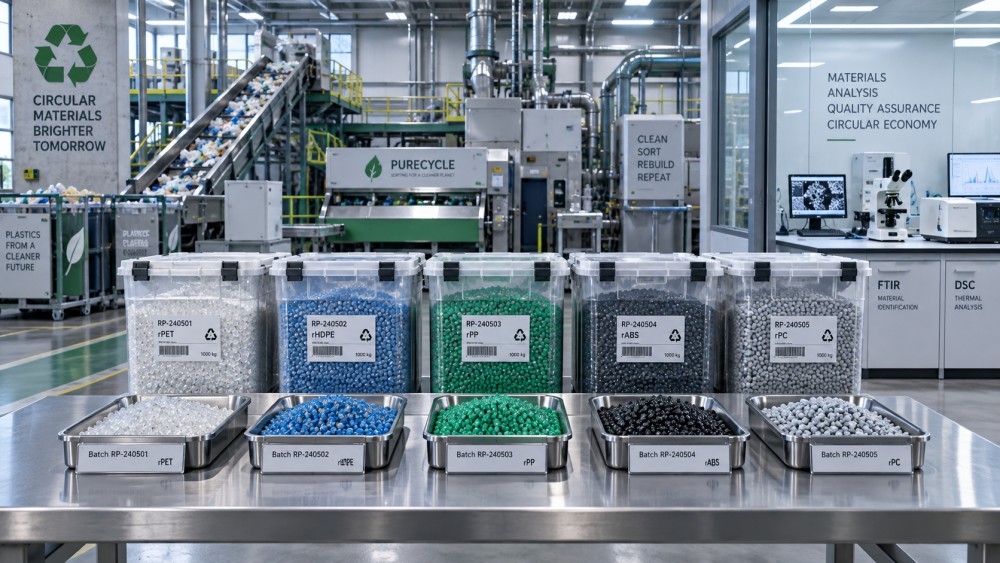
Traceability is not a single certificate or supplier statement. It is the ability to reconstruct a material’s documented chain of custody, transformation, and quality controls.
Set the required traceability level before evaluating suppliers. Low-risk packaging may need batch records, while safety-critical polymers, alloys, or chemicals need deeper verification.
Quality teams should define whether they need source-level, facility-level, batch-level, or process-level visibility. Ambiguous requirements create inconsistent supplier assessments and weak procurement controls.
Source-level traceability identifies where scrap, residue, or recovered feedstock originated. Facility-level traceability confirms the recycler, processor, refiner, or compounder handling that material.
Batch-level traceability connects a specific shipment to production dates, lot numbers, test certificates, and transport documents. This is normally the minimum workable standard for controlled materials.
Process-level traceability provides evidence of sorting, decontamination, blending, reprocessing, additive use, and quality-release decisions. It matters where contamination or performance variation creates safety exposure.
Verify the Material Origin Before Reviewing Recycled Content
A recycled-content percentage does not explain the feedstock source. Post-consumer, post-industrial, agricultural, mining, chemical, and mixed waste streams present different risk profiles.
Ask suppliers to classify feedstock precisely and document collection channels. “Recycled material” is too broad to support consistent quality, environmental, or product-safety decisions.
For post-consumer feedstock, review collection geography, sorting methods, contamination controls, and material recovery facility records. Mixed municipal waste typically needs stronger downstream verification.
For post-industrial feedstock, identify the original manufacturing process, material grade, prior additives, and whether the scrap remained under controlled industrial ownership.
Reclaimed metals require particular attention to alloy mixing, coatings, radioactive contamination screening, and segregation practices. Nominal chemistry alone may not establish appropriate end-use suitability.
Chemical recycling claims should identify the input stream, conversion technology, mass-balance method, yield assumptions, and whether traceability applies to molecules, volumes, or certificates.
Build an Evidence Chain for Every Supplier and Batch
Effective circular economy material sourcing uses an evidence chain rather than isolated documents. Each record should support another record without unexplained gaps or conflicting details.
Begin with supplier identity, legal entity information, facility locations, production scope, approved subcontractors, and ownership of incoming waste or recovered feedstock.
Then request purchase records, intake logs, weighbridge tickets, sorting records, production orders, batch numbers, and dispatch documentation for representative material lots.
Dates, quantities, and material descriptions should reconcile across documents. Large differences between feedstock intake, production output, and declared recycled content require investigation.
Use a batch traceability matrix to connect purchase orders, certificates of analysis, safety data sheets, inspection reports, packaging labels, and receiving inspection outcomes.
Require controlled document versions and retention periods. A supplier that cannot retrieve historical records promptly may be unable to support recalls, investigations, or customer audits.
Assess Certifications Without Treating Them as Proof
Third-party certifications can strengthen supplier confidence, but they do not replace technical verification. Their value depends on scope, audit rigor, validity, and chain-of-custody coverage.
Check whether a certificate covers the exact site, material family, processing activity, and time period relevant to the proposed supply relationship.
Review recognized systems relevant to the material and market, including ISO 9001, ISO 14001, ISO 45001, ISCC PLUS, RCS, GRS, EuCertPlast, or sector-specific schemes.
Confirm certificate status directly with the issuing body whenever possible. Expired, suspended, transferred, or overly broad certificates can create false confidence during qualification.
Examine audit findings and corrective actions where suppliers will share them. Repeated weaknesses in segregation, calibration, records, or subcontractor control deserve additional scrutiny.
Certification should support an evidence-based approval decision. It cannot demonstrate that a specific incoming batch meets your grade, contamination, performance, or regulatory requirements.
Test for Contamination, Performance, and Hidden Safety Risks
Traceability verification must include physical and chemical confirmation. Documentation can establish provenance, but laboratory testing determines whether material actually meets intended-use requirements.
Create a risk-based test plan based on material type, end use, prior applications, and expected contaminants. Increase testing when feedstock variability is high.
For recycled plastics, assess polymer identity, melt flow, moisture, ash, odor, color variation, residual additives, heavy metals, and restricted substances where applicable.
For recycled metals, confirm composition, inclusions, coating residues, mechanical properties, and contamination from incompatible alloys. Sampling should represent the batch, not only a favorable specimen.
For recovered chemicals, test purity, water content, residue profile, stability, hazard classification, and unintended reaction risks. Confirm that safety data sheets reflect actual composition.
Document acceptance limits, sampling methods, laboratory competence, and disposition decisions. These records demonstrate that quality controls continue after supplier declarations and certification reviews.
Check Regulatory and Product Compliance Across Markets
Traceability should show more than recycled origin. It must also establish whether the material can legally and safely enter the target product, market, transport route, and process.
Identify applicable requirements early, including REACH, RoHS, TSCA, food-contact rules, packaging regulations, waste shipment restrictions, and customer-specific restricted-substance lists.
Ask suppliers how they manage regulatory changes, substance declarations, safety documentation, and market-specific labeling. A compliant material in one region may be unsuitable elsewhere.
Safety managers should also verify transport classification, storage conditions, dust risks, fire behavior, exposure controls, and emergency information for recovered or reprocessed materials.
Where mass-balance claims are used, distinguish regulatory compliance from marketing allocation. The accounting method must not be mistaken for physical batch-level recycled content.
Maintain a compliance file linking supplier declarations to current specifications, test reports, regulatory screening, and internal approval decisions. Update it when formulation or sourcing changes.
Use Supplier Audits to Test Whether Records Reflect Reality
Desktop reviews identify missing evidence, but audits test operational reality. A focused audit can reveal whether segregation, labeling, sampling, and document controls work consistently.
During a site visit, follow one selected batch from incoming feedstock through storage, processing, quality release, packaging, and dispatch. Compare observations against supplied records.
Inspect physical identification methods, quarantine areas, container labels, stock rotation, calibration status, cleaning procedures, and controls over rejected or nonconforming material.
Interview operators, warehouse personnel, quality staff, and management separately. Consistent explanations indicate mature systems, while unclear ownership often predicts traceability failures.
Pay close attention to subcontracting. Material may pass through collectors, brokers, toll processors, warehouses, and logistics providers before reaching the declared producer.
Audit findings should lead to measurable corrective actions, deadlines, and re-verification. Supplier approval should depend on closure of critical gaps, not verbal commitments.
Create a Practical Approval and Monitoring Workflow
A strong program separates initial qualification from ongoing monitoring. Traceability can deteriorate when suppliers change feedstock sources, production lines, subcontractors, or operating locations.
Use a supplier scorecard covering origin evidence, document completeness, certification scope, laboratory results, regulatory status, audit performance, corrective actions, and delivery consistency.
Assign higher monitoring frequency to materials with greater safety consequences, volatile feedstock quality, limited supplier transparency, or complex cross-border supply chains.
Set change-notification requirements in purchasing agreements. Suppliers should disclose changes to feedstock category, process conditions, formulation, facility, certification, or subcontracting arrangements before shipment.
Establish clear escalation triggers, including mismatched lot numbers, missing certificates, unusual test results, late documentation, unexplained yield differences, or altered safety classifications.
Structured industry intelligence can help teams compare supplier capabilities, standards coverage, technical specifications, market developments, and regional sourcing risks before approval or renewal.
Make Traceability a Decision Tool, Not a Paper Exercise
Verified circular economy material sourcing protects quality, safety, compliance, and business continuity. The objective is not collecting documents, but making defensible material approval decisions.
Prioritize traceability depth according to risk, require connected batch evidence, validate certifications, test material properties, and audit supplier controls where uncertainty remains.
When origin, processing history, test data, and compliance records agree, quality and safety teams can source circular materials with greater confidence and fewer avoidable surprises.
Related News
- 00
0000-00
Virgin vs Recycled Resin: How to Switch Without Disrupting Production? - 00
0000-00
Why Bio-Based Plastics Still Have to Prove Themselves on the Molding Floor - 00
0000-00
Industrial decarbonization targets slip when baselines are weak - 00
0000-00
How to verify traceability in circular economy material sourcing - 00
0000-00
How to store laboratory chemicals to avoid degradation from humidity
Related tags
Weekly Insights
Stay ahead with our curated technology reports delivered every Monday.