




How to vet suppliers in a process technology supplier directory




How to Vet Suppliers in a Process Technology Supplier Directory
Finding the right process technology partner requires more than comparing product listings. A reliable process technology supplier directory can shorten the search, but it does not remove the need for technical and commercial due diligence. In sectors such as refining, chemicals, metals, polymers, energy storage, and carbon capture, a supplier may look qualified on paper while lacking the process references, engineering depth, manufacturing control, or service coverage needed for a specific project.
The practical question is not simply, “Can this company supply the equipment?” It is whether the supplier can support the required duty, material selection, documentation, delivery schedule, commissioning expectations, and lifecycle obligations. That distinction matters most when a component sits inside a larger process line: a pump affects uptime, a reactor affects yield and safety, a filtration package affects product quality, and a control system can determine whether a plant runs steadily or becomes difficult to operate.
Start with the process duty, not the supplier name
Directories are often searched by equipment category: heat exchangers, injection molding machinery, drilling tools, pipeline valves, smelting systems, or carbon capture equipment. That is a useful starting point, but it is too broad for supplier selection. Procurement should first turn the project need into a concise technical screening brief.
For a process package, that brief may include feedstock characteristics, operating temperature and pressure, corrosive media, throughput, required turndown, utility constraints, hazardous-area requirements, automation interfaces, and site conditions. For materials, it may focus on chemistry, mechanical properties, dimensional tolerances, processing method, traceability, and applicable customer specifications. A supplier directory becomes much more useful when these requirements are used to filter listings rather than being introduced only after an RFQ is issued.
This step also prevents a common sourcing mistake: comparing suppliers that serve the same broad market but solve different problems. A company experienced in standard water treatment skids, for example, may not be the right fit for solvent recovery or aggressive chemical service. Likewise, a fabricator capable of producing vessels is not automatically qualified to engineer a complete reaction, separation, or emissions-control system.
Read a directory profile as a lead, not as proof
A well-structured process technology supplier directory should make it easier to identify likely candidates by product scope, applications, process knowledge, certifications, export activity, and market coverage. Platforms such as GEMM are especially useful when they connect product information with technical guidance, supplier references, material data, production processes, and market context across energy, raw materials, chemicals, metals, plastics, rubber, and sustainable energy fields.
Still, directory information should be treated as a screening layer. A supplier’s stated capability needs to be checked against project evidence. Pay attention to how specific the profile is. “Chemical equipment manufacturer” says very little. A profile that identifies equipment types, process media, material grades, fabrication scope, relevant applications, and service geography gives procurement something tangible to investigate.
Vague language is not always a warning sign; some suppliers protect proprietary details. But when every technical question receives a broad marketing answer, the buyer should assume that engineering depth has not yet been demonstrated.
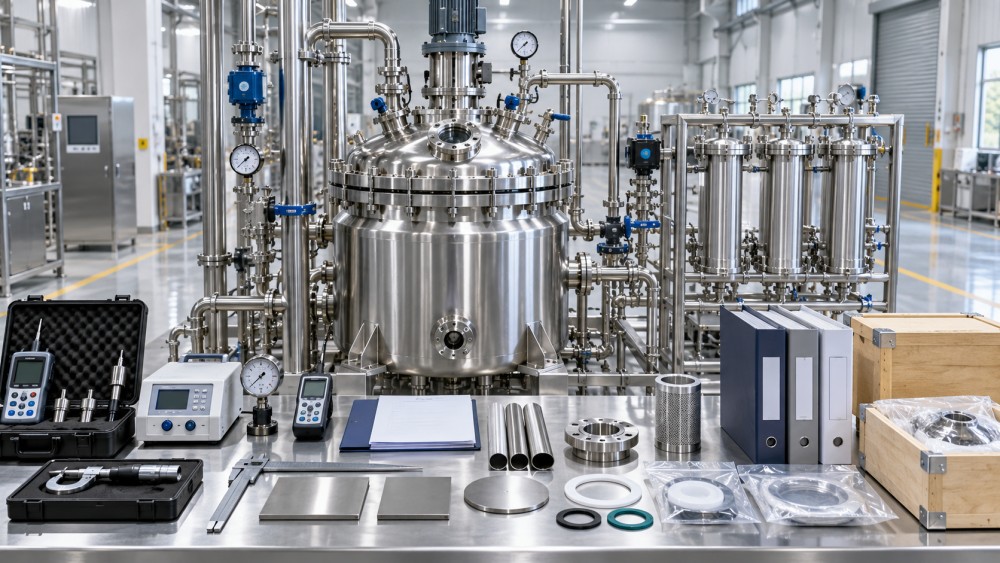
Test technical capability against the actual application
The most useful supplier question is usually application-specific: “Where has this technology operated under comparable conditions?” Comparable does not mean identical, but the differences must be understood. A reference involving clean hydrocarbon service may not validate performance with solids, high chlorides, abrasive slurry, unstable feed composition, or frequent thermal cycling.
Ask shortlisted suppliers to explain their engineering basis. Depending on the technology, this may include process flow diagrams, heat and material balances, equipment datasheets, control philosophy, material-selection rationale, utility consumption estimates, or performance assumptions. The aim is not to collect paperwork for its own sake. It is to see whether the supplier understands where performance risk sits.
For complex systems, it is worth separating “design capability” from “manufacturing capability.” Some companies are strong fabricators working from customer drawings. Others can size equipment and take responsibility for the process design. A third group may assemble purchased components into a skid. All three models can be appropriate, but they carry different interfaces and liabilities. Procurement should know which model is being offered before comparing prices.
Verify quality systems, certifications, and traceability in context
Certification claims deserve careful handling. A certificate can confirm that a management system or product category has been assessed against a defined requirement, but it does not automatically prove suitability for every process duty or destination market. The relevant question is whether the certification applies to the supplied scope, the manufacturing location, and the project’s legal or contractual requirements.
For pressure-containing equipment, electrical assemblies, hazardous locations, food-contact materials, or regulated chemical applications, documentation requirements can be substantial. Confirm early who will provide material certificates, inspection and test plans, welding documentation where applicable, calibration records, drawings, manuals, and final data books. If a supplier relies heavily on subcontractors, ask which activities remain under its direct quality control.
Material traceability is often underestimated during early sourcing. It becomes urgent only after a project engineer asks for verification of alloy grade, elastomer compatibility, coating system, or recycled-content claim. Bringing these requirements into the request package early avoids a late change order or an unusable delivery.
Look beyond capacity: assess delivery realism
A supplier may have sufficient shop space and still be a delivery risk. Lead time depends on engineering workload, long-lead bought-out parts, specialist labor, testing availability, export packing, and the approval cycle between buyer and vendor. For a project-critical package, ask for a preliminary schedule that shows these dependencies rather than accepting a single promised delivery date.
This is also where trade and pricing intelligence can add context. Changes in steel, specialty alloys, polymers, energy inputs, freight conditions, or export availability may affect both quotation validity and delivery exposure. Information platforms that organize market trends alongside technical and supplier data can help procurement distinguish a temporary price movement from a deeper supply constraint. It will not replace a supplier commitment, but it can improve the questions asked during negotiation.
Compare suppliers on risk ownership, not just quoted scope
Two quotations can appear comparable while allocating very different responsibilities. One supplier may include process guarantees, controls integration, FAT support, commissioning assistance, spare parts, and operator training. Another may quote only the hardware. Neither offer is inherently better; the lower initial price may be sensible if the buyer has the engineering resources to manage the interfaces. Problems arise when those exclusions are discovered after award.
A simple comparison sheet should capture more than price:
- Fit with the required process duty and operating envelope;
- Evidence of similar applications, including known limitations;
- Engineering responsibility versus fabrication-only scope;
- Applicable documentation, inspection, and traceability commitments;
- Critical subcontracted items and their lead-time exposure;
- Service, commissioning, and spare-parts capability in the project region;
- Commercial exclusions, performance assumptions, and warranty boundaries.
The point is not to force every supplier into the same model. It is to make differences visible before the commercial decision is locked in.
Use the directory to build a defensible shortlist
The best use of a process technology supplier directory is not to select a vendor in one click. It is to build a credible shortlist faster, with enough technical context to avoid wasting time on poor-fit enquiries. Search across related categories where necessary: material suppliers, component manufacturers, package integrators, testing providers, and service specialists may all affect the viability of one process solution.
Before inviting final bids, hold a technical clarification discussion with the leading candidates. The supplier that asks precise questions about feed conditions, operating philosophy, interfaces, and acceptance criteria is often giving useful information about how it will behave once the order is placed. A directory can reveal who is active in the market; careful verification reveals who can carry the project risk with you.
- Last One:No more articles
- Next Article:How to Verify Chemical Manufacturing Supplier CertificationsOct 08, 2026
Related News
- 00
0000-00
How to vet suppliers in a process technology supplier directory - 00
0000-00
How to verify chemical manufacturing environmental standards compliance - 00
0000-00
How to evaluate data quality in a recycled plastics database - 00
0000-00
How to assess contamination risk in plastic recycling pellets - 00
0000-00
Can biofuels for industrial boilers reduce fuel costs at high load?
Weekly Insights
Stay ahead with our curated technology reports delivered every Monday.