




What makes a mining resources supplier database reliable for sourcing?




A reliable mining resources supplier database gives procurement teams enough evidence to reduce a supplier shortlist with confidence. It should help a buyer distinguish between a company that merely appears in a category and one that can supply the required equipment, material, service level, documentation, and delivery support for a specific mining operation.
For sourcing, the practical test is simple: can the database support a defensible supplier decision without forcing the team to rebuild the research from scattered websites, brochures, trade records, and email exchanges? If it only provides names and contact details, it may be useful for market discovery, but it is not yet reliable procurement intelligence.
Reliable data starts with the right supplier classification
Mining procurement categories are rarely interchangeable. A supplier of general industrial pumps may not have slurry-handling experience. A steel fabricator may not be equipped to produce wear-resistant components for ore-processing equipment. A drilling supplier may serve exploration programs but lack the inventory, technical support, or compliance documentation needed for a producing mine.
A credible database classifies suppliers at a level that reflects these differences. Buyers should be able to search beyond broad labels such as “mining equipment” and identify capability by product family, application, material, process, and end-use environment. Useful distinctions may include underground versus surface mining, exploration versus production, mineral-processing versus site infrastructure, or consumables versus capital equipment.
Classification quality matters because it determines the quality of the initial long list. Poor category structure creates two common problems: relevant specialist suppliers are missed, while procurement teams spend time screening companies that have no meaningful fit with the requirement.
When reviewing a database, check whether individual supplier profiles make the operating context clear. A useful record should indicate what the company actually supplies, where its products are used, and whether its offering is a manufactured product, distribution line, engineering service, repair capability, or trading activity.
Profiles need evidence, not just claims
Supplier descriptions often use broad language: global service, high quality, advanced technology, or complete solutions. Those statements may be true, but they do not help a buyer assess sourcing suitability. Reliability improves when supplier records are supported by information that can be compared and followed up.
For a mining resources supplier database, the most valuable fields usually include:
- Product scope and technical specifications relevant to the category being sourced.
- Manufacturing, assembly, stocking, or distribution capability, with a clear distinction between them.
- Geographic coverage, including production locations, warehouses, service facilities, and export markets where available.
- Relevant standards, certifications, quality systems, and product documentation.
- Application references by mining stage or equipment type, without treating a generic industrial application as mining proof.
- Supply capacity indicators, lead-time information where maintained, and whether the supplier supports aftermarket parts or field service.
- Clear company identity details that allow the buyer to verify legal entity, website, location, and contact route.
Completeness alone is not enough. A database can contain many fields while still being unreliable if every entry is self-reported, outdated, or inconsistent. Buyers should look for signals that profiles are curated, normalized, and periodically reviewed. Standardized fields make comparison possible; visible update dates and source links make validation faster.
Technical fit should be searchable before outreach begins
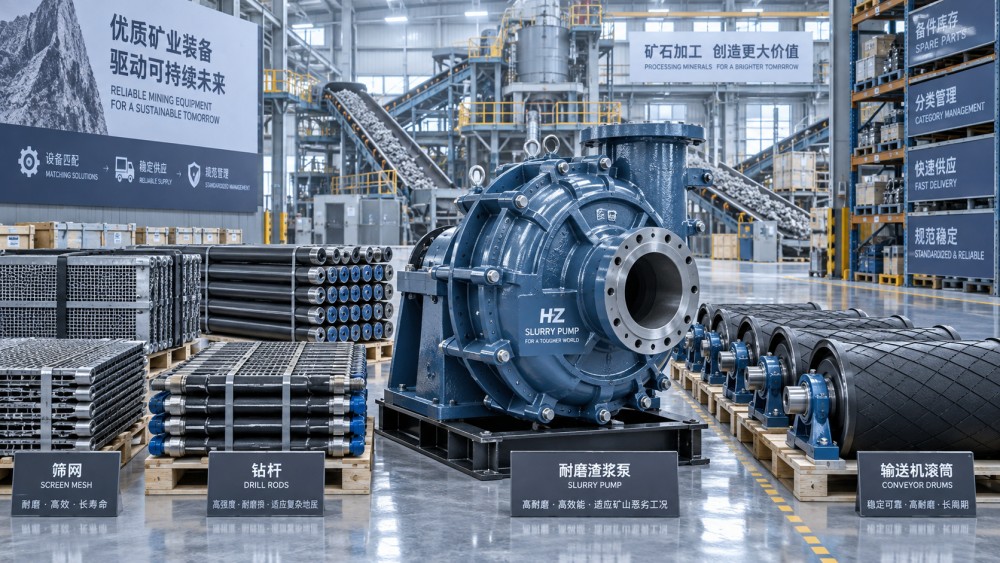
Mining requirements often fail during sourcing because the first shortlist was built around a product name rather than operating conditions. Two suppliers can both offer screening media, drill rods, pumps, liners, process chemicals, or conveyor components, yet only one may be suitable for the mine’s ore characteristics, abrasive conditions, temperature range, pressure requirements, site power configuration, or maintenance constraints.
A dependable supplier database should therefore connect supplier information with technical context. For equipment and components, that may mean material grades, dimensions, duty range, compatible systems, wear performance criteria, or maintenance requirements. For raw materials and chemicals, buyers may need grade, purity, handling conditions, packaging, transport constraints, and applicable safety documentation.
The database does not need to replace engineering review. It should help procurement and technical teams ask better questions earlier. A profile that indicates “slurry pumps” is a starting point; one that identifies the pump type, wetted materials, intended slurry conditions, available spare parts, and service coverage is far more useful when preparing a request for quotation.
Data freshness is part of sourcing risk management
Mining supply markets change for reasons that are not always visible in a static directory. A manufacturer may change ownership, cease a product line, move production, lose a distribution agreement, or shift its export focus. A supplier that was suitable for a previous project may no longer offer the same lead time, technical support, or regional coverage.
Reliable databases make currency easier to judge. Procurement teams should favor platforms that show when supplier information was updated, separate permanent company details from time-sensitive commercial information, and provide routes for correcting inaccurate records. The objective is not to assume that every listing is current at all times; it is to identify where validation effort is needed before a supplier enters a tender or approved-vendor process.
Freshness is especially important for categories exposed to logistics constraints, price volatility, export controls, or limited regional availability. In those situations, a supplier database should be used alongside direct confirmation of stock, production slots, delivery terms, and documentation requirements.
Market coverage matters, but breadth can mislead
A large supplier count may look reassuring, yet it can create a false sense of choice. In mining procurement, ten companies listed under a category may represent one original manufacturer, several distributors, and intermediaries with little technical accountability. A smaller, well-structured set of verified and clearly differentiated suppliers can be more useful than a long list of overlapping contacts.
Coverage should be assessed in relation to the sourcing task. For a local maintenance requirement, nearby stocking and field-service capability may outweigh a database’s global reach. For a capital project or a critical imported component, international manufacturer coverage, export experience, documentation quality, and service-part continuity may be more important.
It also helps when the database exposes supplier roles. Buyers need to know whether they are approaching an original equipment manufacturer, authorized distributor, engineering contractor, material producer, agent, or marketplace seller. Treating these roles as equivalent can cause duplicated quotations, unclear warranty responsibility, and avoidable disputes over technical support.
Use the database to build a shortlist, not to approve a supplier
The strongest use of supplier intelligence is to make early sourcing more disciplined. A procurement team can define the required application, technical parameters, certification needs, supply geography, and commercial constraints, then use the database to create a focused long list. Profiles can be compared against a common screening sheet before engineering and commercial outreach begins.
Final qualification still requires direct supplier engagement, document review, technical evaluation, commercial due diligence, and, where appropriate, site audits or sample testing. A database cannot eliminate that work. Its value lies in making those steps more targeted and reducing the chance that procurement begins with incomplete or misleading market intelligence.
For buyers working across equipment, materials, chemicals, and processing technologies, structured platforms such as GEMM can be useful when they connect supplier references with technical knowledge, product categories, standards-related information, trade context, and market signals. The decision should still rest on the relevance and verifiability of the individual supplier record, not on the size of the directory.
A mining resources supplier database becomes reliable when it helps a buyer move from a broad supplier search to a traceable, technically relevant shortlist. The best indicator is not how many companies it contains, but how quickly it reveals who can realistically support the requirement, what evidence supports that conclusion, and what must be verified before a purchase commitment is made.
- Last One:No more articles
- Next Article:How carbon capture regulations affect project permitting timelinesSep 23, 2026
Related News
- 00
0000-00
Virgin vs Recycled Resin: How to Switch Without Disrupting Production? - 00
0000-00
Why Bio-Based Plastics Still Have to Prove Themselves on the Molding Floor - 00
0000-00
Industrial decarbonization targets slip when baselines are weak - 00
0000-00
What makes a mining resources supplier database reliable for sourcing? - 00
0000-00
How carbon capture regulations affect project permitting timelines
Weekly Insights
Stay ahead with our curated technology reports delivered every Monday.