




How industrial alloys affect equipment life in the Middle East




In the Middle East, equipment life is usually determined less by nameplate quality than by how well the alloy matches heat, chlorides, sand, cyclic loading, and maintenance reality. For technical evaluators, the key point is simple: the right industrial alloys can extend service life materially, while the wrong choice can create avoidable corrosion, erosion, and downtime within a short operating window.
What technical evaluators are really trying to answer
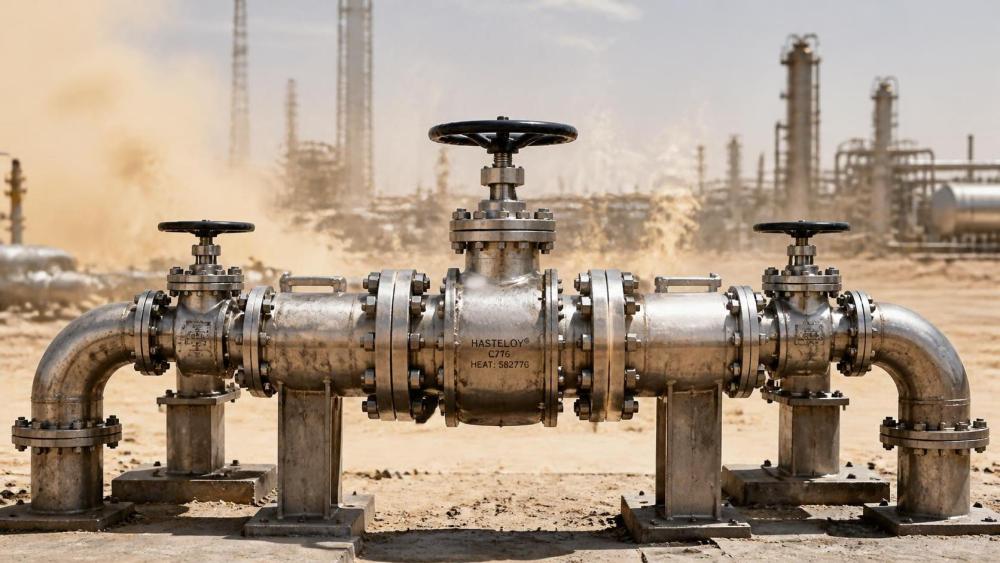
That means the real question is not “which alloy is strongest,” but “which alloy keeps performance stable under regional stress factors and operating constraints.”
Why the Middle East is a difficult service environment
The region combines high ambient temperatures with saline air, dust intrusion, and in many sectors aggressive process media. These conditions accelerate oxidation, pitting, crevice corrosion, and mechanical wear, especially where equipment runs hot or has poor sealing.
Sand and airborne particulates also matter. They do not just erode surfaces; they can damage coatings, contaminate lubricants, and increase clearance loss in rotating or moving equipment. Over time, that shortens inspection intervals and drives up corrective maintenance.
For evaluators, the implication is clear: environmental exposure should be treated as a design input, not an afterthought. An alloy that performs well in a temperate inland plant may fail early in a coastal or desert installation.
How alloy composition affects equipment life
Corrosion resistance usually comes from chemistry, not marketing language. Chromium improves passive film stability, nickel supports toughness and corrosion resistance, and molybdenum is valuable where chlorides and localized attack are concerns.
In practical terms, stainless steels, duplex grades, high-nickel alloys, and specialty nickel-based materials each solve different problems. Selecting one without matching it to temperature, pressure, and chemical exposure can create an expensive mismatch.
Mechanical properties matter as much as corrosion resistance. Hardness can improve wear performance, but excessive hardness may reduce impact tolerance or weldability. A balanced alloy choice often delivers longer life than a “maximum strength” specification.
Where failures usually begin
Most premature failures in industrial alloys Middle East applications start at interfaces: welds, bolt holes, crevices, gaskets, and coating edges. These are the places where moisture, salts, and debris concentrate.
Designers often underestimate thermal cycling as well. Repeated expansion and contraction can loosen joints, crack protective layers, and expose base metal to faster attack. That is especially relevant for pipelines, heat exchangers, and rotating process equipment.
A second common issue is material substitution during procurement. If the supplied grade is close but not equal, the equipment may pass initial inspection yet lose life rapidly under real operating loads.
How to judge whether an alloy is the right fit
Technical evaluators should start with three checks: operating temperature, corrosion medium, and wear mechanism. If any of these are unclear, the material decision is already weak.
Next, compare the alloy against applicable standards, fabrication requirements, and local supply consistency. A technically ideal alloy is not useful if it cannot be welded reliably, inspected properly, or sourced with stable mill certification.
Finally, evaluate total lifecycle cost, not unit price. A lower-cost alloy that requires more shutdowns, thicker coatings, or early replacement often produces a worse return than a more capable grade with higher upfront cost.
Practical material choices by application
For pipelines and valves exposed to saline or sour conditions, corrosion-resistant alloys usually outperform carbon steel with basic protection. The right choice depends on chloride level, temperature, and pressure, not on a single universal rule.
For refining, chemical processing, and high-temperature components, nickel-bearing alloys often justify their cost because they resist both heat and corrosion better than standard steels. In abrasive service, surface hardness and erosion resistance become equally important.
For structural or secondary equipment, over-specifying premium alloys can waste budget without adding useful life. Evaluators should match alloy performance to actual consequence of failure, not to perceived prestige.
What to ask suppliers before making a decision
Ask for composition data, mechanical properties, heat-treatment condition, traceability, and relevant certification. If the supplier cannot document these clearly, the sourcing risk is already elevated.
Request evidence from similar service environments in the Middle East, not only generic datasheets. Field performance in coastal, desert, or high-temperature plants is far more useful than laboratory claims alone.
It also helps to ask how the alloy behaves in fabrication and repair. An alloy that is difficult to weld or inspect can increase lifecycle cost even if its corrosion resistance is strong.
Conclusion: service life follows fit, not reputation
Industrial alloys influence equipment life in the Middle East through a direct chain: chemistry affects resistance, resistance affects degradation rate, and degradation rate affects uptime and cost. The best choice is the one that fits the real environment and operating duty.
For technical evaluators, the most reliable approach is to compare service conditions, standards, fabrication needs, and lifecycle cost before approving a material. That method reduces premature failure risk and creates a clearer basis for sourcing and specification decisions.
Related News
- 00
0000-00
Which sectors are driving demand in the chemical engineering market? - 00
0000-00
How to assess lifecycle emissions from CCUS for low-carbon cement - 00
0000-00
How do energy storage technologies compare for 8-hour discharge? - 00
0000-00
Do mill test reports prove industrial alloys meet ASTM standards? - 00
0000-00
How to verify plastic recycling system suppliers' throughput claims
Weekly Insights
Stay ahead with our curated technology reports delivered every Monday.