




How Buyers Evaluate Galvalume Steel Plate for Corrosion Exposure and Cost




Procurement teams rarely buy coated steel on price alone when the material will be exposed to moisture, industrial fallout, or repeated temperature change. A lower upfront number can turn into a higher lifecycle cost if early red rust, edge corrosion, repainting, or premature replacement interrupts operations. That is why buyers evaluating steel for roofing, wall panels, ducting, equipment housings, and fabricated components usually start with two linked questions: how severe is the corrosion environment, and what service life is realistically required before major maintenance or replacement?
In many of those decisions, Galvalume-coated steel enters the shortlist because it offers a balance between corrosion resistance and cost that can make sense in exposed applications. The challenge is that “better corrosion resistance” is too broad to support a purchase order. Buyers need to judge where the material performs well, where its limits appear, and how coating, fabrication, supply conditions, and downstream use affect total cost.
Corrosion exposure is the real starting point, not the steel price sheet
A useful buying process begins with the environment the plate will actually face. Procurement documents often describe the product by thickness, width, and coating designation, yet many failures come from underestimating exposure. Outdoor rainwater is one issue; trapped moisture under insulation, contact with wet concrete, salt-bearing air, acidic condensate, or deposits from nearby manufacturing can be far more aggressive.
For buyers, exposure usually falls into a few practical categories:
- Dry interior service: storage racks, interior panels, light fabrication in climate-controlled settings.
- General outdoor exposure: roofing, cladding, shelters, and enclosures exposed to weather but with reasonable drainage and ventilation.
- Industrial or polluted settings: areas with sulfur compounds, chemical residues, or process emissions.
- Coastal or salt-influenced exposure: marine atmosphere, ports, logistics yards, and sites where salt deposition is persistent.
- Moisture-trapping assemblies: overlaps, unventilated cavities, poorly drained details, or installations where condensate remains in contact with the surface.
These categories matter because coated steel does not age at the same rate everywhere on the same project. Flat exposed areas may last well while cut edges, fastener zones, or poorly designed water traps become the first maintenance points. A buyer who only compares base price per ton may miss the much more expensive issue: where failure is likely to start and how difficult repair will be once the product is installed.
Why buyers consider Galvalume in longer-service applications
Galvalume-coated steel is commonly selected when the goal is to extend service life beyond what basic coated sheet may deliver in the same environment, especially in building envelope and light industrial applications. The appeal is not simply the presence of a metallic coating, but the way the coating is intended to protect the steel substrate during long exposure cycles.
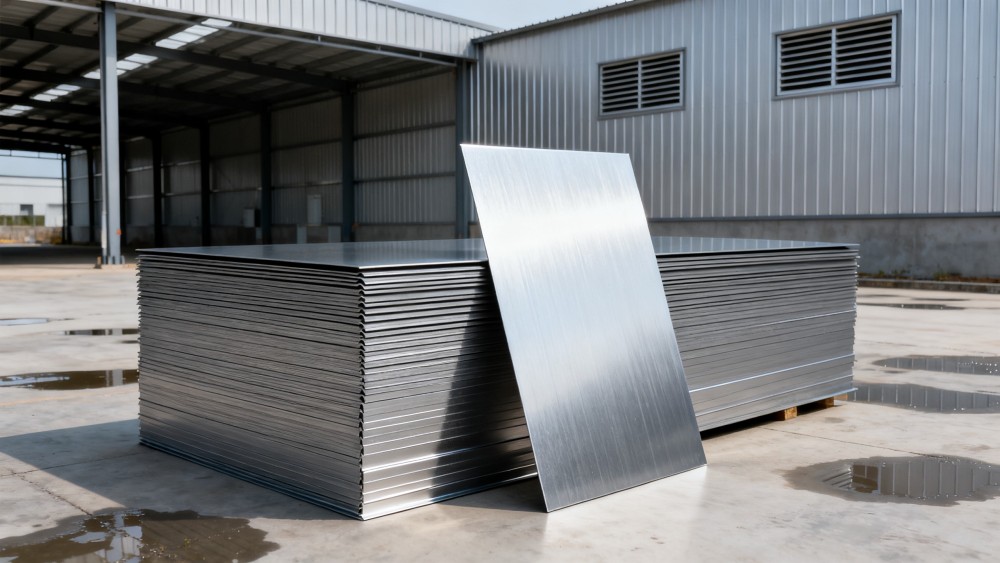
When procurement teams review Galvalume Steel Plate options for roofing panels, wall systems, equipment covers, or formed parts, they are usually comparing the expected durability of the coated surface against the project’s maintenance interval, access difficulty, and replacement cost. In applications where shutdowns, elevated work, or dismantling make future replacement expensive, a modest material premium can be justified if it delays corrosion-related intervention.
That does not make the product universal. Performance still depends on site conditions, fabrication quality, coating integrity, and whether the design allows water to drain instead of remain trapped. Buyers should treat coated steel as part of a system rather than as a standalone answer.
The cost calculation buyers actually need
For procurement, “cost” has at least four layers. Unit price is only the first one.
1. Initial material and processing cost
This includes the steel itself, coating designation, thickness, tolerances, and any further processing such as cutting, slitting, leveling, or packaging. Some buyers focus heavily on coating type while underestimating processing losses. If a plate requires extensive fabrication, the quality of the coated surface after bending, punching, or edge cutting becomes relevant to scrap rates and rework.
2. Installation and fabrication effects
A cheaper product may become more expensive if it is harder to form cleanly, arrives with surface damage, or requires additional protective handling. On projects where visual finish matters, inconsistent appearance across batches can also create hidden cost through sorting or rejection.
3. Maintenance and repair burden
Once corrosion appears in visible or structurally sensitive areas, the cost is no longer just repainting material. Labor access, equipment rental, downtime, safety controls, and disruption to occupied facilities can dominate the expense. Buyers responsible for total project cost often place high value on any material choice that reduces these later interventions.
4. Premature replacement risk
The most expensive scenario is not steady aging but earlier-than-expected replacement. If a roof panel, enclosure, or formed component must be removed years ahead of schedule, the replacement cost includes demolition, disposal, logistics, new installation, and possible production interruption. This is where corrosion exposure and cost truly intersect.
In practical terms, buyers should compare not only price per ton but price relative to expected service interval in the actual environment. A lower-cost plate in a severe exposure zone may produce a higher annualized ownership cost than a more durable coated option.
Application details that change material suitability
Procurement teams often receive generic requests such as “use corrosion-resistant coated steel,” but the right choice depends heavily on how the plate will be used after delivery.
Roofing and exterior cladding
These are common applications because large exposed surfaces benefit from durable coating performance. Yet drainage design, roof pitch, contact with dissimilar materials, and edge detailing are critical. Standing water, debris accumulation, and contact with runoff from incompatible materials can shorten useful life even when the base material choice is sound.
Fabricated housings and equipment covers
In these products, buyers should look beyond flat-sheet corrosion resistance and ask how the coating behaves after forming, punching, or joining. Tight radii, rough cut edges, and abrasive handling during assembly can expose vulnerable areas. If components are used near heat sources or process emissions, temperature cycles and contaminants may shift the risk profile.
Agricultural and light industrial buildings
These structures can look straightforward on a specification list but often present mixed exposure conditions. Humidity, condensate, fertilizers, cleaning chemicals, or animal-related byproducts may create more aggressive conditions than ordinary outdoor weather. A product that performs well in open-air cladding may need closer review in enclosed, chemically active spaces.
Interior ducting, partitions, and utility components
In less aggressive indoor use, buyers may decide that the added corrosion performance of Galvalume Steel Plate is valuable mainly where condensation, periodic washing, or service access limitations are expected. In dry, protected interiors, the cost-benefit equation may look different.
What procurement should verify before approving a supplier
Even when the material type is appropriate, purchasing risk remains if technical and delivery details are vague. Buyers can reduce disputes by verifying a narrower set of points before order release.
- Base metal thickness and tolerance: nominal thickness alone is not enough; tolerance affects fit, weight, and downstream forming.
- Coating designation or coating mass: this directly influences corrosion performance expectations and should match the application environment.
- Surface quality requirements: especially important for visible exterior use or painted downstream processing.
- Cut edge condition: edge quality matters when parts are fabricated from plate and edges remain exposed.
- Protective packaging and transit handling: moisture during shipping or storage can damage coated surfaces before installation.
- Inspection and documentation: mill certificates, coating-related documentation, and agreed acceptance criteria help avoid ambiguity on receipt.
Procurement specifications should also identify whether the material will be painted, formed, welded, or stored for extended periods before use. Those details affect what surface condition is acceptable at delivery and what packaging or temporary protection is necessary.
Common mistakes that distort the corrosion-cost decision
One recurring mistake is choosing a coated steel product based on a nominally similar prior job without checking whether the exposure is actually comparable. A warehouse in a dry inland location is not a good benchmark for a coastal loading canopy, even if both use exterior panels.
Another problem is relying on coating type while ignoring design traps. If water cannot drain, if debris accumulates, or if cut edges are left in persistent wet contact, even a well-chosen coated plate may underperform. Material selection and design detailing need to support each other.
Buyers also run into trouble when they separate procurement from fabrication reality. A plate that meets the paper specification may still produce issues if the downstream processor uses aggressive tooling, poor storage practices, or handling that scratches the surface before installation. In such cases, corrosion that appears “too early” may partly result from process damage rather than from the coating concept itself.
How to compare offers when several coated steel options look similar
When suppliers present multiple coated steel alternatives, the best comparison format is not a simple ranking by price. A more useful review asks each option to answer the same operational questions:
This framework helps buyers avoid overspecifying in mild applications while also avoiding false savings in demanding ones. The most economical choice is often the one that fits the exposure and service interval with the fewest hidden penalties, not the one with the lowest quoted rate.
Where Galvalume fits, and where extra caution is needed
In many building and industrial applications, Galvalume Steel Plate makes sense where long outdoor exposure, moderate maintenance access, and the need for stable corrosion performance justify a more durable coated substrate. It is often considered for roofs, wall panels, enclosures, and fabricated parts where replacement would be disruptive and where the design supports runoff and ventilation.
Buyers should apply more caution in environments with concentrated chemical attack, constant wetness, trapped debris, or details that expose cut edges to long-term moisture. In those conditions, the procurement decision should include a closer review of assembly design, protective finishing strategy, and whether another material system is more appropriate for the most exposed zones.
The strongest purchasing decisions come from matching coated steel to the real service environment, then testing cost assumptions against maintenance and replacement risk. Corrosion exposure is not a side issue to price; it is the factor that explains whether the quoted material cost is low, fair, or ultimately expensive.
Related News
- 00
0000-00
Which sectors are driving demand in the chemical engineering market? - 00
0000-00
How to assess lifecycle emissions from CCUS for low-carbon cement - 00
0000-00
How do energy storage technologies compare for 8-hour discharge? - 00
0000-00
Do mill test reports prove industrial alloys meet ASTM standards? - 00
0000-00
How to verify plastic recycling system suppliers' throughput claims
Related tags
Weekly Insights
Stay ahead with our curated technology reports delivered every Monday.